Country guides
10 days from Zurich to Geneva by train: Lucerne, the Jungfrau region, Zermatt and Lake Geneva
This is the first trip most people dream of, and it works perfectly by train.
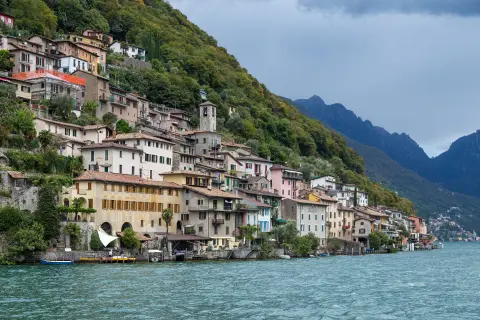
From Romansh villages under glaciers to palm trees and risotto in half a day: this corner is the sunniest and least crowded part of the Swiss Alps.
Switzerland is not in the European Union, but it is in the Schengen area, so passport rules are the same as in France or Germany.
Avalanches kill about 20 people in an average Swiss winter, nearly all of them off the piste, in slides they or their companions set off.
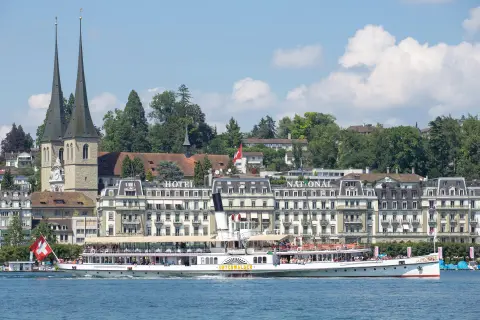
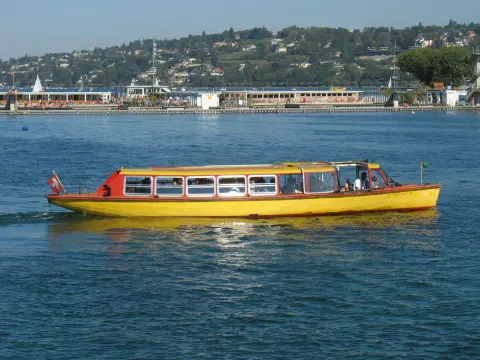
The boats are public transport, not just tours: they're in the timetable, call at villages the train doesn't reach, and are covered by the same passes.
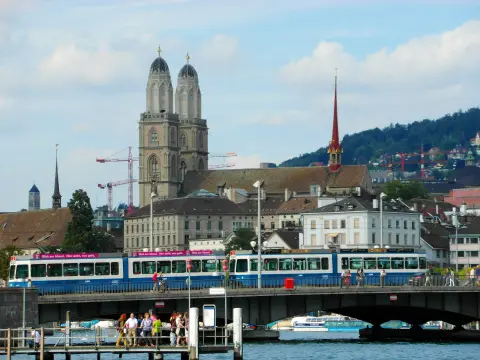
Where the train stops, a tram or a yellow bus is waiting.
Every Swiss lake has its mountain with a railway, and nobody needs them all.
The Swiss are polite, reserved and fond of rules, because the rules work.
Roads are superb and drivers orderly. Fines are among the highest in the world, parking is scarce, and several of the loveliest villages don't allow …
Swiss food changes at the language line: rösti, sausages and veal in the German part, fondue and lake fish in the French part, risotto and polenta in…
The Grand Train Tour is Switzerland Tourism's name for joining the best railways into a circle of about 1,280 km.
Swiss health care is superb and costs more than almost anywhere.
Switzerland has about 65,000 km of signed paths, all free, starting from almost every station, and a cable car or yellow bus to save your knees.
Switzerland uses the Swiss franc (CHF), which is strong, and it's one of the dearest countries in the world for a visitor.
Cable cars put you at 3,000 m in half an hour, in the same shoes you wore to breakfast.
Coverage is excellent, even on most trains and ski slopes.
Full fares are high: Zurich to Bern is about CHF 53 one way for an hour's ride.
Switzerland is one of the safest countries in the world.
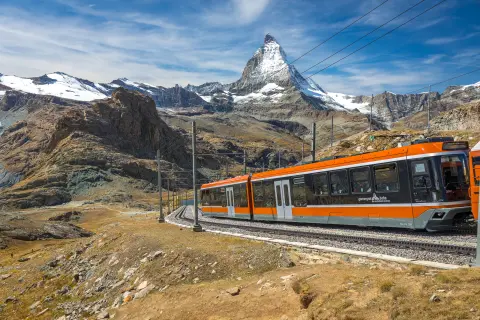
Every famous panoramic train runs on a line that ordinary trains use too, hourly, with windows that open and no reservation fee.
Switzerland has the highest, most beautiful ski areas in the Alps, reached by train, with sure snow and old villages.
Between about June and October the passes are the best drives in Europe, and free.
In most Swiss towns the tourist tax on your bill buys you something: a guest card, with free local transport or cheap lifts.
You don't have to tip in Switzerland. By agreement, service has been included in restaurant, hotel, taxi and hairdresser's prices since the 1970s, an…
Nearly every place you sleep in Switzerland adds a small charge per person per night: Kurtaxe, Citytax, taxe de séjour or tassa di soggiorno.
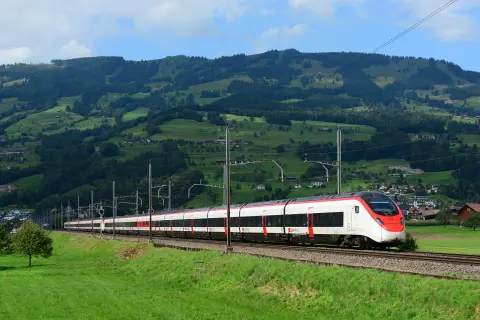
Swiss trains are the easiest way to travel anywhere in Europe.
Jungfraujoch, at 3,454 m, is Europe's highest railway station, above the longest glacier in the Alps.
Swiss weather turns fast, and the mountains are moving: warmer summers thaw the frozen ground that holds rock together.
For walking and all the cable cars, go from mid-June to early October.
Beds are dear, but clean and well run nearly everywhere.