
Driving in Switzerland: the vignette for 2027, speed limits and fines, licences, winter tyres, parking and car-free villages
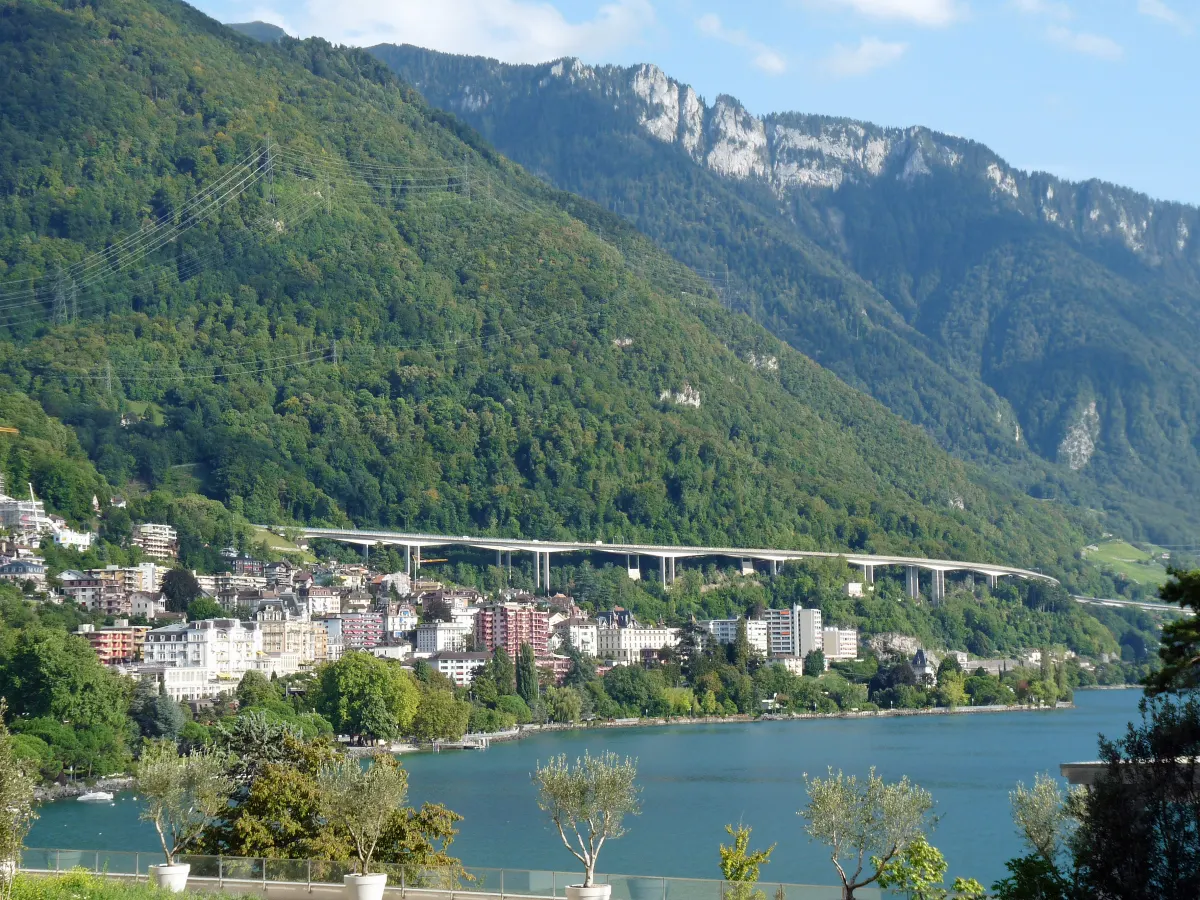
Roads are superb and drivers orderly. Fines are among the highest in the world, parking is scarce, and several of the loveliest villages don't allow cars at all. For the classic sights the train is easier. For Graubünden, the Jura, Appenzell and the passes a car is a joy.
The vignette
- You need one on all motorways and expressways (green and white signs). There's only one kind, for a year: CHF 40. There's no 10-day version.
- The 2027 vignette is on sale from 1 December 2026, and valid to 31 January 2028. The 2026 one is good until 31 January 2027.
- Either the e-vignette, linked to your plate, or a sticker (purple for 2027), which must be stuck on the windscreen. A trailer or caravan needs its own.
- Buy the e-vignette only at e-vignette.ch, the government's shop. Copycat sites charge more, and fake emails ask you to pay twice. Stickers are sold at automobile clubs, post offices and petrol stations near the border.
- Without one the fine is CHF 200, plus the price of the vignette.
- A car hired in Switzerland has one. Hired across the border, or on the French side of Geneva or Basel airport, it may not.
Licence
- Your own licence is enough for a visit, if it shows the vehicle classes in Latin letters. Otherwise you need an international driving permit. UK photocard licences are fine. Hire firms may have rules of their own.
- You must be 18. Under-12s shorter than 150 cm need a child seat. Carry a warning triangle within reach.
Rules
- Limits: 50 km/h in towns (30 in many streets, 20 where walkers have priority), 80 outside, 100 on expressways, 120 on motorways. A limit is often signed only once.
- Headlights or day lights on at all times.
- Alcohol: 0.05%, and 0.01% for new drivers.
- Give way to the right unless signs say otherwise, always to trams, and to pedestrians at a crossing.
- On mountain roads the car going up has priority, and the yellow PostBus always has, where you see the sign with a yellow horn.
- Camera detectors are illegal, and so are camera warnings in your sat nav. Turn them off.
Fines
- Cameras are everywhere, with little tolerance. Small speeding fines run from tens of francs to a few hundred, and bigger ones go to court and are set by your income. At 40 km/h too fast on a motorway the police can take your licence on the spot.
- Police may ask visitors to pay at once. Fines reach you at home through the hire firm, with a fee on top, and the neighbouring countries help collect them. If you don't pay, you can be held to it next time you enter.
Winter
- Winter tyres aren't compulsory, but if you block the road or crash without them you can be fined, and your insurer may not pay in full. Use them from October to Easter. Hire cars have them then: check.
- A round blue sign with a chained tyre means snow chains are compulsory. Practise at home.
- Most high roads shut: see Alpine passes and car trains.
The Gotthard
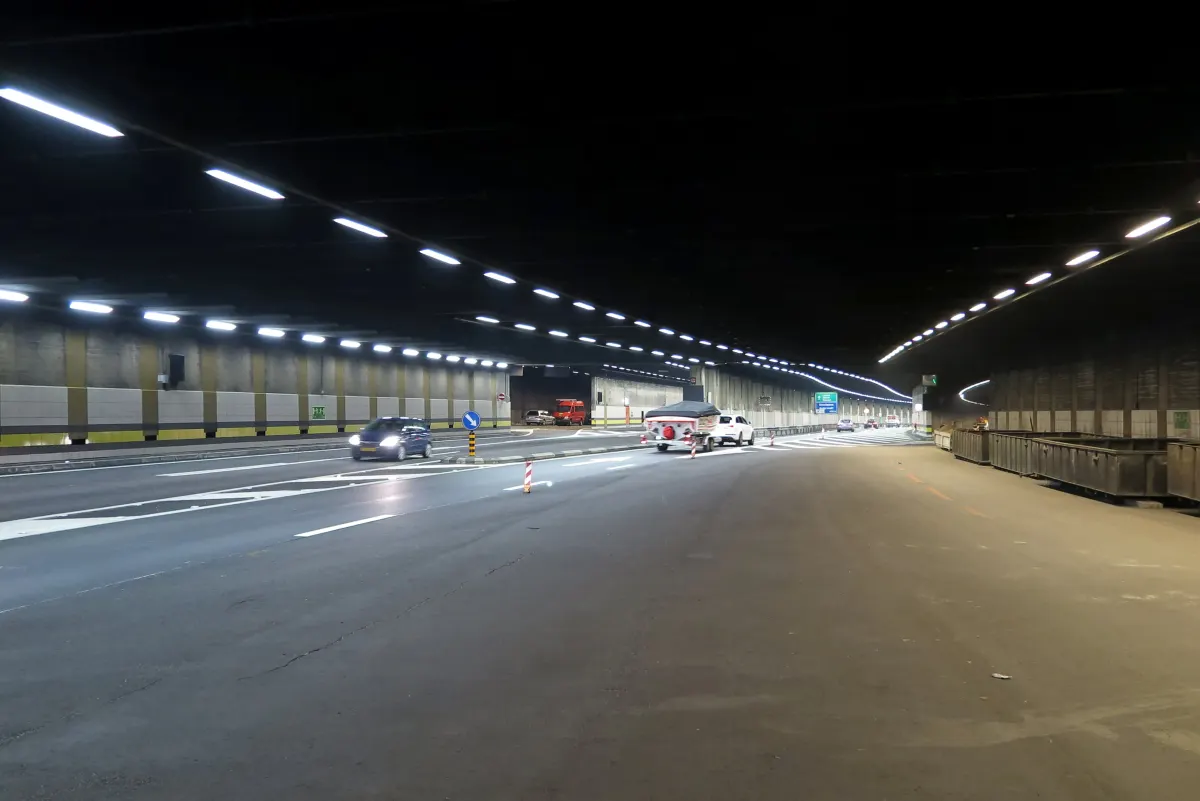
- The 17 km tunnel has one lane each way until a second tube opens in about 2030. Queues of two hours and more are usual southbound at Easter (28 March 2027), Ascension (6 May), Whitsun (16 May) and on summer Saturdays, and northbound on Sundays.
- If the wait is over an hour, the Touring Club suggests the A13 over San Bernardino for drivers from eastern Switzerland. In summer you can take the old pass road.
- There's no toll. The Great St Bernard tunnel to Italy has one. The Mont Blanc tunnel is in France.
Parking
- White lines: pay at a meter (often by the app Parkingpay or EasyPark). Blue lines: usually an hour free with a blue parking disc, from any petrol station. Yellow: private, keep off.
- City garages cost CHF 3 to 5 an hour. Park and Ride at stations is much cheaper.
- In valleys such as Lauterbrunnen and at Kandersteg car parks fill by 10 am in summer. Come by train.
Car-free villages
Zermatt (park in Täsch and take the shuttle train), Saas-Fee (park at the entrance), Wengen and Mürren (park in Lauterbrunnen), Bettmeralp and Riederalp, Braunwald and Rigi.
Fuel and charging
Fuel costs about the same as next door, less than in Italy. Stations are often unmanned: use a card with a PIN. Fast chargers stand at motorway services and many supermarkets.
If you break down, the Touring Club's number is 140. See also Ticino and Graubünden.

Matterhorn and Gornergrat, Zermatt
The Matterhorn, 4,478 m, is the most famous mountain in the Alps, rising alone above the car-free village of Zermatt.

Lauterbrunnen Valley
A deep glacial valley with sheer rock walls and 72 waterfalls, including the Staubbach Falls, which drop 300 m right beside the village.

Oeschinensee, Kandersteg
A turquoise mountain lake at 1,578 m beneath huge cliffs and waterfalls, a UNESCO World Heritage Site in the Bernese Oberland.
Comments