
Mountain safety in Switzerland: rescue and who pays, weather, paths, glaciers, altitude, cows and guard dogs
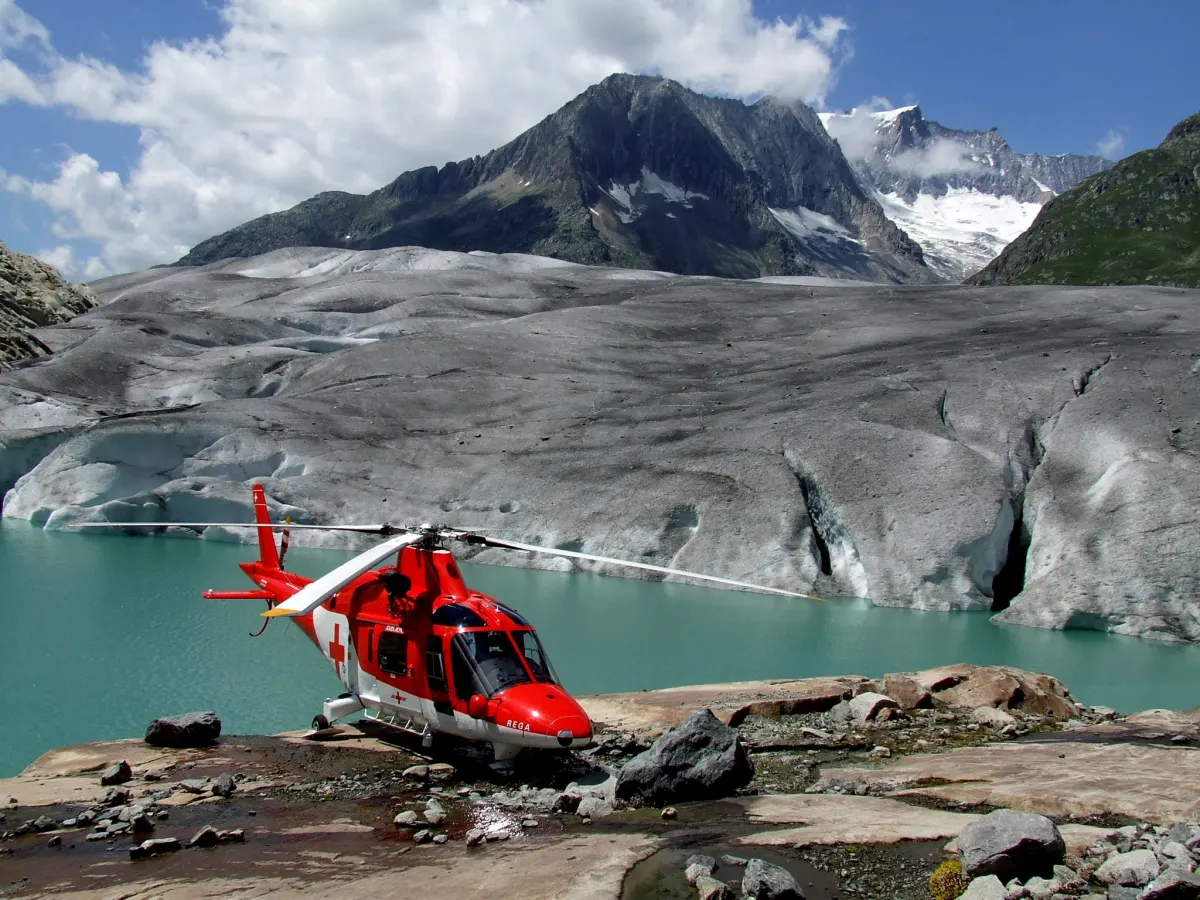
Cable cars put you at 3,000 m in half an hour, in the same shoes you wore to breakfast. In 2025 almost 4,000 people had to be rescued in the Swiss mountains, 11% more than the average, and 98 died, the fewest in ten years. Half of the emergencies were hikers or climbers on foot, and about 1,500 people weren't hurt at all: they were lost, stuck or exhausted.
Call for help
- 1414: Rega, the air rescue. In the Valais, 144. From a foreign phone if it fails: +41 333 333 333. 112 works on any network.
- Better: the free Rega app, which sends your position with the call. Set it up before you go.
- Say where, what happened, how many, the weather, and any cables nearby. Then keep the phone free, and warm.
- No signal: six calls, whistles or flashes a minute, a minute's pause, and again. The answer is three.
- To a helicopter: both arms up in a Y for "yes, help". One up and one down, like an N, for no.
Who pays
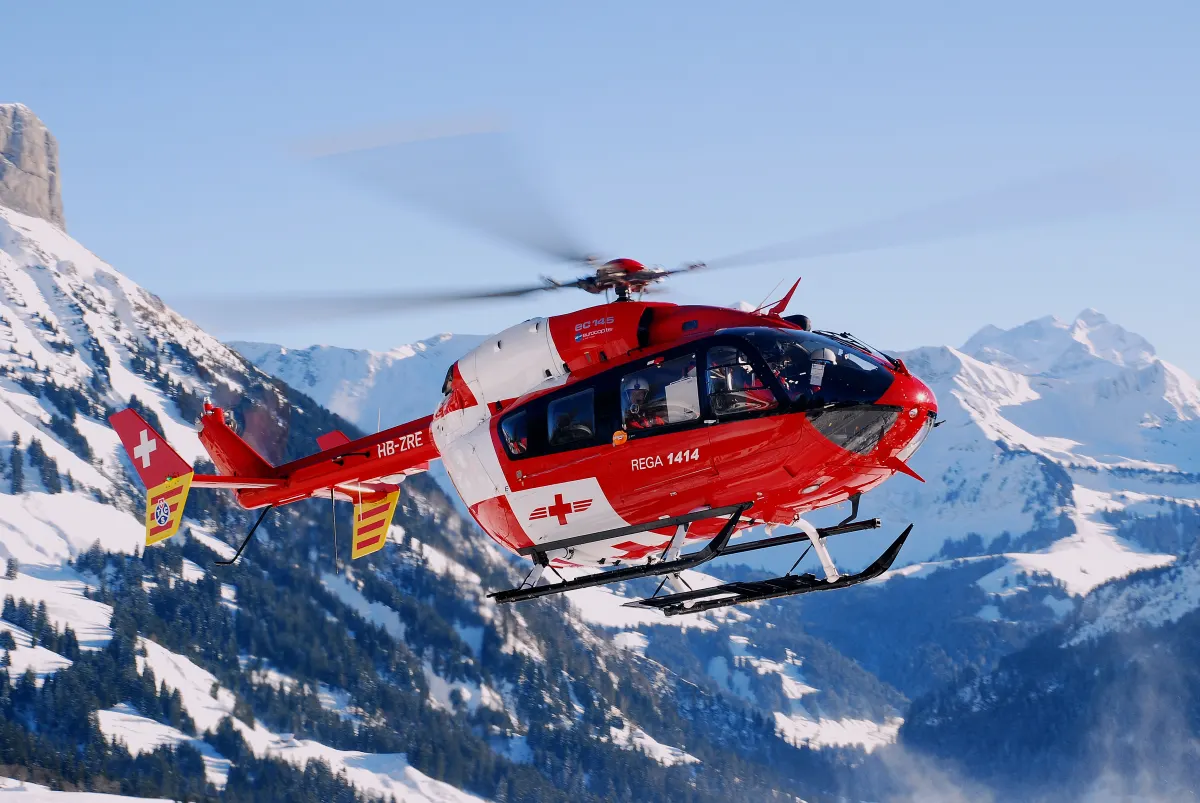
- You or your insurer. A Rega flight costs about CHF 4,500 on average, and more if it's complicated. A European health card doesn't cover all of it.
- Check that your travel insurance covers rescue by helicopter, and the sport and height.
- Rega patrons pay CHF 40 a calendar year, and Rega may then waive what insurance doesn't cover. It isn't insurance, and the rules for people who live abroad are narrower: read them.
Plan
- Look at the grade, the height gain and the time on the signs. The times have no rests in them.
- Check for closed paths in the swisstopo or SwitzerlandMobility map, and the forecast on MeteoSwiss.
- Know when the last cable car goes. Many stop at 5 pm.
- Take boots with a good sole, water, food, a warm layer, waterproof, hat, sun cream, a torch and a charged phone. Tell someone where you're going.
- Turn back while it's still easy. It's the one thing most of the rescued didn't do.
The usual dangers
- Slips, mostly on the way down, tired, on an easy path. Use poles.
- Thunderstorms from early afternoon in summer. Be off ridges and cables by 1 pm.
- Old snow on steep north slopes until July, hard as ice in the morning. Don't cross it in trainers.
- Rockfall: the permafrost is thawing, and 2026 was the hottest summer since 1864. Classic climbs are unsafe by mid-summer, and paths are moved. Obey every barrier.
- Streams below dams can rise without warning, and glacier streams by afternoon.
- Snow can fall in any month above 2,000 m.
Glaciers
Never step onto one without a guide and a rope, not even beside a platform at Jungfraujoch or Titlis. Stay inside the poles. Thin snow bridges hide crevasses. A guided walk on the Aletsch glacier is safe and unforgettable.
Altitude
At Jungfraujoch (3,454 m) and the Klein Matterhorn (3,883 m), walk slowly, drink water, and go down if you have a bad headache, feel sick or are confused. Babies and people with heart or lung trouble should ask a doctor first.
Cows
- Mother cows defend calves. Give them 20 to 50 metres, walk round, don't stare, don't touch.
- Keep a dog on a short lead. If a cow charges, let the dog go.
- Close gates. Electric fences are live: use the plastic handle.
Guard dogs
Since wolves came back, big white dogs live with the sheep, from about early June to early October. Signs warn you. Stop, stay calm, let them bark and look, then walk round the flock slowly, at a distance. Get off your bike. Don't run, stare, or throw anything. If they won't let you by, turn back. Leave your own dog at home.
In winter, read Avalanches first.

Aletsch Glacier
The largest glacier in the Alps, a river of ice 20 km long, sweeping down from the Jungfrau region, a UNESCO World Heritage Site.

Jungfraujoch, Top of Europe
The highest railway station in Europe at 3,454 m, reached by a cog railway that tunnels through the Eiger.

Grindelwald First
A mountain above Grindelwald reached by a gondola, with the First Cliff Walk, a steel walkway pinned to the cliff face, with views to the Eiger's nor…
Comments