
Money in Switzerland: francs, cards and cash, what things cost, how to spend less, and tax-free shopping
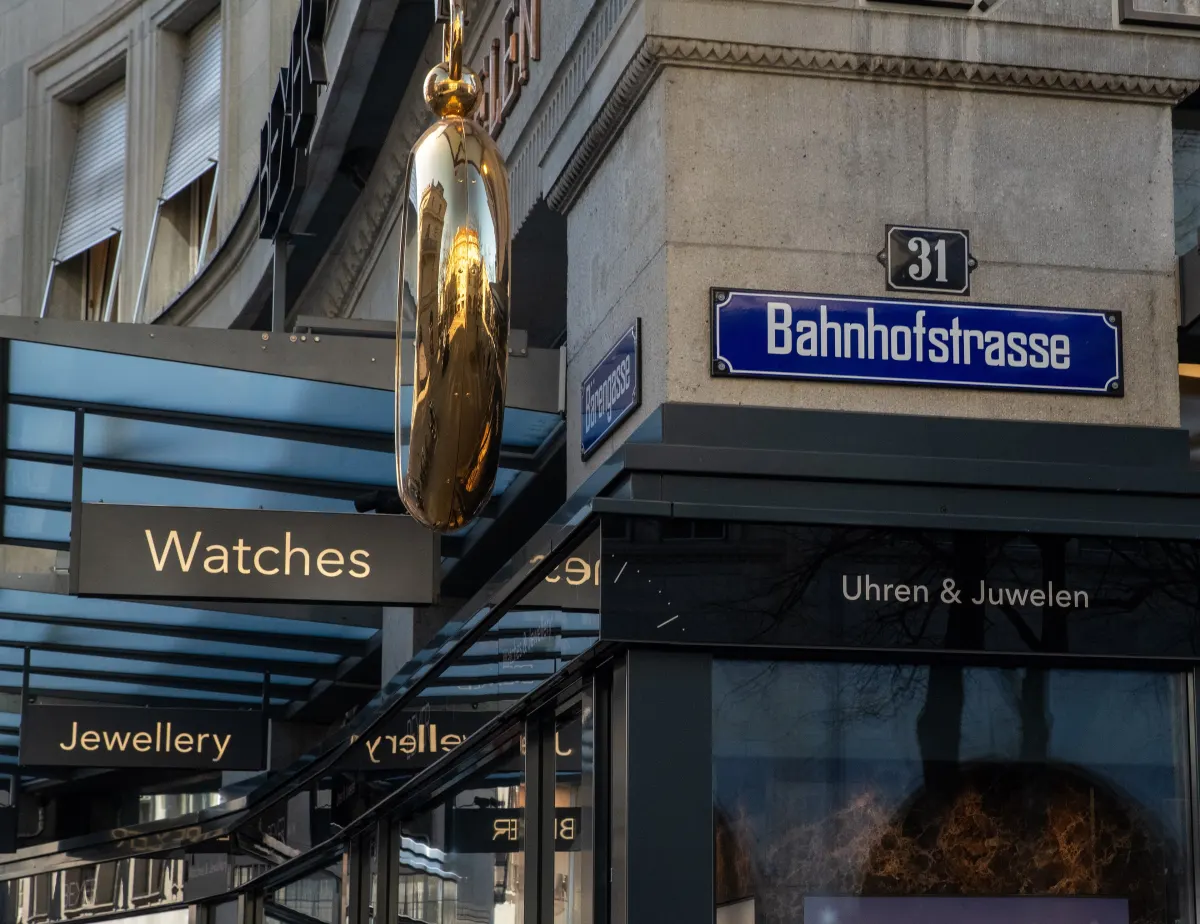
Switzerland uses the Swiss franc (CHF), which is strong, and it's one of the dearest countries in the world for a visitor. Two things make it bearable: a lot of the best things (walks, lakes, fountains, villages) cost nothing, and supermarkets are good.
Cards and cash
- Cards and phones work nearly everywhere, even at farm stalls in some valleys. Visa and Mastercard are safest.
- Carry CHF 50 to 100 for mountain huts, small cafés, honesty boxes, lockers and markets.
- The Swiss pay by TWINT, an app that needs a Swiss bank account. If you see only a TWINT code, ask for another way.
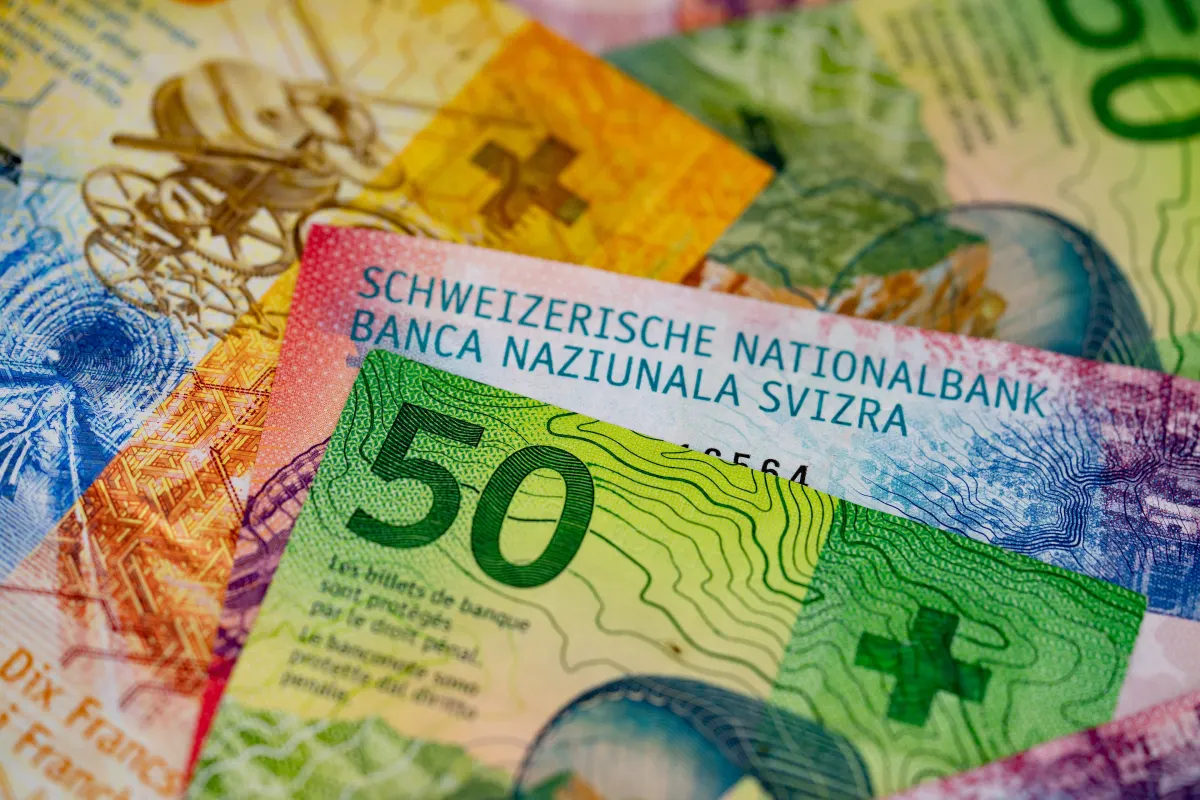
- Notes are 10, 20, 50, 100, 200 and even 1,000 francs, and nobody minds a 100. Coins go down to 5 centimes. Old notes (before the current series with hands and globes) are no longer accepted in shops.
- Liechtenstein uses the franc too.
Euros
Stations, tourist shops and some hotels take euro notes, at a poor rate, and give change in francs. Pay in francs, and if a machine offers to charge your card in your own currency, refuse.
Cash machines
They're called Bancomat, and are at every bank, station and big supermarket. Those of the cantonal banks, PostFinance, Raiffeisen and UBS are fine. Exchange offices at SBB stations are honest but not cheap.
What things cost
Rough prices in late 2026:
- Coffee CHF 4.50 to 6. Beer (3 dl) CHF 5 to 7. Bottle of water in a restaurant CHF 5 to 8.
- Supermarket sandwich CHF 4 to 7. Plate at a Coop or Migros self-service restaurant CHF 12 to 20. Lunch menu CHF 20 to 28. Main course at dinner CHF 28 to 45. Fondue CHF 26 to 35 a head.
- Bed in a hostel CHF 35 to 65, simple double room CHF 100 to 180, three-star CHF 180 to 280: see Where to stay.
- Zurich to Bern by train CHF 53 full fare. A cable car up a famous mountain CHF 80 to 138 return, and Jungfraujoch CHF 270.
- Museum CHF 10 to 30.
Someone careful, in hostels and with picnics, spends about CHF 120 to 200 a day. A couple in mid-range hotels, with trains and a mountain or two, easily spends CHF 500.
Spending less
- Trains first: a Half Fare Card or a pass can halve the biggest cost after your bed.
- Choose one great mountain, not four, and one of those that's free with a pass.
- Eat your main meal at lunch. Buy dinner at Migros, Coop, Denner, Aldi or Lidl: near closing time fresh food is marked down by 25 to 50%. The Too Good To Go app is big here.
- Fill a bottle at any fountain that doesn't say kein Trinkwasser, eau non potable or acqua non potabile. Zurich alone has over 1,200.
- Migros sells no alcohol in its ordinary supermarkets: Coop and Denner do.
- Swim, walk and look: lakes, river baths in Bern and Basel, trails and church concerts are free.
- Use your guest card.
- Many museums are free on one day a month, and 500 of them with the Swiss Travel Pass.
Tax-free shopping
- VAT is 8.1% (2.6% on food, books and medicine, and 3.8% on rooms), always included in the price.
- If you live outside Switzerland, wherever you come from, you can have it back on goods of CHF 300 or more in one purchase, for yourself or as gifts. Ask for the form when you pay, and show your passport.
- Take the goods out of Switzerland within 90 days, and have the form stamped by Swiss customs as you leave: at the airport before you check your bag, or at a staffed border crossing in its opening hours. Forms dropped in a box aren't stamped.
- After the operator's fee you get about 5 or 6%. Then remember the customs limit at home.
See also Tipping and Tourist tax.
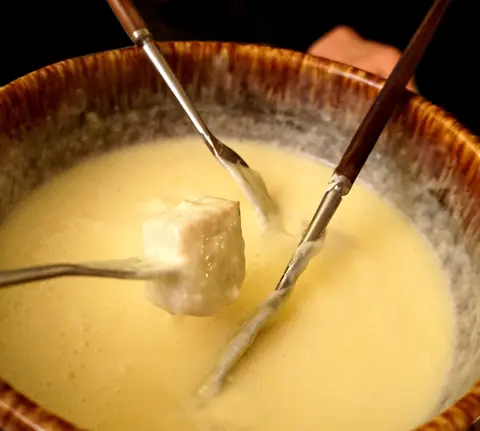
Cheese fondue
Melted Gruyère and Vacherin with white wine and garlic in a pot, eaten by dipping bread on long forks.
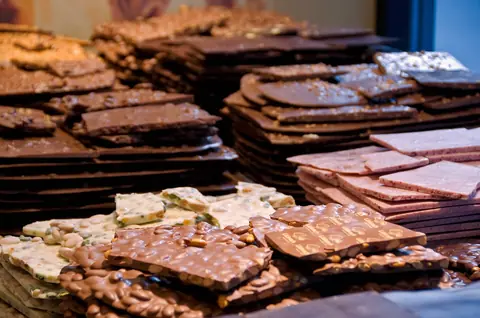
Swiss chocolate
Switzerland invented milk chocolate. Visit the Lindt Home of Chocolate near Zurich, with a giant chocolate fountain, or the Cailler factory in Broc, …
Comments