Practical advice
7 days in Kyrgyzstan: Bishkek, Song-Kul, the south shore of Issyk-Kul and Karakol
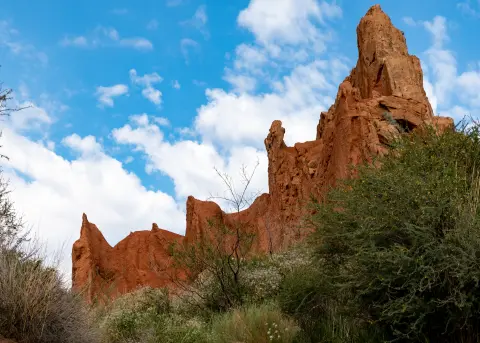
This is the classic loop: mountains by Bishkek, a night in a yurt at 3,000 m, red canyons beside a huge lake, and a trekking town under the Tian Shan.
Kyrgyzstan lets citizens of about 70 countries in without a visa, but the stay got shorter at the end of 2025: for most Western visitors it's now 30 …
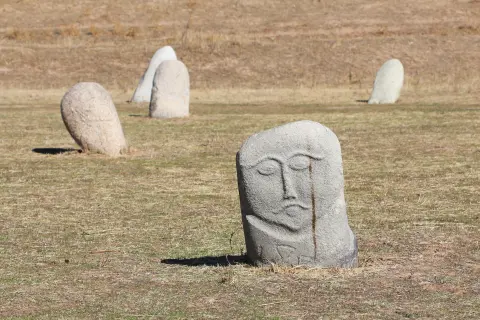
The Kyrgyz were nomads until a century ago, and a guest is still an honour.
Kyrgyz food is what herders ate, meat, milk and dough, with the cooking of Dungan, Uyghur, Uzbek and Russian neighbours added.
Kyrgyzstan is small on the map, but almost all mountains, so journeys take longer than they look.
Medical care in Kyrgyzstan is basic outside Bishkek, and the places people come for are hours from a hospital.
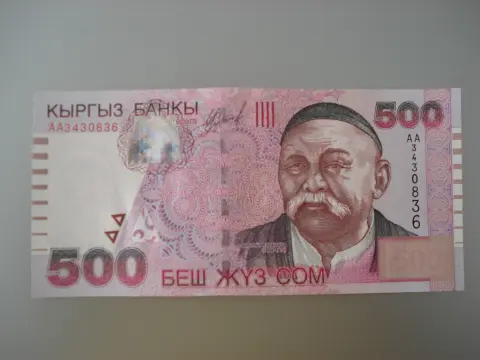
The currency is the som (KGS), and you'll rarely find it outside Kyrgyzstan.
Mobile data is cheap, and fast in the towns.
Kyrgyzstan is mostly a friendly and peaceful place to travel, and the biggest dangers are roads and mountains.
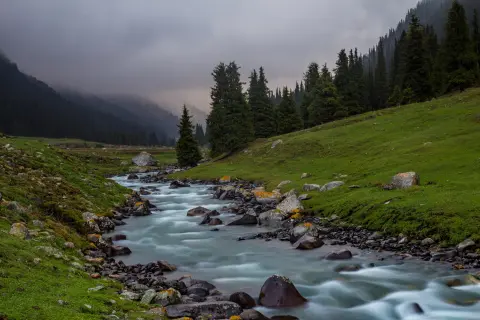
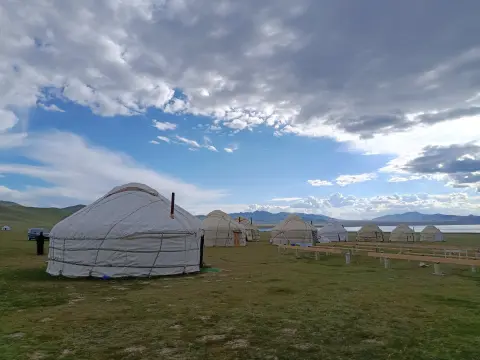
Nine-tenths of Kyrgyzstan is mountains. You can walk or ride for days without a fence, staying in yurts or a tent.
Two weeks is enough for the lakes and pastures of the north and the older, warmer south, if you fly between Bishkek and Osh.
For yurts, high lakes and trekking, go in July or August; for fewer people, go in late June or the first half of September.
Every summer families take their animals up to the jailoo, the high pastures, and live in yurts.