
Food and drink in Kyrgyzstan: beshbarmak, lagman, manti, ashlan-fu, kymyz and bazaar bread
Kyrgyz food is what herders ate, meat, milk and dough, with the cooking of Dungan, Uyghur, Uzbek and Russian neighbours added. It's filling rather than spicy, and cheap. The best of it is in the bazaars, and at a family table in the mountains.
Kyrgyz dishes
- Beshbarmak ("five fingers", as it's eaten by hand): boiled mutton or horse, cut small, on noodles with onion and broth. It's made for guests and feasts, and there's an order to who gets which part of the sheep.
- Kuurdak: meat fried with onion and potato.
- Chuchuk: a fatty horse sausage. Horse is ordinary here: ask if you'd rather not eat it.
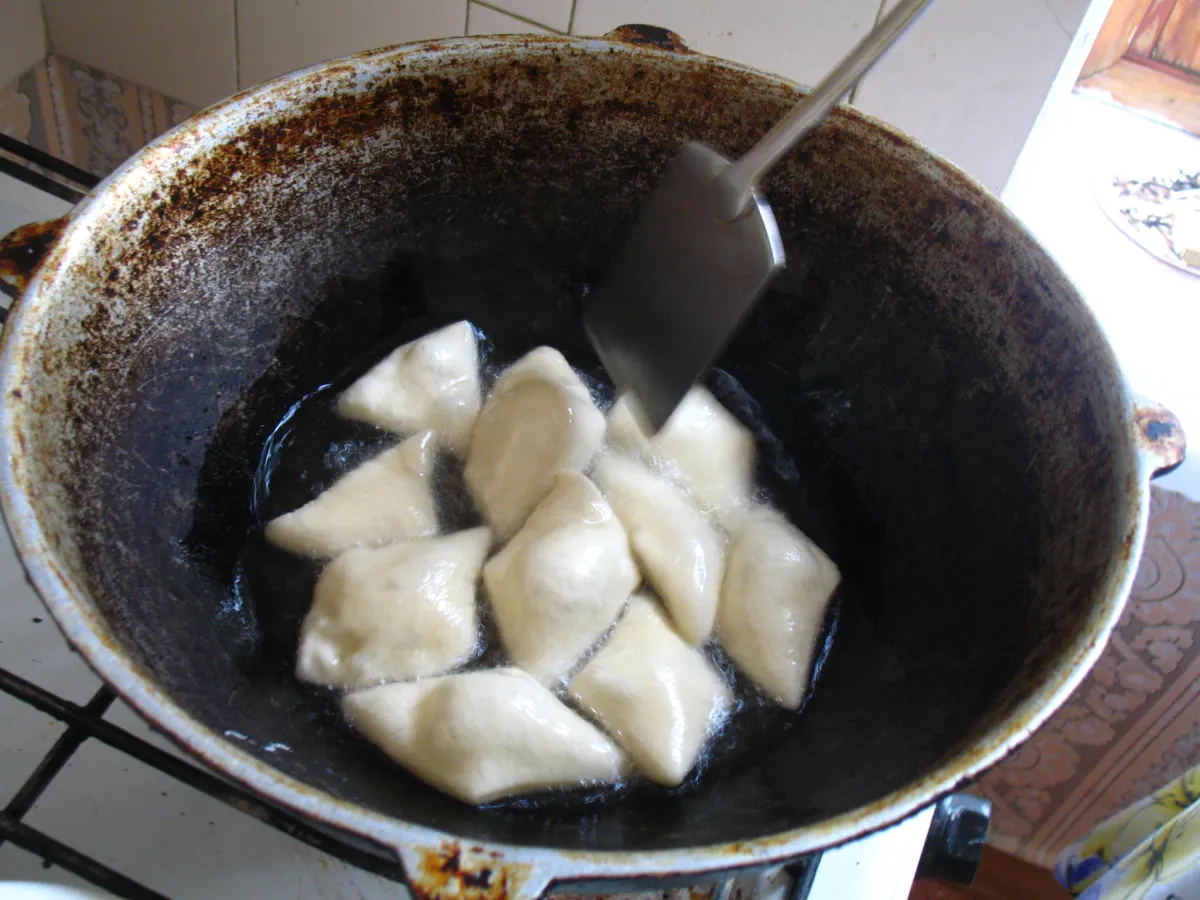
- Boorsok: little pillows of fried dough, spread over the table for guests, to eat with jam and kaimak (thick cream).
- Kurut: hard, salty balls of dried yoghurt, for the road.
From the neighbours
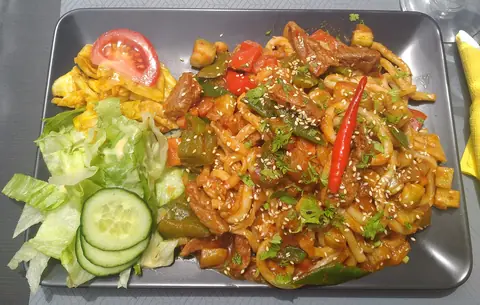
- Lagman, hand-pulled noodles with meat and peppers, in soup or fried.
- Manti, big steamed dumplings, with meat or, sometimes, pumpkin.
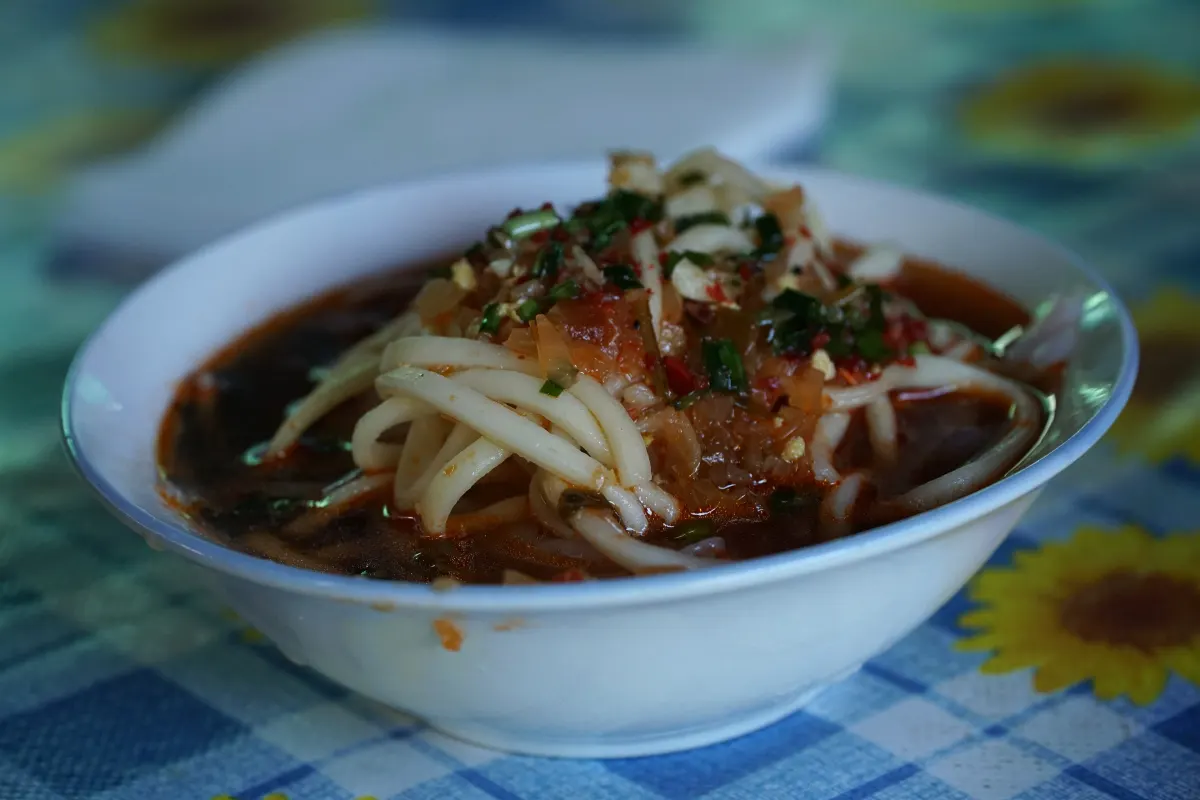
- Ashlan-fu (ashlyamfu), a cold, sour, spicy bowl of wheat noodles and starch jelly, from the Dungans, Muslims who came from China. Karakol is the place for it: look for the row of stalls near the bazaar, and eat it with a potato pie.
- Samsa, pastries with meat and onion baked on the wall of a clay oven, best in Osh, where they're huge.
- Plov, rice with meat and carrots, at its best in the south, made with the red-brown rice of Uzgen.
- Shashlik, skewers grilled over coals, everywhere.
Lagman
Thick, hand-pulled noodles served with a stew of meat, peppers, tomato and vegetables, either as a soup or fried (gyuro lagman).
Bread
Round loaves stamped in the middle (tokoch or lepyoshka) come with every meal. Bread is treated with respect: tear it, pass it around, and don't put it face down or throw it away.
Drinks
- Tea, black or green, comes in small bowls, filled only part way so your host can keep pouring. Put your hand over the bowl when you've had enough.
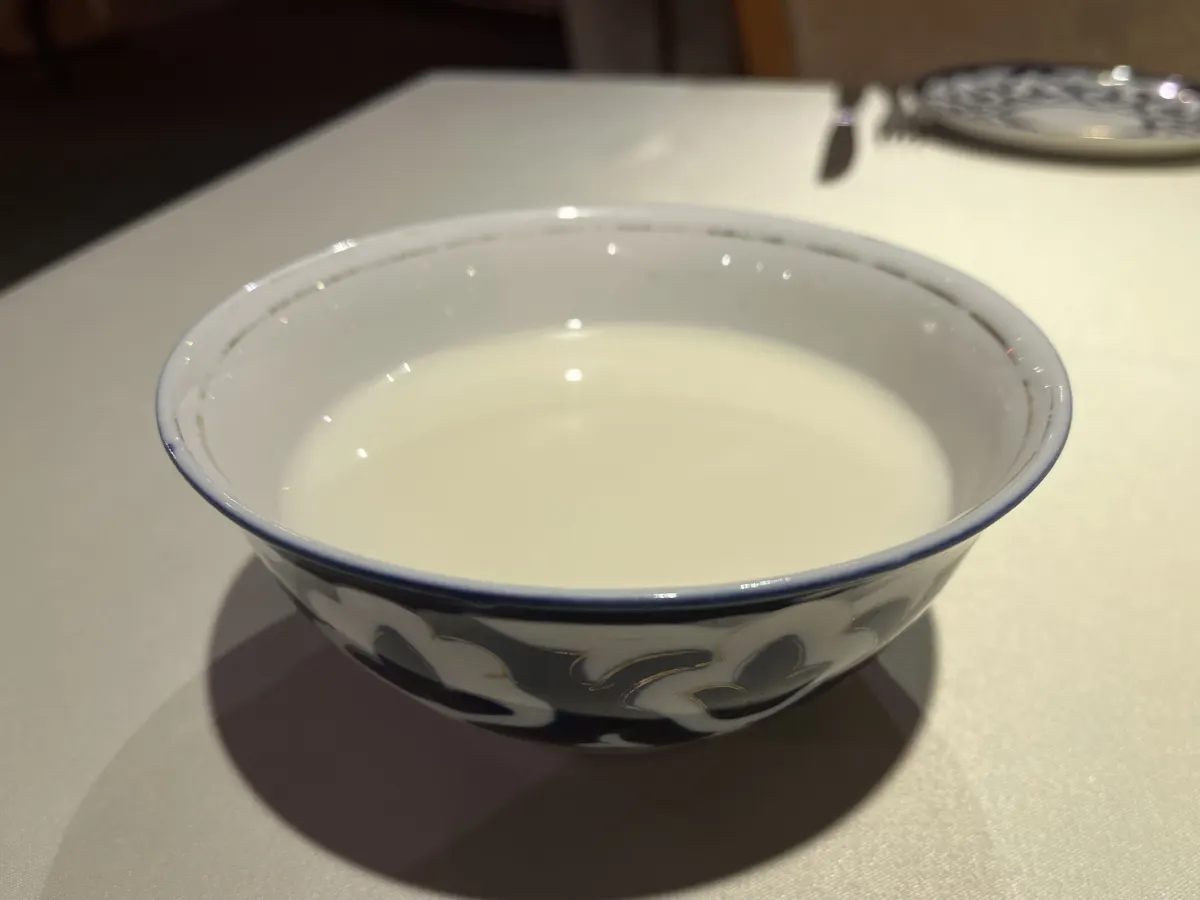
- Kymyz, fermented mare's milk, is sour, smoky and slightly alcoholic. It's made from about May to August. Start with a small bowl, as it can upset your stomach.
- Maksym, jarma and chalap are sour drinks of grain or yoghurt, sold from barrels on the street in summer, by Shoro and other makers.
- Beer, vodka and local cognac are sold widely in the north, and less in the south. Drinking in public places is banned, and shops can't sell to the young: the UK government says people aged 18 or under.
Where to eat
- A chaikhana is a teahouse, and an ashkana or stolovaya a canteen where you point.
- Markets such as Osh Bazaar in Bishkek sell nuts, dried fruit, bread, kurut and honey. Watch your bag.
- Bishkek has good coffee, and Korean, Georgian, Turkish and Indian restaurants.
- In yurts and guesthouses, ask for dinner when you book. Nearby shops and cafés may not exist.
Vegetarians
It's hard outside Bishkek and Karakol, where there are cafés used to visitors. Tell guesthouses when you book: bez myasa means "without meat" in Russian. Expect eggs, bread, salad, potatoes, soup and pumpkin manti, and fat in things that look plain. Most meat is halal. Vegans should bring some food of their own.
Eating safely
- Don't drink the tap water, or water from streams below pastures, unless you boil, filter or treat it.
- Milk, cream, kymyz and fresh cheese on the pastures are unpasteurised, and can carry brucellosis and tick-borne encephalitis. Boiled milk is safer; see Health.
Comments
No comments yet.