
Trekking and horse riding in Kyrgyzstan: Ala Archa, Karakol, Song-Kul, guides and border-zone permits
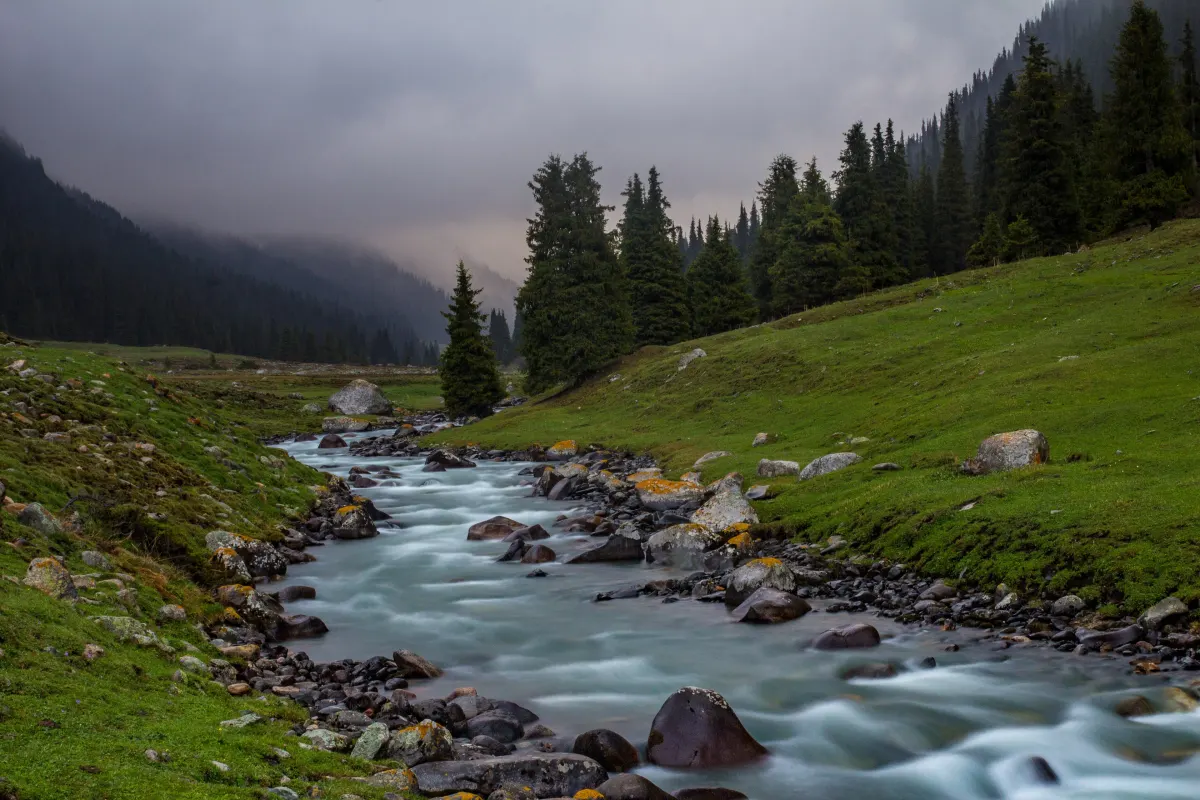
Nine-tenths of Kyrgyzstan is mountains. You can walk or ride for days without a fence, staying in yurts or a tent. Paths are mostly unmarked, maps are patchy, and rescue is slow, so choose routes to suit your experience, and take a guide if you're not sure.
Walks and treks
- Ala Archa, 40 km from Bishkek, has easy valley walks, a half-day hike to the Ak-Sai waterfall and a hard, steep day up to the Ratsek hut, at about 3,300 m.
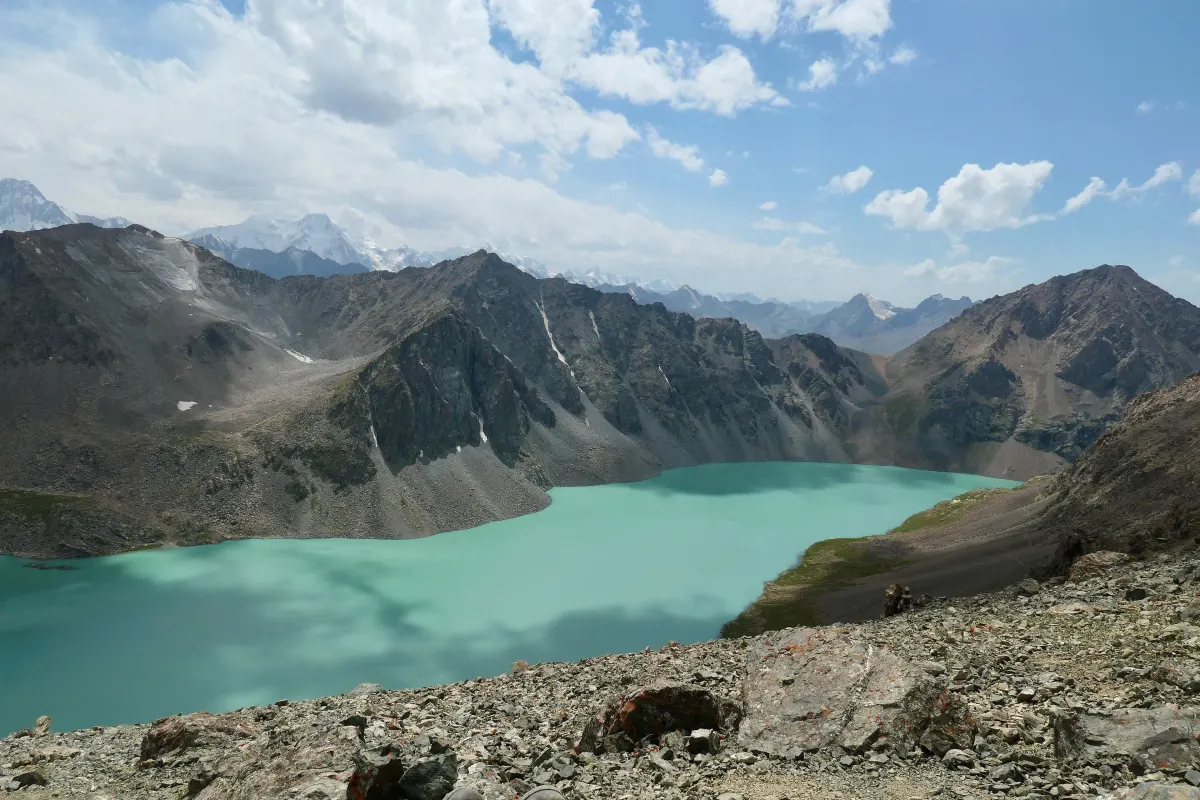
- Ala-Kul, from Karakol, is the most popular trek: three days or so up the Karakol valley, over a pass of about 3,900 m and down to the hot springs at Altyn-Arashan. The far side of the pass is steep and loose. Go from July to mid-September; snow lies on the pass before that. There are tent and yurt camps on the way, which fill up in August.
- Altyn-Arashan alone is a good overnight walk from Ak-Suu, near Karakol, on a rough jeep track.
- Jyrgalan, east of Karakol, is a former coal village with quieter treks and good guesthouses.
- Jeti-Oguz has easier walks and rides in meadows.
- Arslanbob, in the south, has walnut forest and waterfalls, and Sary-Chelek has lakes and forest.
Horse treks
- The classic is a two- or three-day ride to Song-Kul from Kyzart, Kochkor or Jumgal, over a pass to the lake, staying in yurts. Beginners can do it, as the horses are steady and you mostly walk.
- Arrange it through a CBT office (see Yurt stays) or a company with good recent reviews, with a guide. Agree on the price, meals and what happens in bad weather.
- Look at the horse first. The French government advises checking under the saddle and the girth for sores, and refusing a hurt or very thin animal. Agree its condition with the owner too, as there are scams about damage.
- Bring a helmet if you can, as many places have none. Wear long trousers and shoes with a small heel. Keep your feet so they'll slip out of the stirrups, and don't tie yourself to the reins or the saddle.
- Rivers are high on summer afternoons, when the snow melts. Cross in the morning, with your guide.
- Check that your insurance covers riding.
Park fees
The nature parks charge visitors from abroad roughly 150 to 700 som, in cash, at the gate. Ala Archa was raised to a reported 250 som in 2026. Fees change.
Border-zone permits
Areas near the borders are closed without a border-zone permit, which soldiers check. It isn't a visa, and you don't need one for Ala Archa, Ala-Kul, Altyn-Arashan, Song-Kul or Arslanbob. You do for:
- Issyk-Kul region: Enilchek, Khan Tengri, Sary-Jaz and Karkyra.
- Naryn region: Kel-Suu, the Ak-Sai valley, Chatyr-Kul and the way to Torugart. Tash Rabat isn't on these lists, but the ride from it to Chatyr-Kul goes into the zone.
- Osh region: the Trans-Alay range and Lenin Peak base camp.
- Parts of the Chong-Kemin valley and of Batken. Ask about treks around Jyrgalan that go towards the border.
- You get it through a CBT office or an agency, which sends a copy of your passport. It takes about 6 to 10 working days, so ask three or four weeks ahead in summer. Agencies quoted around US$35 to 40 for all zones in 2026.
- It's valid for about a month. Carry the original paper and your passport; a photo on your phone isn't accepted.
- Climbing Peak Pobeda is reported to need a separate permit since August 2026. Go to the high peaks only with a specialist agency.
Guides, gear and safety
- You can hire tents, sleeping bags, boots and stoves in Bishkek and Karakol. Gas canisters are sold there too, but not in villages.
- Never walk alone. Leave your route with your guesthouse, and for high routes tell the Ministry of Emergency Situations (112). Mountain rescue, by volunteers, is on +996 312 651 404.
- Carry an offline map and, on remote treks, a satellite messenger, as there's no signal in most valleys.
- Storms and lightning come in the afternoon. Start early, and camp above the river, away from slopes where rocks fall.
- Get used to the height first: see Health. For dogs and other dangers, see Safety.

Comments
No comments yet.