
A week in Ladakh: Leh, the monasteries, Nubra Valley and Pangong Lake
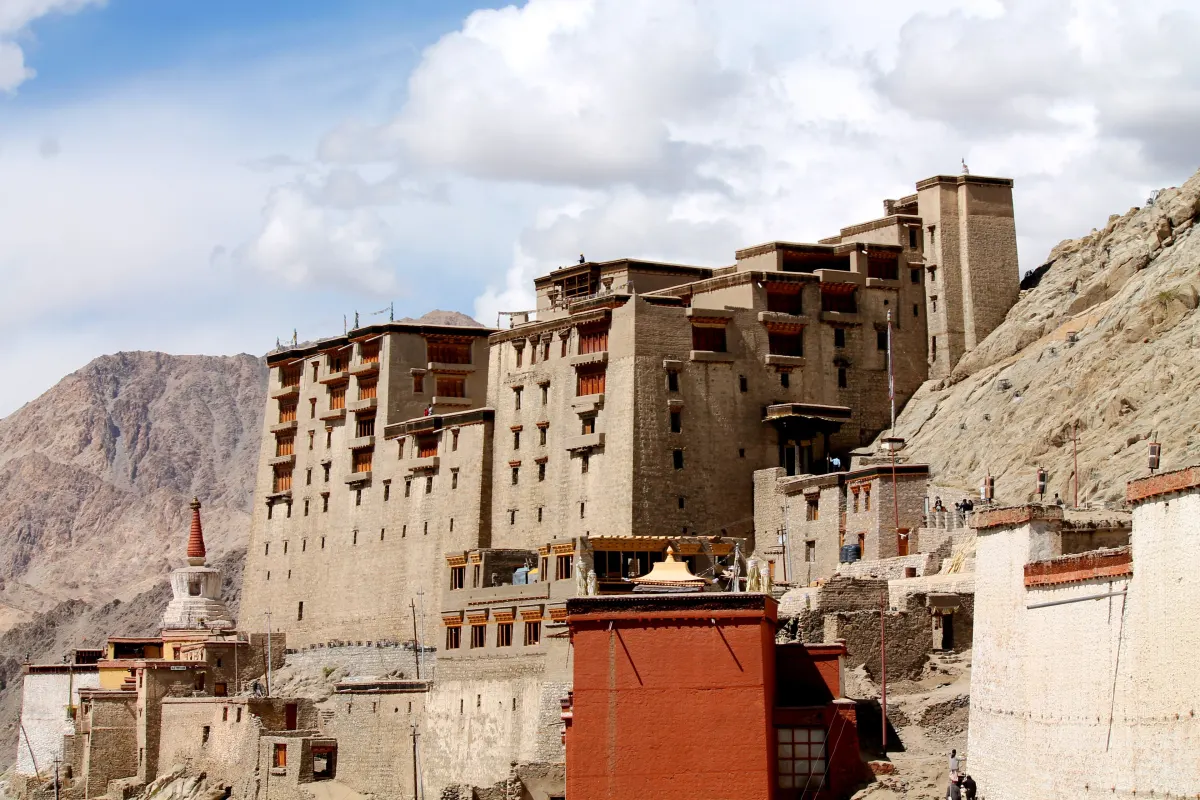
Ladakh, high on the Tibetan plateau between the Himalaya and the Karakoram, is a world apart from the rest of India: a dry, empty desert of brown mountains and blue skies, with whitewashed Buddhist monasteries on the crags and lakes of startling blue. It's one of the most beautiful places in Asia, but it's very high, and the season is short.
Map of the route
The Indus valley monasteries, about 40 km
Over the Khardung La to Nubra, about 120 km
Nubra to Pangong along the Shyok, and back over the Chang La, about 310 km
Click a dot for the place. Day numbers mark where you stay. Route from OpenStreetMap (© OpenStreetMap contributors, ODbL).
Before you go
- When: about June to September. The roads into Ladakh and over the high passes open some time in May or June and close with the snow in autumn. Flights to Leh run all year, but winter is bitterly cold (and the time for snow leopards in Hemis National Park).
- Getting there: fly to Leh from Delhi (about 1½ hours, with spectacular views). The road from Manali takes two days over passes above 5,000 metres. The road from Srinagar passes through Jammu and Kashmir, where several governments advise against travel: check your own government's advice first.
- Altitude: Leh is at about 3,500 metres, and the passes are well over 5,000. Flying in, you must rest for the first two days: see Staying healthy.
- Permits: foreigners need a Protected Area Permit for the Nubra Valley, Pangong, Tso Moriri and other places outside Leh. Any registered travel agent in Leh can arrange it in a day, usually for two or more people together; bring copies of your passport and visa, and carry several photocopies of the permit for checkpoints. See Arriving in India.
- Getting around: hire a car and driver (shared or private) from the taxi union in Leh, or through your guesthouse. Experienced riders rent motorbikes. ATMs are only in Leh, so take enough cash. Prepaid SIMs from elsewhere in India and travel eSIMs often don't work in Ladakh, and outside Leh there may be no signal at all: see Phones.
Days 1 and 2: Leh
Rest on the first day: sleep, drink plenty of water and avoid alcohol. On the second, take a gentle walk round Leh's old town, below the nine-storey Leh Palace, and up to the Shanti Stupa for sunset (slowly: it's a steep climb at this height). Arrange your permits and car.
Day 3: The Indus valley monasteries
Drive up the Indus to Thiksey and Hemis, two of Ladakh's great monasteries. Go to Thiksey early for the morning prayers, with horns and chanting. Stop at Shey Palace on the way back. On another day, visit Alchi and Likir to the west, with some of the oldest Buddhist paintings in the Himalaya.
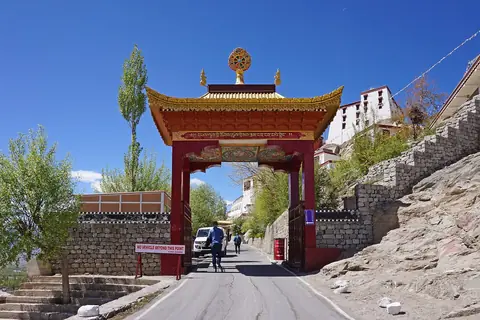
Thiksey and Hemis monasteries, Ladakh
Ladakh's Buddhist monasteries, or gompas, are built on hilltops and cliffs above the Indus valley.
Days 4 and 5: The Nubra Valley
Drive over the Khardung La, one of the highest roads in the world, at more than 5,300 metres (don't linger at the top), down into the Nubra Valley. See the giant Buddha at Diskit monastery, and the sand dunes and two-humped Bactrian camels at Hunder. Stay in a guesthouse or camp in the valley.
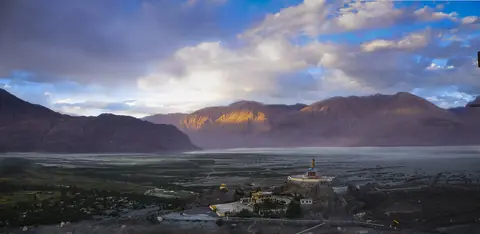
Nubra Valley
A wide valley north of Leh, reached over the Khardung La, one of the highest motorable passes in the world.
Days 6 and 7: Pangong Lake, and back to Leh
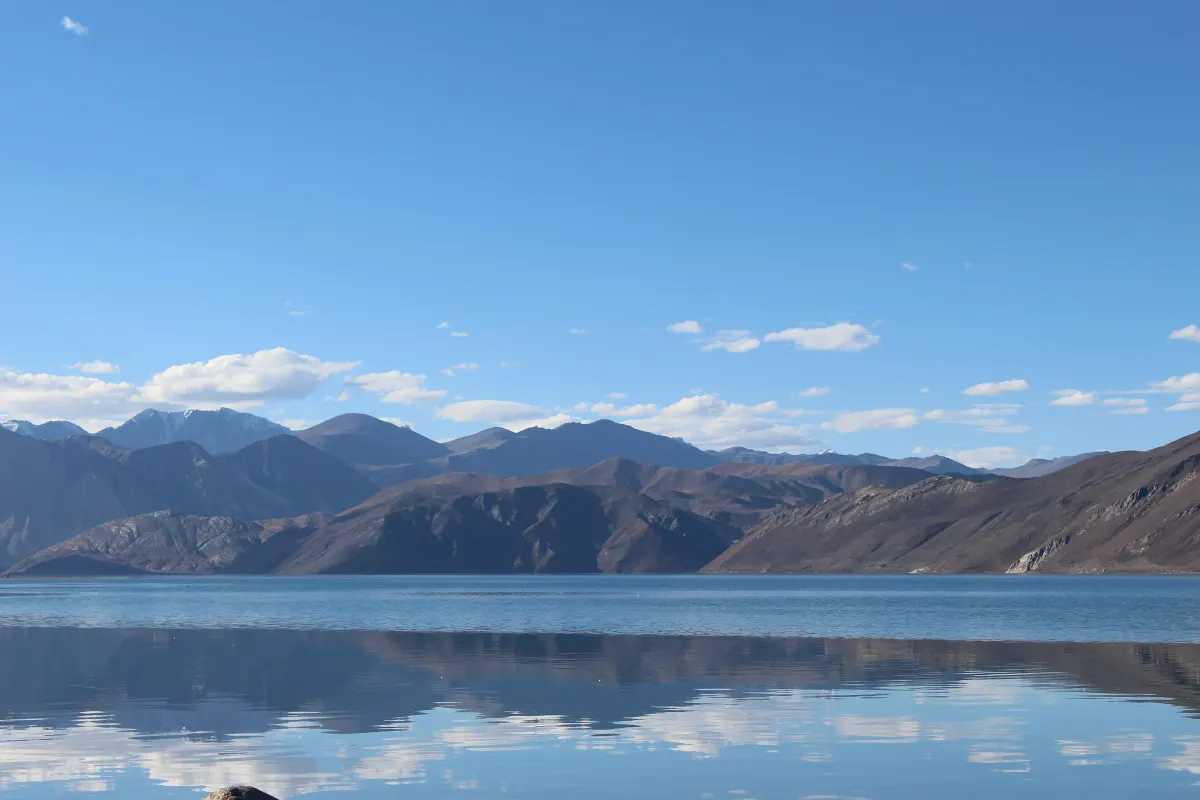
Take the road along the Shyok river from Nubra to Pangong Lake, at about 4,250 metres, whose colour changes from turquoise to deep blue through the day. Most of the lake is in Tibet. Spend the night in a camp or homestay at Spangmik or Merak (it's very cold at night), and drive back to Leh over the Chang La. If the Shyok road is closed, go back via Leh.

Leh and Pangong Lake, Ladakh
Ladakh is a high-altitude desert in the Himalayas with Tibetan Buddhist culture.
With more time
- Tso Moriri, a quieter, higher lake to the southeast, with nomads' camps.
- The Hemis Festival, in June or July, with masked dances: see Festivals.
- Trekking, such as the Markha Valley, with a local guide.
- Spiti Valley, in Himachal Pradesh, has a similar landscape, and can be combined with the road from Manali.
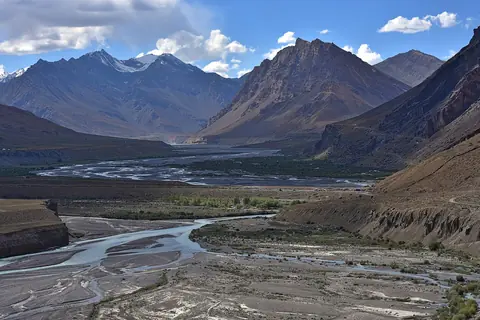
Spiti Valley
A high, dry mountain desert in the far north of Himachal Pradesh, near the border with Tibet, where whitewashed villages and ancient Buddhist monaste…
Ladakh is fragile: carry your rubbish out, use refillable bottles (guesthouses and some shops refill them), and save water. See also Weather and when to go.

Comments
No comments yet.