
Goa and Hampi in 9 days: beaches, Old Goa and the ruins of Vijayanagara
Goa, India's smallest state, is famous for its beaches, but it also has Portuguese churches, old Latin-quarter streets and its own food. A night's journey inland, Hampi is one of the most extraordinary places in India: the ruins of the capital of the Vijayanagara Empire, scattered among giant boulders and banana plantations. Together they make a relaxed trip, or a good second half to a fortnight in the south.
Map of the route
Goa: Panaji, Old Goa, the north and the south, about 100 km
To Hampi by train from Madgaon, about 370 km
With more time: Badami, about 140 km
Click a dot for the place. Day numbers mark where you stay. The train follows much the same way as the road shown. Route from OpenStreetMap (© OpenStreetMap contributors, ODbL).
Before you go
- When: November to February. Many beach shacks and guesthouses close in the monsoon (June to September), and Hampi is very hot from April.
- Getting there: Goa has two airports, Dabolim (GOI) in the south and Mopa (GOX) in the north, an hour or more apart; check which yours is. Trains on the Konkan Railway stop at Madgaon and Thivim.
- Getting around: in Goa, app cabs are limited, so use local taxis (agree the price) or the state's GoaMiles app. Many visitors rent scooters: you need a licence that covers motorbikes, and a helmet. See Getting around.
Days 1 and 2: Panaji and Old Goa
Stay in Panaji (Panjim), Goa's small capital, and walk the colourful Portuguese streets of Fontainhas. Take a bus or taxi to Old Goa, once a city as big as Lisbon, to see the Basilica of Bom Jesus, with the tomb of St Francis Xavier, and Se Cathedral. Eat Goan fish curry, vindaloo and xacuti, and try feni, the local spirit.

Goa beaches and Old Goa
Goa, a Portuguese colony until 1961, combines palm-fringed beaches with whitewashed churches.
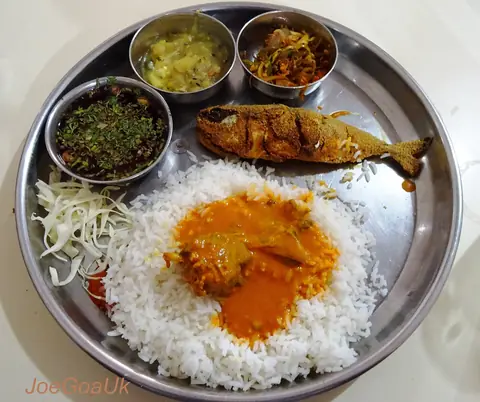
Goan food: fish curry, vindaloo and feni
Goa's food mixes Konkan coastal cooking with Portuguese influences from over 450 years of colonial rule.
Days 3 and 4: North Goa
The north has the lively beaches: Anjuna (and its Wednesday flea market), Vagator and Ashwem, with forts on the headlands. Visit a spice farm, or in and after the monsoon, the Dudhsagar Falls on the border with Karnataka.
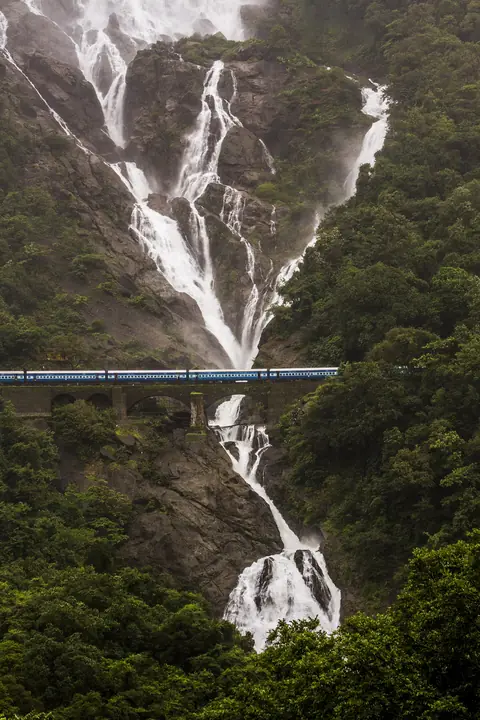
Dudhsagar Falls
A tall, four-tiered waterfall on the Mandovi river, high in the Western Ghats on the border of Goa and Karnataka.
Days 5 and 6: South Goa
The south is quieter, with long beaches such as Palolem, Agonda and Patnem, and old Portuguese mansions inland around Chandor. Swim only where there are lifeguards: the currents can be strong.
Day 7: To Hampi (about 7 hours)
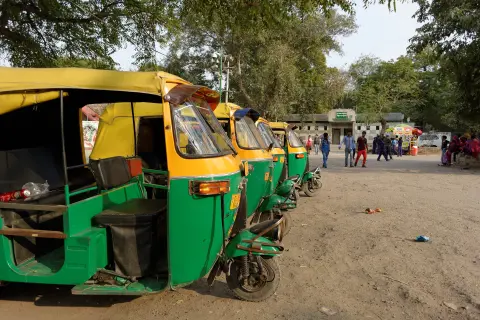
Take the train from Madgaon or Vasco da Gama to Hosapete (Hospet), or an overnight sleeper bus, and then an auto-rickshaw to Hampi, 13 km away.
Days 8 and 9: Hampi
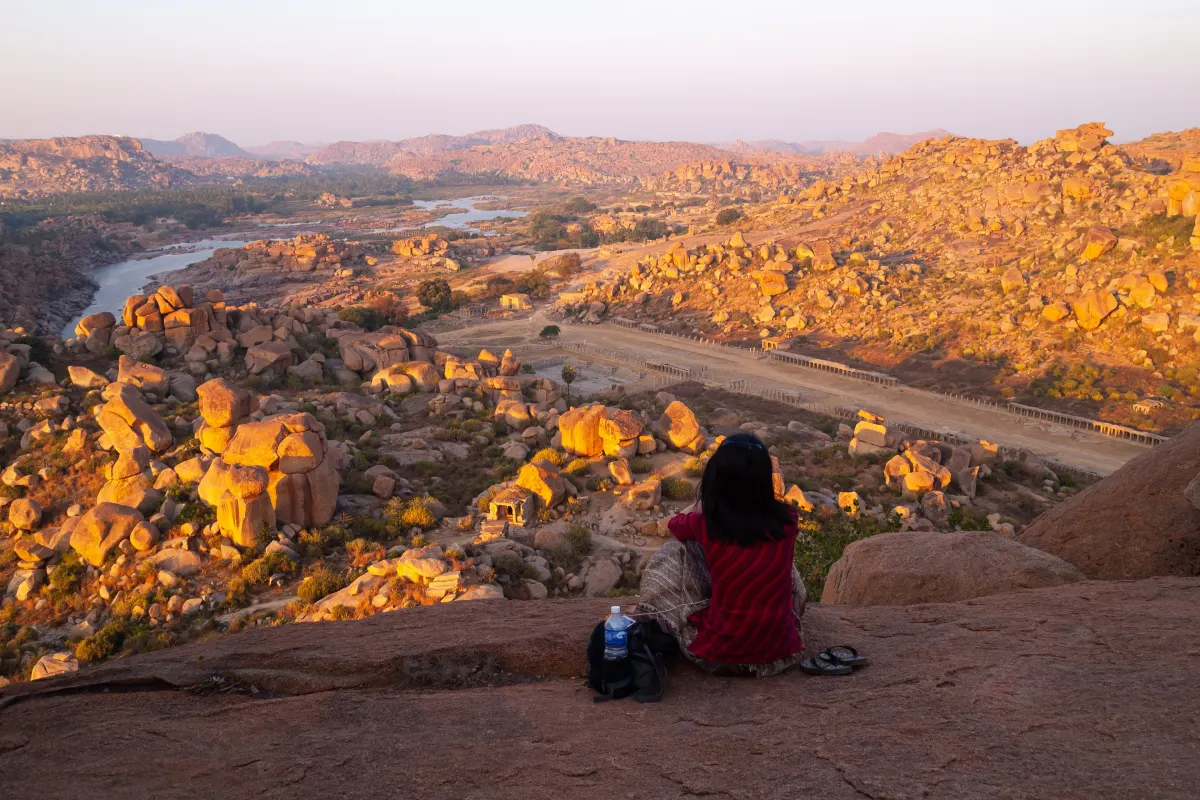
Hampi was the capital of the Vijayanagara Empire, one of the richest cities in the world in the 1500s, until it was sacked in 1565. Its ruins are spread over a huge area. Hire a bicycle, an electric rickshaw or a guide. See the Virupaksha Temple, still in use, the stone chariot and musical pillars of the Vittala Temple, the Royal Enclosure and the Lotus Mahal, and the elephant stables. Climb Matanga Hill or Hemakuta Hill for sunrise or sunset over the boulders. Across the river, Hanuman's birthplace, the Anjanadri temple, has 575 steps and a famous view.

Hampi
The ruins of Vijayanagara, once one of the world's richest cities, scattered among giant boulders, banana plantations and the Tungabhadra River, a UN…
With more time
Head on to the cave temples of Badami, Aihole and Pattadakal, a few hours north, or south to the Mysore Palace and the Belur and Halebidu temples. Fly home from Bengaluru, or from Goa.
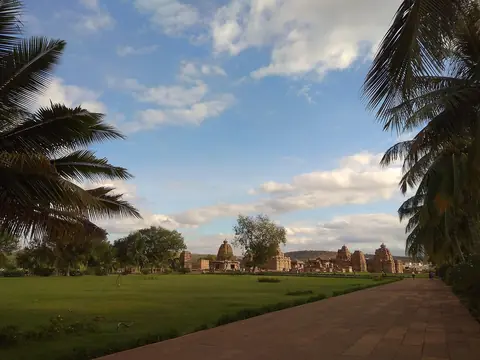
Badami, Aihole and Pattadakal
Three sites in northern Karnataka where the Chalukya kings built some of India's earliest Hindu temples between the 6th and 8th centuries.

Mysore Palace
The opulent palace of the Wadiyar maharajas, built in 1912 in Indo-Saracenic style, with stained glass, mosaics and carved doors.
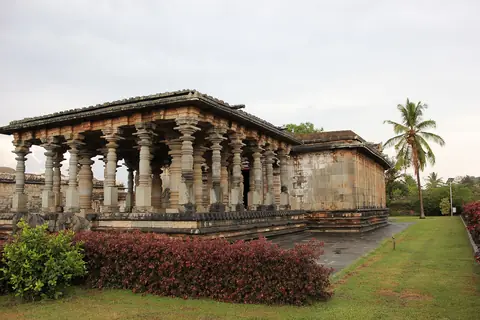
Belur and Halebidu temples
Two temples built by the Hoysala kings in the 12th century, famous for the finest stone carving in India, and listed by UNESCO.


Comments
No comments yet.