
7 days in the Golden Triangle: Delhi, Agra and Jaipur
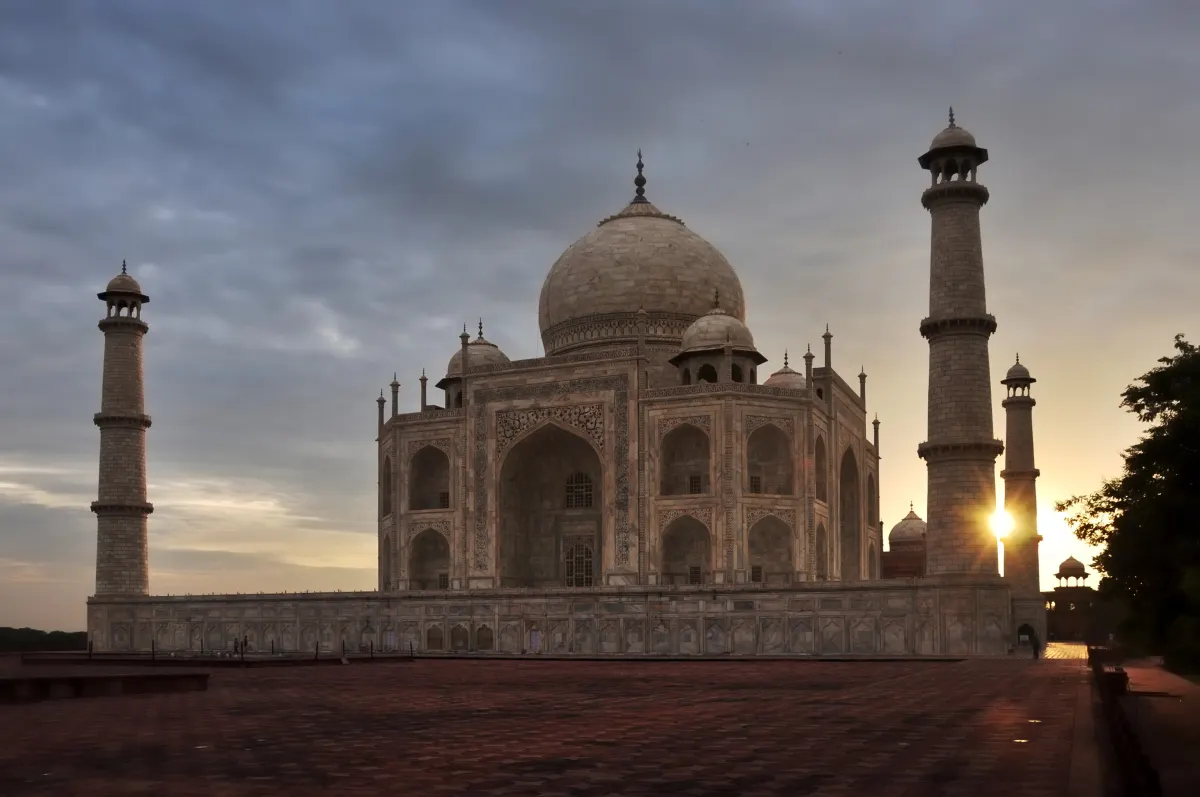
The Golden Triangle (Delhi, Agra and Jaipur) is the classic first trip to India, and a week is just right for it. You'll see the Mughal monuments of Delhi and Agra, including the Taj Mahal, and the forts and bazaars of Rajasthan, with no journey longer than about five hours.
Map of the route
Delhi to Agra by train, about 210 km
Agra to Jaipur by car, via Fatehpur Sikri, about 240 km
Jaipur back to Delhi by train, about 290 km
Click a dot for the place. Day numbers mark where you stay. The trains follow much the same way as the roads shown. Route from OpenStreetMap (© OpenStreetMap contributors, ODbL).
Before you go
- The Taj Mahal is closed on Fridays. Plan your Agra days around it. It opens at sunrise; at the time of writing foreigners pay ₹1,100, plus ₹200 to go inside the mausoleum, and you can book online.
- When: October to March is best. December and January can bring fog, which delays trains and flights, and smog in Delhi and Agra. April to June is very hot. See Weather and when to go.
- Getting around: trains from Delhi to Agra, and from Jaipur back to Delhi, and a car with a driver from Agra to Jaipur, via Fatehpur Sikri. Many visitors hire a car and driver for the whole week: see Getting around and Trains.
- Scams: Delhi, Agra and Jaipur are where you'll meet most touts. Read Scams and safety first.
Day 1: Old Delhi
Start at the Red Fort, then walk into Old Delhi: the Jama Masjid, India's biggest mosque, and the lanes of Chandni Chowk, best seen by cycle rickshaw. Eat your way through Old Delhi's street food: parathas, kebabs and jalebis. In the late afternoon, visit Gurudwara Bangla Sahib, where anyone can eat at the free kitchen.
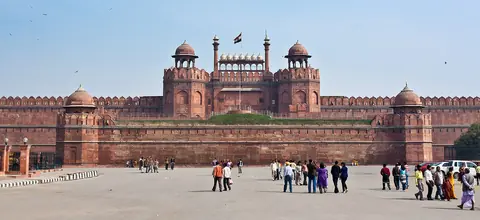
Red Fort and Old Delhi
The Mughal emperors' palace fortress, with red sandstone walls, built by Shah Jahan in the 1640s, a UNESCO World Heritage Site.
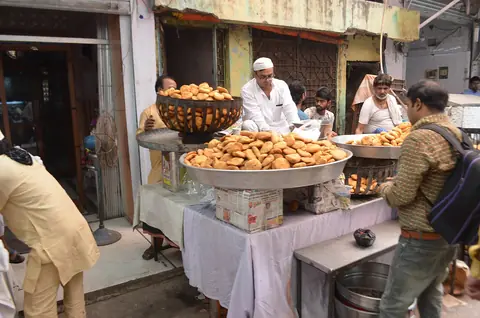
Old Delhi street food
The lanes of Old Delhi, around Chandni Chowk and the Jama Masjid, are one of the great street food areas of the world.
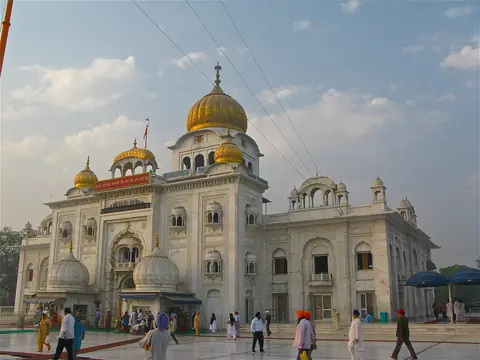
Gurudwara Bangla Sahib, Delhi
Delhi's best-known Sikh temple, with a golden dome and a large holy pool, built where the eighth Sikh guru, Guru Har Krishan, stayed in 1664 and help…
Day 2: New Delhi
Visit Humayun's Tomb, the garden tomb that inspired the Taj Mahal, then the Sufi shrine at Nizamuddin nearby. Walk in Lodhi Garden, see the government buildings and India Gate, and spend an hour or two in the National Museum. End at the Qutb Minar, the 73-metre tower of the first Delhi sultans. In the evening, try butter chicken, invented in Delhi.

Humayun's Tomb, Delhi
The tomb of the Mughal emperor Humayun, built in the 1560s, the first garden tomb in India and an inspiration for the Taj Mahal, a UNESCO World Herit…
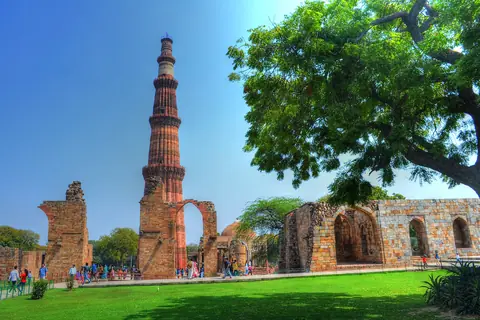
Qutb Minar, Delhi
A soaring red sandstone tower, 73 m tall, begun around 1199 by Qutb-ud-din Aibak, founder of the Delhi Sultanate, and finished by his successors.
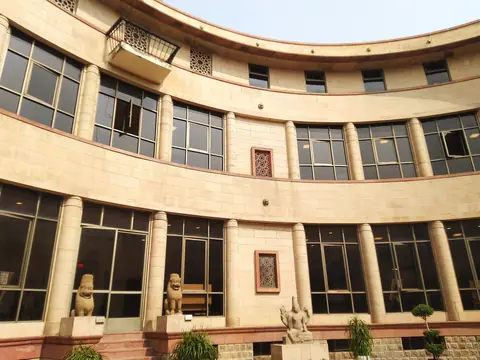
National Museum, New Delhi
India's largest museum, with treasures from over 5,000 years of history, from the Harappan civilisation of the Indus Valley, including the famous bro…
Day 3: To Agra (about 2 hours by train)
Take an early train from Delhi to Agra: the Gatimaan Express from Hazrat Nizamuddin takes about 1¾ hours, and the Shatabdi from New Delhi a little longer. Visit Agra Fort, where Shah Jahan, who built the Taj, was imprisoned by his son, and the delicate tomb of Itimad-ud-Daulah (the "Baby Taj"). At sunset, see the Taj Mahal from across the river at Mehtab Bagh.

Agra Fort
A massive red sandstone fortress, the main residence of the Mughal emperors until 1638, a UNESCO World Heritage Site.
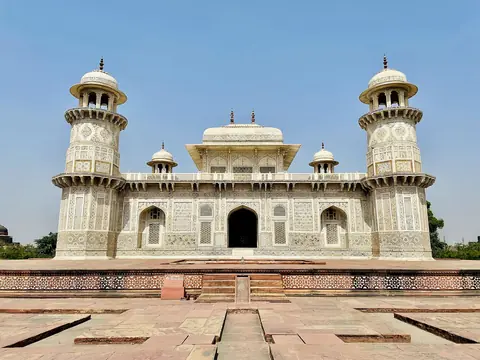
Itimad-ud-Daulah's Tomb (the Baby Taj), Agra
A small, jewel-like tomb on the banks of the Yamuna, built between 1622 and 1628 by the empress Nur Jahan for her father, a minister of the Mughal co…
Day 4: The Taj Mahal, then Fatehpur Sikri and Jaipur (about 5 hours by car)
Be at the Taj Mahal gates before sunrise, when it's coolest, quietest and the marble changes colour. Leave big bags, food and tripods at your hotel: only small bags, phones and cameras are allowed. Then drive west to Fatehpur Sikri, Akbar's abandoned red sandstone city, and on to Jaipur. Bird lovers can stop at Keoladeo National Park in Bharatpur, on the way.

Taj Mahal, Agra
The white marble mausoleum built by the Mughal emperor Shah Jahan for his wife Mumtaz Mahal, completed around 1653, one of the most beautiful buildin…
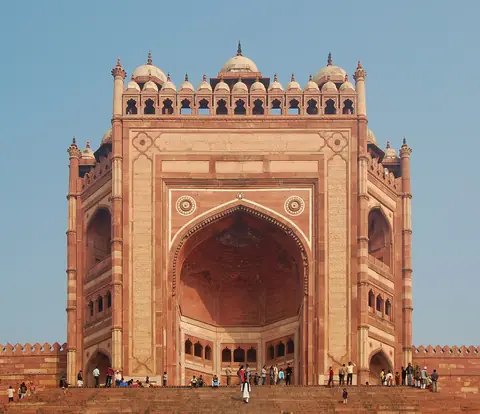
Fatehpur Sikri
A royal city built in red sandstone by the Mughal emperor Akbar in the 1570s, and abandoned only about 15 years later.
Day 5: Amber and the hills
Go early to Amber Fort, the hilltop palace of the Rajput kings, 11 km from the city, before the crowds and the heat. Walk up, or take a jeep: we suggest not riding the elephants. Visit the Jaigarh and Nahargarh forts above it, and watch the sunset over the city from Nahargarh.
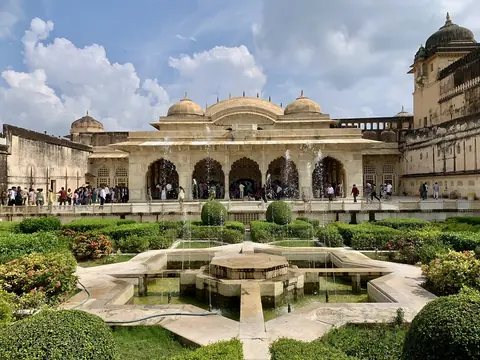
Amber Fort, Jaipur
A hilltop palace fortress overlooking Lake Maota, built of pale yellow and pink sandstone from 1592, with courtyards, gardens and the dazzling Sheesh…
Day 6: The Pink City
Spend the day in the old walled city: the City Palace and Hawa Mahal, the giant astronomical instruments of Jantar Mantar, and the bazaars for textiles, block prints and jewellery (and gem scams: see Scams). In the evening, visit the Albert Hall Museum, lit up at night, and eat a Rajasthani thali.
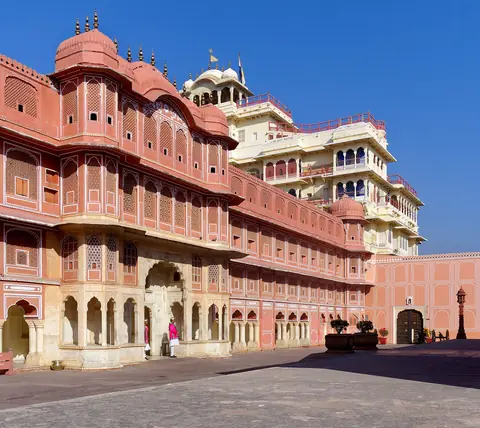
Hawa Mahal and City Palace, Jaipur
The Hawa Mahal, 'Palace of Winds', is a five-storey pink sandstone façade honeycombed with 953 small windows, built in 1799 so royal women could watc…
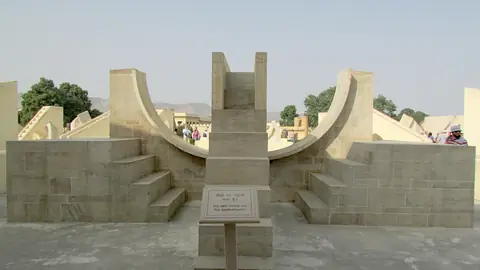
Jantar Mantar, Jaipur
An astronomical observatory built in the early 18th century by Maharaja Sawai Jai Singh II, the founder of Jaipur, and listed by UNESCO.

Rajasthani thali and dal baati churma
Rajasthan's cooking was shaped by the desert, using dried beans, gram flour, ghee, millet and yoghurt rather than fresh vegetables.
Day 7: Back to Delhi (about 4½ hours)
Take a morning train back to Delhi, or fly out from Jaipur's own international airport. With more time, add Ranthambore for tigers (about 3 hours from Jaipur), or carry on round Rajasthan with two weeks in Rajasthan, or take the train to Varanasi.

Ranthambore National Park
One of the best places in the world to see wild tigers, a former royal hunting ground with dry forest, lakes and the ruins of a 10th-century fort.


Comments
No comments yet.