
Varanasi and the Ganges: 4 days, with Sarnath and Bodh Gaya
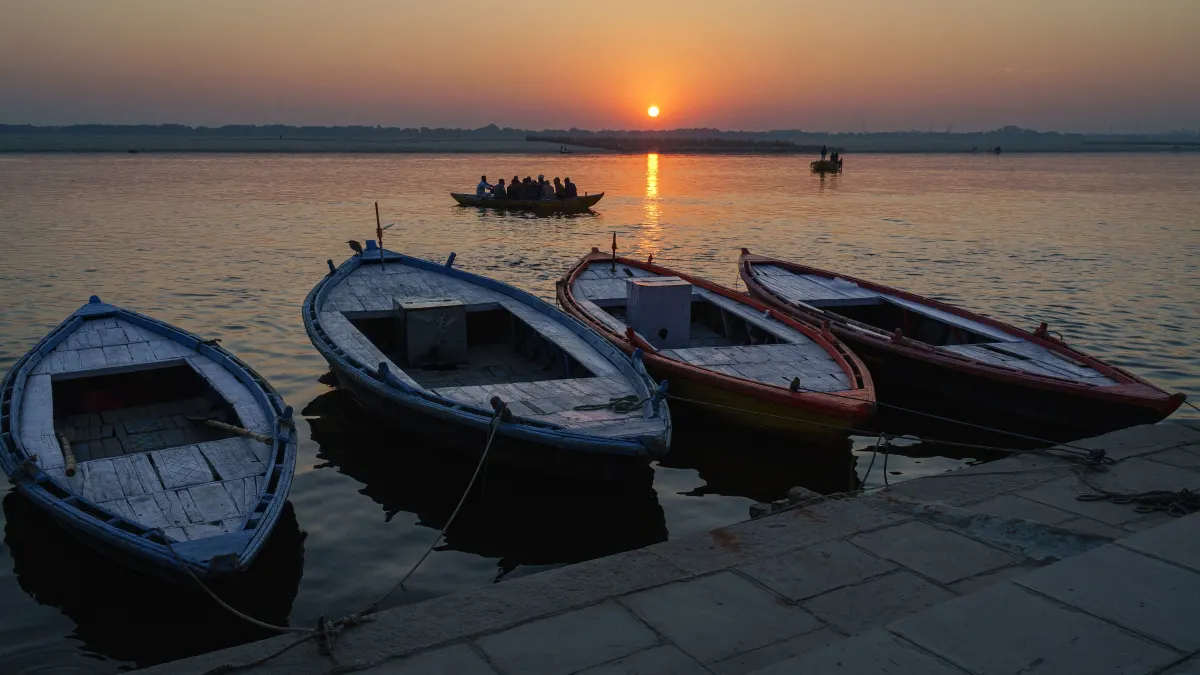
Varanasi, on the Ganges, is one of the oldest living cities in the world and Hinduism's holiest. Pilgrims come to bathe in the river and the dying to be cremated beside it, and life and death happen in the open along its ghats. It's intense, crowded and unforgettable. Nearby are some of the most important places in Buddhism, where the Buddha found enlightenment and first taught.
Map of the route
Varanasi and Sarnath, about 10 km
On to Bodh Gaya, Rajgir, Nalanda and Patna, about 420 km
Click a dot for the place. Day numbers mark where you stay. The trains follow much the same way as the roads shown. Route from OpenStreetMap (© OpenStreetMap contributors, ODbL).
Before you go
- Getting there: fly to Varanasi, or take the train from Delhi: the Vande Bharat Express takes about 8 hours by day, and there are overnight sleeper trains. See Trains.
- When: October to March. Winter mornings are often foggy, which is beautiful on the river but delays trains. In the monsoon (July to September) the river rises over the lower ghats and boats may stop.
- Where to stay: in a guesthouse near the ghats, for the dawn boat ride. Cars can't get into the old city's lanes, so you'll walk the last bit.
- Respect: never photograph cremations, dress modestly, and ignore men who ask for money for "wood for the poor" at the burning ghats. See Scams.
Day 1: The ghats
Walk along the ghats, the stone steps down to the river, which run for some 6 km: from Assi Ghat in the south, past the palaces and temples, to Dashashwamedh Ghat in the middle and Manikarnika, the main burning ghat, where the fires never go out. In the evening, watch the Ganga aarti at Dashashwamedh, with lamps, bells and chanting, from the steps or a boat.

Varanasi Ghats
One of the oldest living cities in the world and Hinduism's holiest city, on the Ganges, where pilgrims bathe on stone steps (ghats) and cremations t…
Day 2: The river at dawn and the old city
Take a rowing boat at dawn, when the light is soft and pilgrims bathe and pray. Agree the price and time first. Then get lost in the old city's lanes, full of shrines, sweet shops, cows and silk weavers. The Kashi Vishwanath temple is the holiest in the city, with long queues and strict security: phones and bags aren't allowed inside. Try Varanasi's street food: kachori and jalebi for breakfast, lassi in a clay cup, and paan after dinner.
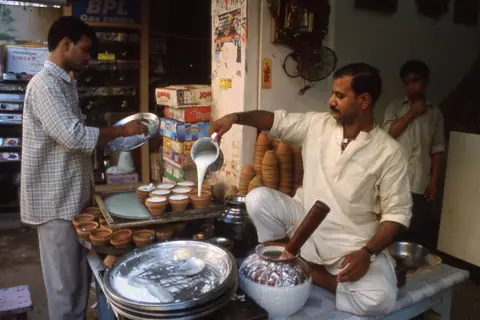
Varanasi street food: kachori, lassi and paan
The lanes of old Varanasi are full of small shops selling the city's favourite foods.
Day 3: Sarnath
Sarnath, 10 km north of Varanasi, is where the Buddha gave his first sermon, in the deer park. See the great Dhamek Stupa, the ruins of the monasteries, and the museum's Lion Capital of Ashoka, India's national emblem. Back in Varanasi, visit Ramnagar Fort across the river, or Banaras Hindu University's museum.
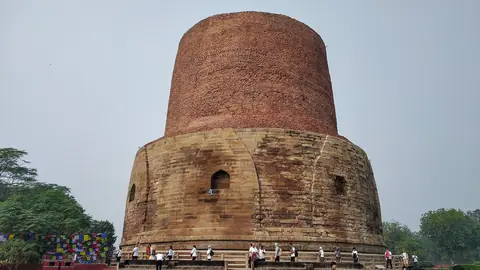
Sarnath
The deer park where the Buddha gave his first sermon after his enlightenment, about 2,500 years ago, and one of the four holiest places of Buddhism.
Day 4 and beyond: Bodh Gaya and Nalanda
Take the train or drive (about 6 hours) to Bodh Gaya, where the Buddha found enlightenment under the Bodhi tree. The Mahabodhi Temple is surrounded by monasteries built by Buddhist countries from Japan to Bhutan. Spend a day or two, then visit the ruins of the ancient university at Nalanda and Rajgir, and travel on from Patna. Bihar is a dry state: see Etiquette.
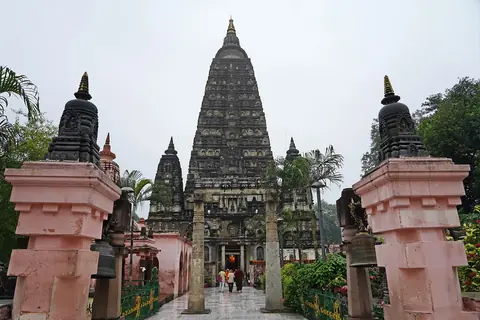
Mahabodhi Temple, Bodh Gaya
The holiest place in Buddhism, where the Buddha attained enlightenment under the Bodhi tree about 2,500 years ago.
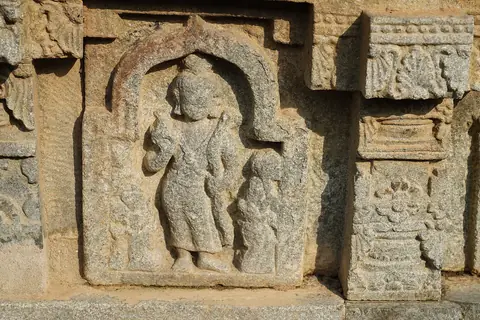
Nalanda university ruins
The ruins of one of the world's oldest universities, a great Buddhist centre of learning from the 5th to the 12th century, where thousands of student…
Other ways to see the Ganges
- Upstream in the foothills of the Himalaya, Rishikesh is a centre for yoga, and the evening Ganga aarti at Haridwar is another unforgettable sight. Both are a few hours by train from Delhi.
- Lucknow, between Delhi and Varanasi, is the city of Awadhi kebabs and Shia monuments.
- Downstream, the river reaches the sea in the mangrove forests of the Sundarbans, south of Kolkata.

Rishikesh
A holy town on the Ganges at the foot of the Himalayas, the 'yoga capital of the world', with ashrams, yoga courses and the evening Ganga Aarti at Tr…
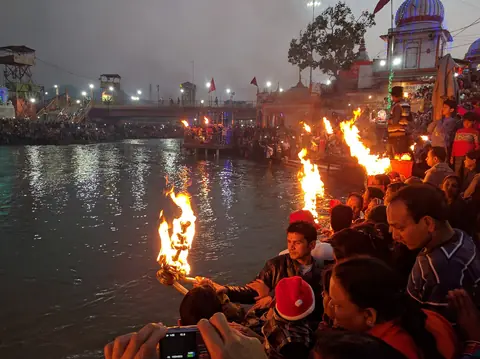
Ganga aarti at Haridwar
Haridwar, where the Ganges leaves the Himalaya and enters the plains, is one of the seven holiest cities of Hinduism.



Comments
No comments yet.