
Two weeks in Rajasthan: Jaipur, Pushkar, Jodhpur, Jaisalmer and Udaipur
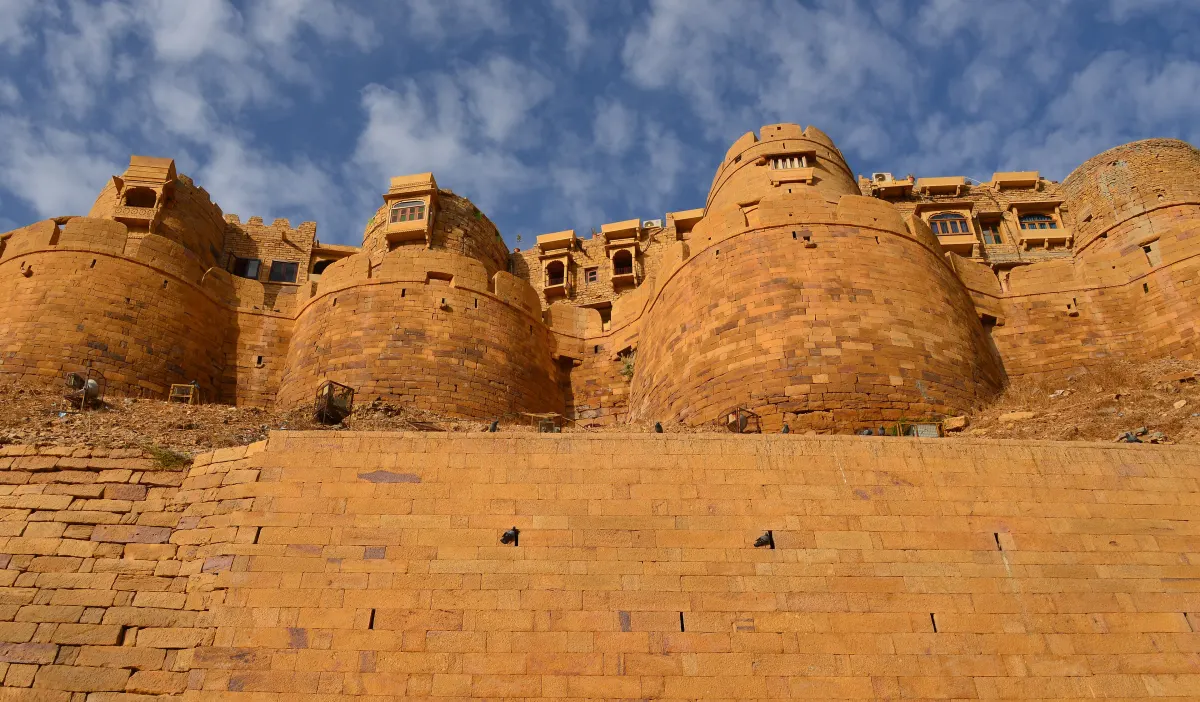
Rajasthan, the land of kings, is India at its most romantic: hilltop forts, painted palaces, desert towns and lake cities, with camels, turbans and colour everywhere. Two weeks lets you see the best of it at an easy pace, starting from Delhi and finishing in Udaipur.
Map of the route
Delhi to Jaipur, about 270 km
Jaipur to Jaisalmer, via Pushkar and Jodhpur, about 640 km
Jaisalmer to Udaipur, via Jodhpur, Ranakpur and Kumbhalgarh, about 590 km
Click a dot for the place. Day numbers mark where you stay. Route from OpenStreetMap (© OpenStreetMap contributors, ODbL).
Before you go
- When: October to March. The desert is very cold at night in December and January, and from April it's scorching.
- Getting around: the easiest way is to hire a car with a driver for the whole trip, which costs much less than in Europe: see Getting around. Trains link Jaipur, Ajmer (for Pushkar), Jodhpur, Jaisalmer and Udaipur, but not in a convenient loop.
- Where to stay: Rajasthan is the place for heritage hotels in old havelis (mansions), forts and palaces, from simple to very grand.
- Border area: several governments advise against travel within 10 km of the border with Pakistan, west of Jaisalmer. The dunes at Sam and Khuri are well away from it.
Days 1 to 3: Jaipur
Drive or take the train from Delhi to Jaipur (about 4½ hours). Spend a day at Amber Fort and the hill forts, and a day in the old city at the City Palace and Hawa Mahal, Jantar Mantar and the bazaars. See the Golden Triangle for more; you can start with Agra and the Taj Mahal and do both.
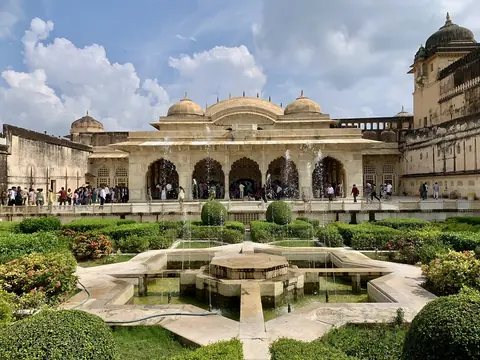
Amber Fort, Jaipur
A hilltop palace fortress overlooking Lake Maota, built of pale yellow and pink sandstone from 1592, with courtyards, gardens and the dazzling Sheesh…
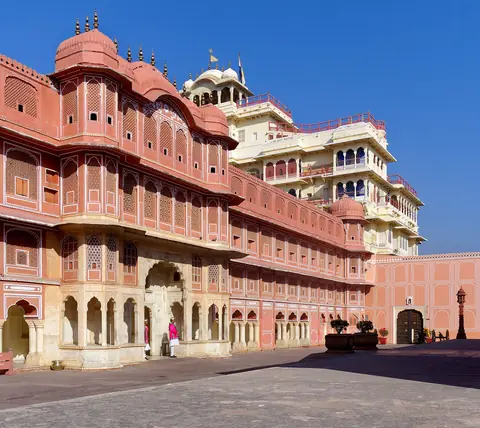
Hawa Mahal and City Palace, Jaipur
The Hawa Mahal, 'Palace of Winds', is a five-storey pink sandstone façade honeycombed with 953 small windows, built in 1799 so royal women could watc…
Day 4: Pushkar (about 3 hours)
The holy town of Pushkar is built round a small lake, with 52 ghats and hundreds of temples, including one of the few to Brahma. It's vegetarian and alcohol-free. Walk round the lake, climb to the Savitri temple for sunset, and don't let anyone press a "puja" flower on you at the ghats unless you're happy to pay. The camel fair is in October or November.
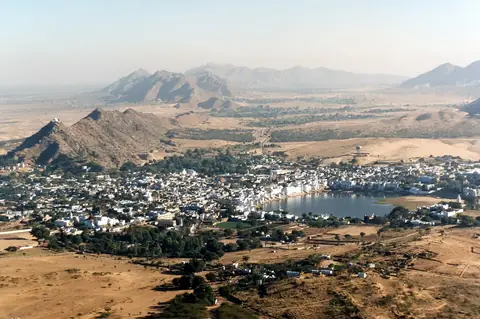
Pushkar
A small holy town around a sacred lake in Rajasthan, with 52 bathing ghats and hundreds of temples, including one of the very few temples in the worl…
Days 5 and 6: Jodhpur (about 4 hours)
Mehrangarh Fort towers over Jodhpur's blue houses, and has one of the best museums in India, with an excellent audio guide. Walk down through the blue city to the clock tower market, and visit Jaswant Thada and the Umaid Bhawan Palace.

Mehrangarh Fort, Jodhpur
One of the largest forts in India, rising sheer from a rocky hill above the 'Blue City' of Jodhpur, with ornate palaces, an excellent museum and view…
Days 7 to 9: Jaisalmer and the desert (about 5 hours)
The golden sandstone Jaisalmer Fort rises out of the Thar Desert, and people still live inside it. Explore its Jain temples and the carved havelis in the town below. Spend a night in the desert, at a camp near the dunes of Sam or Khuri, or better, on a camel safari away from the crowds. Choose a well-reviewed operator, and agree what's included.

Jaisalmer Fort and Thar Desert
A golden sandstone fort rising out of the Thar Desert, one of the few 'living forts' in the world, with about a quarter of the town's people living i…
Day 10: Back to Jodhpur (about 5 hours)
Drive back to Jodhpur for the night, or take the train, ready for the drive south.
Day 11: Ranakpur and Kumbhalgarh to Udaipur
A long but wonderful day. The marble Jain temple at Ranakpur has more than 1,400 carved pillars, no two alike: no leather inside, and it opens to visitors from noon. Then drive through the Aravalli hills to Kumbhalgarh Fort, whose walls run for some 36 km, and on to Udaipur. Some people stay a night at Kumbhalgarh.
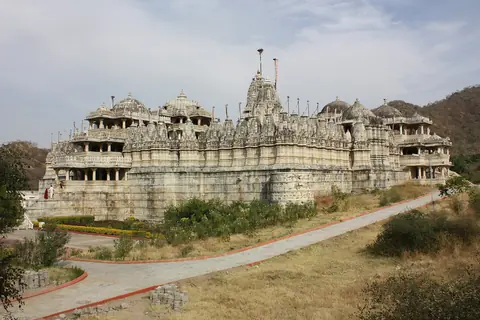
Ranakpur Jain temple
A magnificent Jain temple in a wooded valley of the Aravalli hills, built in the 15th century of pale marble and dedicated to Adinath, the first Jain…
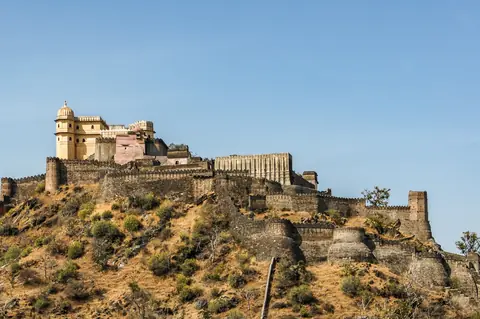
Kumbhalgarh Fort
A mighty hill fort in the Aravalli hills, built by Rana Kumbha of Mewar in the 15th century, surrounded by a wall that runs for about 36 km across th…
Days 12 to 14: Udaipur
Udaipur's palaces and havelis line Lake Pichola. Visit the City Palace, take a boat on the lake at sunset, see the Bagore ki Haveli dance show, and take a cooking class. Fly home from Udaipur, or carry on to Chittorgarh, Bundi or Mount Abu.

City Palace and Lake Pichola, Udaipur
Udaipur, the 'City of Lakes', is built around Lake Pichola, with the huge City Palace rising from its shore and the Lake Palace hotel floating in the…
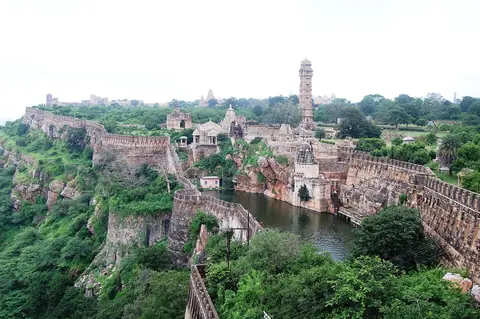
Chittorgarh Fort
One of the largest forts in India, spread across a hilltop plateau above the town of Chittorgarh, and listed by UNESCO among the hill forts of Rajast…
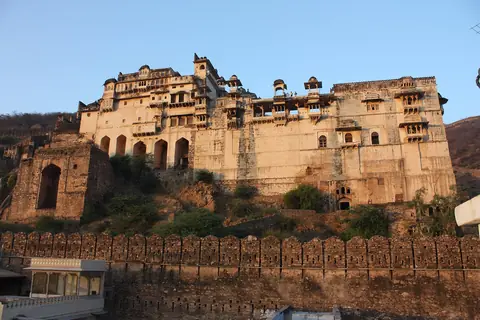
Bundi
A small, relaxed town in Rajasthan with blue houses, a lake and a grand palace climbing the hillside below Taragarh fort.

Comments
No comments yet.