
Driving in Australia: distances, outback roads and road trains
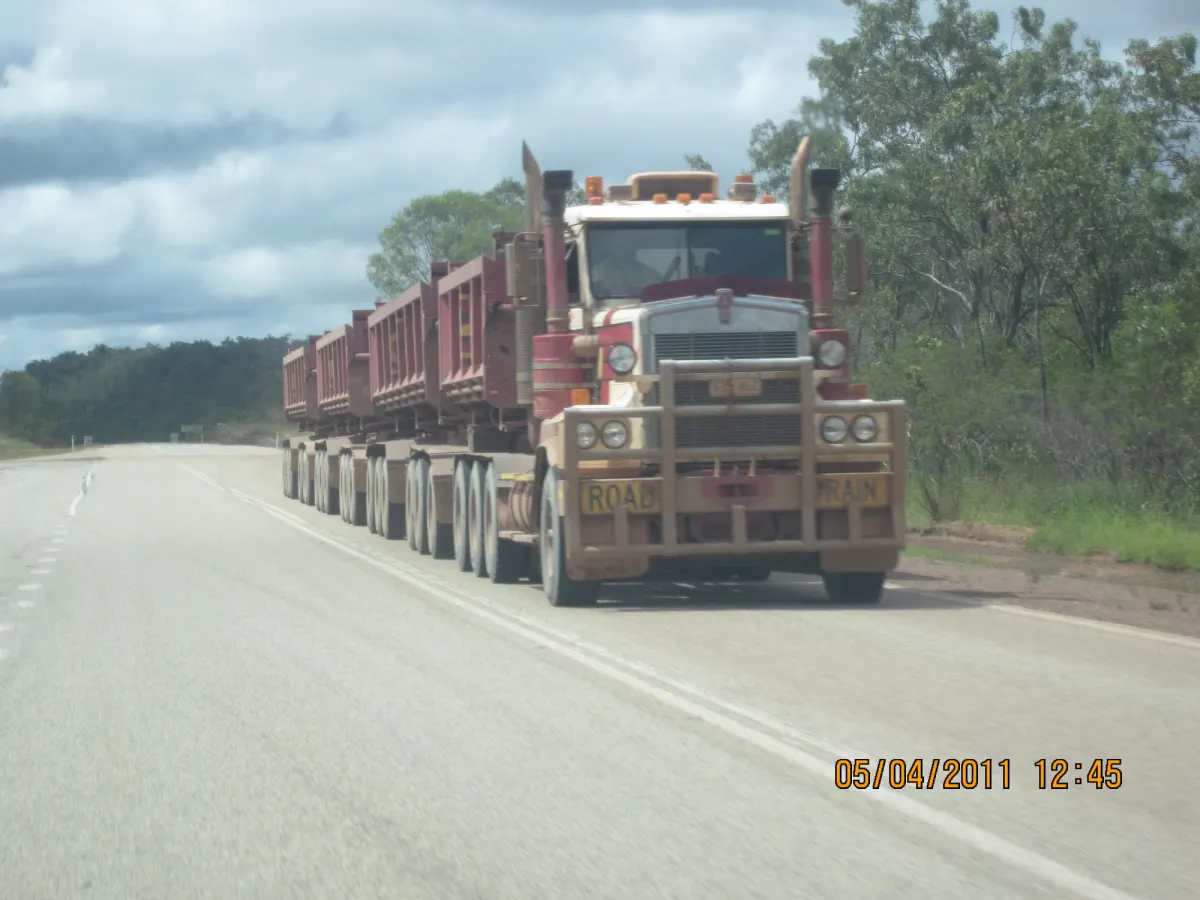
Australia is about the size of the mainland United States, with fewer people than Texas, and outside the cities its roads are long, straight and empty. Driving is the best way to see much of it, but distances are huge, towns and fuel can be hundreds of kilometres apart, and kangaroos, cattle and 50-metre road trains share the road with you. This is what you need to know before you pick up a hire car or campervan.
What you need to drive
- Your licence: as a visitor you can drive on a current overseas licence, but how long for depends on the state: up to three months in the Northern Territory, six months in New South Wales and Victoria, and for as long as you're a visitor elsewhere, according to Austroads. You can only drive the kinds of vehicle your licence covers.
- In English, or with a translation: if your licence isn't in English, you must also carry an International Driving Permit or an English translation. Carry your licence whenever you drive.
- Age: most rental companies want you to be at least 21, and charge more if you're under 25.
- Read the rental agreement. Many don't cover unsealed (gravel or dirt) roads, driving at night outside towns, or damage from hitting an animal, and some don't allow their vehicles on certain roads at all, such as the Gibb River Road. A four-wheel drive (4WD) hire usually allows more, but check.
- One-way fees: dropping a car or campervan off in another city often costs extra, sometimes a lot. It's worth comparing companies.
The main rules
- Keep left. Australians drive on the left, and overtake on the right.
- Speed limits are in km/h and enforced with fixed, mobile and average-speed cameras, as well as by police. In towns it's usually 50 km/h unless signs say otherwise (and 40 km/h or less near schools at certain times). On country roads it's usually 100 or 110 km/h. In the Northern Territory, some sections of the Stuart, Barkly, Victoria and Arnhem highways are 130 km/h, but only where signs say so. If a camera catches a hire car, the rental company passes the fine on to you, with a fee.
- Alcohol: the limit is 0.05% blood alcohol for fully licensed drivers. Random breath tests are common, day and night.
- Mobile phones: you can't hold your phone while driving, even when stopped at lights. Use a mount, or pull over.
- Seatbelts are compulsory for everyone, and children need an approved child seat, which rental companies can supply.
- Turning left on red isn't allowed unless a sign says you can.
- Roundabouts: give way to traffic already on the roundabout, which comes from your right.
- Melbourne's hook turns: at some intersections in central Melbourne, signs tell you to turn right from the left lane, to keep out of the way of trams. Wait in the left lane, and turn when the lights on the road you're turning into go green. Don't drive in tram lanes, and stop behind a tram when it stops to let people off.
- Toll roads in Sydney, Melbourne and Brisbane have no booths: they're paid electronically. Hire cars usually have a tag, and the rental company charges you, often with a fee.
Distances
Look at a map before you plan an itinerary: it's about 900 km from Sydney to Melbourne, 2,700 km from Perth to Adelaide across the Nullarbor, and 1,500 km from Alice Springs to Darwin. Places that look close often aren't. Don't try to drive more than 600 to 800 km in a day, stop every two hours, and share the driving if you can: tiredness causes many crashes on long, straight country roads. There are rest areas with toilets, and in some states driver reviver stops with free coffee at holiday times.
Wildlife and stock on the road
Kangaroos and wallabies are the biggest danger outside the cities, especially at dawn, dusk and at night, when they're most active and hard to see. Wombats, emus, camels and cattle (much of the outback is unfenced) are on the roads too. The best advice is not to drive at those times outside towns. If you must:
- Slow down, and watch the verges.
- If an animal is in front of you, brake hard but stay in your lane. Don't swerve: swerving off the road or into oncoming traffic is more dangerous than hitting a kangaroo.
- Where one kangaroo crosses, others often follow.
If you hit an animal and it's injured, call the local wildlife rescue service or the police. Check the pouch of a dead kangaroo or wallaby for a joey, if it's safe to stop.
Road trains
On outback highways you'll meet road trains: trucks pulling two, three or more trailers, often more than 50 metres long. They can't stop or swerve quickly.
- Overtaking: you need a long, clear stretch of road. It can take 2.5 km to overtake one at 100 km/h. Don't pull out until you can see far enough ahead, and wait until you can see the whole road train in your mirror before you pull back in.
- When one is coming towards you, slow down and move to the left. If the road is narrow, pull right off it and stop: the trailers sway, and throw up stones and dust.
- When one wants to pass you, keep left and steady, and slow down a little to let it by.
Fuel
- In the outback, roadhouses can be 200 km or more apart. Fill up whenever you can, and know where the next fuel is before you leave. Some roadhouses close at night.
- Fuel costs much more in remote areas than in the cities.
- In some remote areas, roadhouses sell low-aromatic fuel rather than regular unleaded petrol. You can use it in a petrol car.
- Most fuel stations ask you to fill up first, then pay inside; some in cities and on highways are card-only, at the pump.
Unsealed roads
Many roads to national parks, and most outback tracks, are unsealed: gravel, red dirt or sand. They're often fine in a normal car when dry, if your rental agreement allows it, but:
- Slow down: 60 to 80 km/h is plenty on most. Loose gravel is like driving on marbles, especially on bends.
- Corrugations (ridges across the road) shake the car, and dust hides oncoming traffic and road trains: put your lights on.
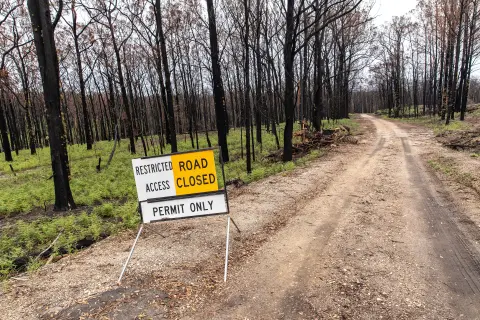
- Rain can make dirt roads impassable, and closes many in the tropical north in the wet season (roughly November to April). Never drive into floodwater: you can't tell how deep or fast it is. "If it's flooded, forget it."
- Remote tracks such as the Gibb River Road, the Birdsville and Oodnadatta tracks and the road to Cape York need a high-clearance 4WD, preparation and some experience.
Check road conditions before you go, on the state road authority's website: for example Road Report NT in the Northern Territory and QLDTraffic in Queensland. Some national parks also close roads after rain.
Driving in the outback
- Carry plenty of water, at least several litres a person a day, and some food.
- Tell someone your route and when you expect to arrive.
- Phone coverage runs out soon after you leave the towns and highways. On remote tracks, carry a satellite messenger or a personal locator beacon (PLB), which you can hire.
- If you break down, stay with your vehicle. It gives you shade and is far easier for searchers to find than a person walking.
- Check the spare tyre and that you know how to change it.
The outback is worth it: try crossing the Nullarbor, the Stuart Highway past Karlu Karlu (the Devils Marbles) and the Daly Waters Pub, or a night at the Birdsville Hotel.
See also: camping and campervans in Australia, and our road trips: Sydney to Melbourne along the coast, the east coast from Sydney to Cairns, the Red Centre, Tasmania and the Great Ocean Road.


Comments
No comments yet.