
Sun, heat and bushfire safety in Australia
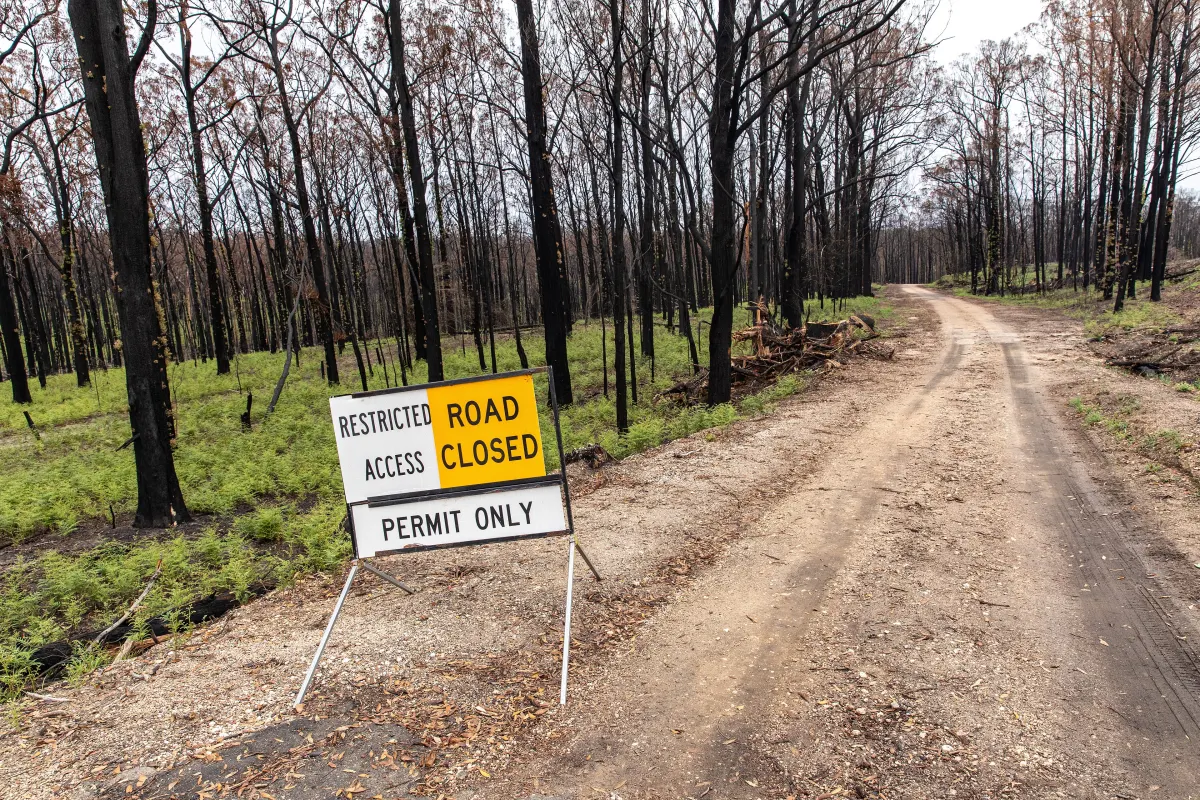
Australia's sun is fierce, its summers are hot, and bushfires are part of life in much of the country from late spring to autumn. None of this should stop you going, but it's worth knowing how to protect yourself, and what the warnings mean if a fire starts near where you are.
The sun
The UV in Australia is far stronger than in Europe or most of North America, and you can burn in 15 minutes on a summer day, even when it's cloudy or cool. Australia has one of the world's highest rates of skin cancer. The local advice, from the Cancer Council's SunSmart, is to protect yourself whenever the UV index is 3 or above, which in summer is most of the day, and all year in the north:
- Slip on clothing that covers your skin.
- Slop on SPF50 or 50+ sunscreen, 20 minutes before you go out, and put more on at least every two hours, and after swimming or sweating.
- Slap on a broad-brimmed hat: a cap leaves your ears and neck exposed.
- Seek shade, especially in the middle of the day.
- Slide on sunglasses.
Weather forecasts and the free SunSmart app give the times when the UV is 3 or above. Sunscreen is sold in every supermarket and chemist, and Australian brands are made for these conditions.
Heat
Summer days over 40°C are common inland and can happen in Sydney, Melbourne, Adelaide and Perth too. In the tropical north it's hot and humid for much of the year.
- Drink plenty of water, before you're thirsty, and carry more than you think you'll need. On a hot day's walk you can need a litre an hour.
- Walk early. Start walks at dawn and rest in the shade in the afternoon. Some popular walks close on hot days: at Kings Canyon you can't start the Rim Walk after 9am when the forecast is 36°C or more, and at Kata Tjuta the full Valley of the Winds circuit closes from 11am on those days.
- Know the signs of heat exhaustion: headache, dizziness, nausea, heavy sweating and cramps. Get into the shade, drink water and cool down. If someone becomes confused, stops sweating or collapses, it could be heatstroke: call 000.
- In the car, carry water, don't leave anyone (or any animal) in a parked car, and if you break down in the outback, stay with your vehicle: it's easier to find than a person, and gives you shade. See Driving in Australia.
Bushfires
The fire season varies around the country: in the south (New South Wales, Victoria, South Australia, Tasmania and southern Western Australia) it's mostly from spring to autumn, with the worst fires usually in summer; in the tropical north it's in the dry season, from about May to October. Fires spread fastest on hot, dry, windy days.
Fire danger ratings
Every day in the fire season, each area gets a fire danger rating, shown on signs by the road and on the state fire service's website and app. There are four levels:
- Moderate: plan and prepare.
- High: be ready to act.
- Extreme: take action now to protect your life.
- Catastrophic: for your survival, leave bushfire risk areas. Don't plan to walk, camp or drive through the bush on these days; some national parks close.
Total fire bans
On days of high fire danger, a total fire ban may be declared for a district. During a ban you can't light a fire in the open: no campfires, and no wood or solid-fuel barbecues. The rules on gas barbecues and camp stoves vary from state to state, so check before you cook. Penalties are severe. Some national parks ban campfires for the whole season.
Warnings
If a fire starts, the emergency services issue warnings, with three levels used across Australia:
- Advice (yellow): a fire has started, but there's no immediate danger. Keep up to date.
- Watch and Act (orange): conditions are changing and you need to take action now, for example leaving if you're not prepared.
- Emergency Warning (red): the highest level. You may be in danger and need to act immediately; it may be too late to leave.
As a visitor, the safe plan is simple: if there's a fire near where you're staying or going, leave early, or don't go. Listen to the police and fire service, and follow road closures.
Where to check
- Each state's fire service has a website and app with ratings, bans, current fires and warnings: for example the NSW Rural Fire Service's Hazards Near Me app in New South Wales, and the VicEmergency app in Victoria. Install the one for the state you're in.
- Local ABC radio stations broadcast emergency warnings.
- Ask at the visitor centre or your campsite, and tell someone your plans if you're going walking.
Australia's emergency number is 000 for police, fire and ambulance (112 also works from a mobile).
See also: beach safety and dangerous wildlife, weather, seasons and what to pack, and camping in Australia.


Comments
No comments yet.