
Money, costs, tipping and phones in Australia
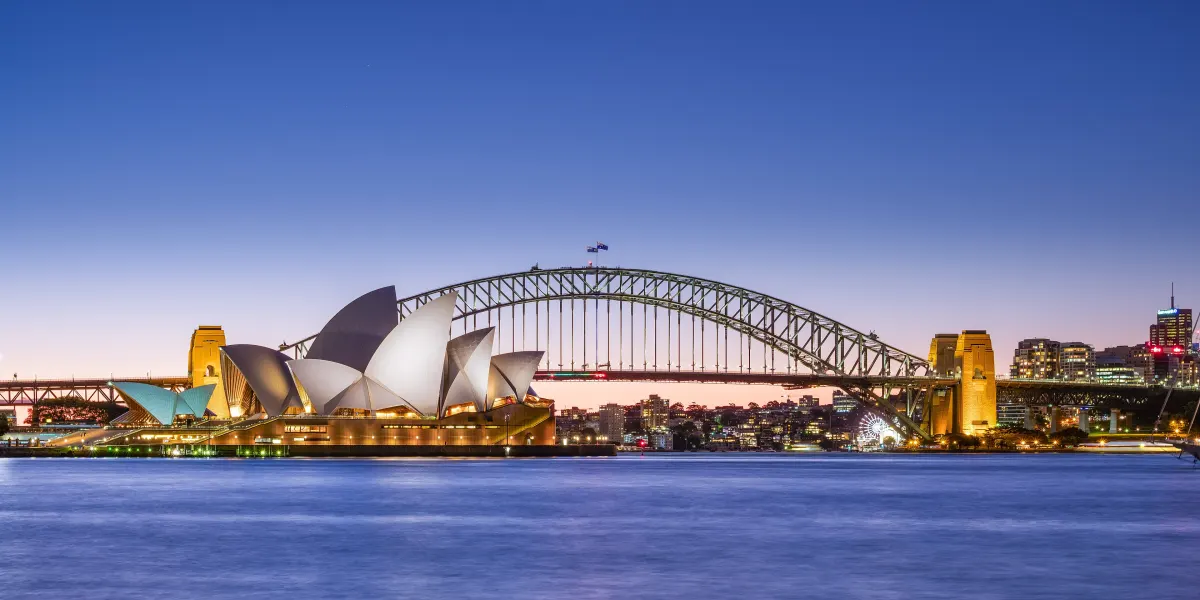
Australia is an expensive country to visit, but it's an easy one: cards and phones are accepted almost everywhere, you don't need to tip, and prices include tax. Mobile coverage is good in the cities and along the main highways, and disappears quickly in the outback.
The currency
- The Australian dollar (A$, AUD) is divided into 100 cents. Notes are $5, $10, $20, $50 and $100, made of plastic (polymer), and coins are 5c, 10c, 20c, 50c, $1 and $2.
- There are no 1 or 2 cent coins: cash totals are rounded to the nearest 5 cents, but card payments are charged exactly.
Paying
- Cards: Visa and Mastercard are accepted almost everywhere, including for small amounts, and tapping a card or phone is the usual way to pay. American Express and Diners Club are accepted less often. Many cafés, shops and even some market stalls are card-only.
- Surcharges: some businesses add a small surcharge for paying by card, and many restaurants and cafés add a surcharge on Sundays and public holidays, often 10% or more, to cover higher wages. They must tell you, usually on the menu or a sign.
- Cash is still useful in remote areas, at some roadhouses, campsites and markets, and in case the card machines are down. Most ATMs accept foreign cards, but some charge a fee: the screen tells you before you go ahead. If an ATM or card machine offers to charge you in your home currency, say no and pay in Australian dollars: the exchange rate is usually worse.
- Prices include GST, the 10% tax, so the price on the label is what you pay. When you leave, you may be able to claim the GST back on things you've bought through the Tourist Refund Scheme.
Tipping
Tipping isn't expected in Australia: wages are higher than in many countries, and service charges aren't usually added to the bill. In restaurants, some people leave around 10% for very good service, or round up the bill, and that's always appreciated, but nobody will be offended if you don't. You don't need to tip taxi drivers, bar staff, hotel staff or tour guides, although many people tip guides on a multi-day tour.
What things cost
Australia's prices are similar to Western Europe's, and higher than North America's for eating out, alcohol and accommodation. Some ways to spend less:
- Eat your main meal at lunchtime, when many pubs and restaurants have cheaper specials, and look for pub meal deals (like the chicken parma night).
- Alcohol is heavily taxed, and you usually buy it in bottle shops ("bottle-os"), often next to the supermarket. Many restaurants are "BYO": you can bring your own wine, sometimes for a small corkage charge.
- Supermarkets (Coles, Woolworths, Aldi and IGA) are much cheaper than convenience stores and roadhouses. Fuel and food cost more in remote areas.
- Free barbecues in parks are an Australian tradition: bring something to cook, and clean the hotplate afterwards.
- Many of the best things are free or cheap: beaches, coastal walks, many museums and galleries (such as the Art Gallery of New South Wales and the National Gallery of Victoria), and national parks, although some charge an entry fee or need a pass.
- Accommodation is busiest and dearest in the school holidays, especially from Christmas to late January, and at Easter.
Phones and data
- Coverage: the three networks are Telstra, Optus and Vodafone (TPG). All cover the cities and towns, but outside them coverage is patchy, and in the outback it's limited to towns, roadhouses and some highways. Telstra (and the providers that use its network) has by far the widest coverage in regional and remote Australia, so it's the one to choose if you're travelling outside the cities.
- Your phone must support 4G calling. Australia switched off its 3G networks in 2024, so phones that rely on 3G for calls won't work here, even for emergency calls, and some older or overseas models that don't support voice over 4G (VoLTE) on Australian networks may not either. Check with your provider or phone maker before you travel.
- An eSIM, bought online before you leave, is the easiest option if your phone supports it: you're connected when you land. Check which network a travel eSIM uses.
- A local prepaid SIM from Telstra, Optus or Vodafone is cheap and includes plenty of data, and you get an Australian number. Buy one at the airport, in phone shops, supermarkets or post offices. You need your passport to activate it.
- Roaming with your home provider is easy but can be expensive; check the daily rate.
- Wi-Fi: free in most hotels and many cafés, libraries and shopping centres, but often slow or absent at campsites and in remote areas.
- Remote areas: where there's no coverage, a satellite messenger or a personal locator beacon (PLB) is the way to call for help. Some newer phones can send messages by satellite. See Driving in Australia.
Useful numbers
- 000: police, fire and ambulance. From a mobile, 112 also works.
- 131 444: the police assistance line, when it isn't an emergency.
- 13 11 26: the Poisons Information Centre.
- 1800 022 222: healthdirect, a free health advice line, any time.
See also: arriving in Australia and getting around.
Comments
No comments yet.