
Camping and campervans in Australia
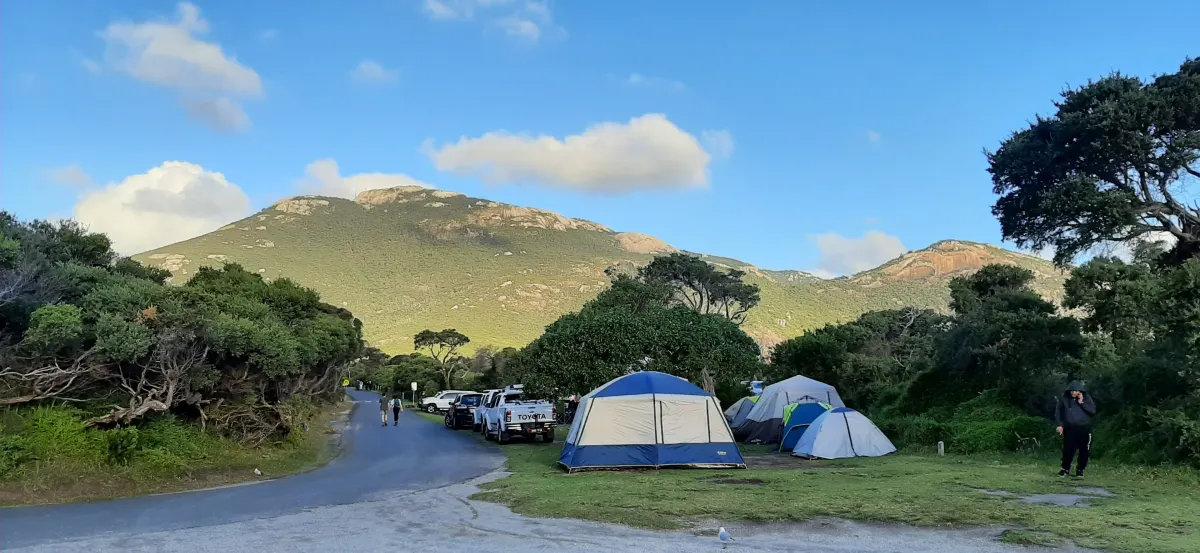
Camping is one of the best ways to see Australia, and one of the cheapest. Australians love it: there are campsites in almost every national park, holiday parks in every town, and free spots by rivers and on the edge of the outback. A hired campervan or a car and a tent lets you wake up to kangaroos on the beach, or the stars over the desert. Here's how it works.
Where to stay
- Holiday parks (caravan parks) are in almost every town and at many beaches. They have powered sites for vans, unpowered sites for tents, cabins, hot showers, toilets, laundries and camp kitchens, and often a pool. Big chains and independent parks both have websites for booking. Expect to pay more in summer and the school holidays, when the popular ones are booked out months ahead.
- National park campsites are usually cheaper and in far better places, with fewer facilities: often toilets, sometimes cold showers, picnic tables and a fire ring, and sometimes nothing at all. Bring your own water unless the park says there's drinking water.
- Free camps and rest areas: in many states you can stay overnight at some roadside rest areas and free campsites run by councils, especially in the outback and the country. Rules vary: some allow one night, some 48 hours or more, and some are only for self-contained vehicles, with their own toilet and water. Read the signs.
- Showgrounds, pubs and farms: many country showgrounds have cheap sites, some outback pubs let you camp behind them if you eat there, and some farms and wineries welcome campervans.
Booking national park campsites
Most national park campsites now have to be booked online, and paid for, before you arrive, and many have no phone coverage to book when you get there. Each state runs its own system:
- New South Wales: NSW National Parks has more than 350 campgrounds, bookable online. Some parks also charge a vehicle entry fee.
- Queensland: you need a camping permit for every national park campsite, booked online through Queensland Parks before you camp. On K'gari, camp in the fenced areas and never feed the dingoes.
- Victoria: Parks Victoria takes bookings online, and many campsites are half price until mid-2027. Campsites along the Great Ocean Road are now booked through the Great Ocean Road Coast and Parks Authority. Parks Victoria paused new online bookings for a time in November 2026, so check its website.
- Tasmania: you need a parks pass for all of Tasmania's national parks. A Holiday Pass covers a vehicle and up to eight people for up to two months, and is the best value for most visitors. Buy it from Parks and Wildlife Tasmania. Some campsites, such as those at the Bay of Fires, are free; others need booking.
- Western Australia: many national parks charge an entry fee per vehicle, and you can buy a holiday pass for several weeks. Campsites are booked through Parks and Wildlife WA's Explore Parks WA website.
- Northern Territory: interstate and overseas visitors need an NT Parks Visitor Pass, bought online, for most Territory parks, on top of the camping fees. Uluru-Kata Tjuta and Kakadu are run by Parks Australia and need their own passes.
Apps
- WikiCamps lists tens of thousands of campsites, free camps, caravan parks, dump points and showers around Australia, with reviews from other campers. It costs a few dollars, once, and works offline.
- CamperMate is free, and shows campsites, free camps, toilets, dump points and fuel in Australia and New Zealand.
- The state parks' own websites are the most reliable for national park sites and closures, and the fire service apps for fire bans.
Campervans
- Types: from small vans with a bed in the back and a kitchen at the rear door, to motorhomes with a shower and toilet. A 4WD camper with a rooftop tent lets you reach more remote places. An ordinary car licence covers most rental campervans and motorhomes.
- Book early for December to February, Easter and the north's dry season. Many companies offer cheap "relocation" deals to move a van between cities, with a few days to do it.
- Check what's allowed: many rental agreements don't cover unsealed roads, driving at night outside towns or crossing to Tasmania. See Driving in Australia.
- Dump points for emptying toilet cassettes and grey water are marked in the apps. Don't empty them anywhere else.
- Power: many vans run the fridge and lights off a second battery, charged as you drive or from a solar panel. A powered site every few days keeps it charged.
Camping rules and safety
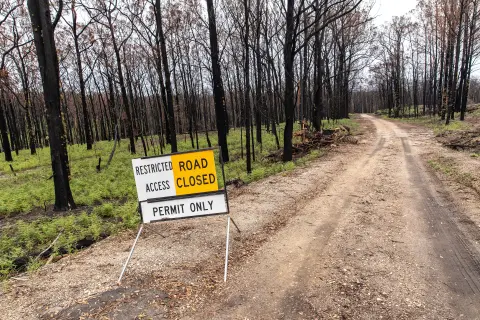
- Don't camp where signs say you can't. Many beaches, town car parks and lookouts don't allow overnight camping, and councils and rangers do fine people.
- Fires: only light a fire in a fire ring or fireplace, where fires are allowed, and never on a total fire ban day. Bring your own firewood (collecting it is banned in national parks), and put the fire out with water, not sand.
- Crocodiles: in the north, camp at least 50 metres from the water, and don't clean fish or wash up at the edge. See dangerous wildlife.
- Wildlife: don't feed animals, and keep food locked away: goannas, possums, kookaburras, dingoes and even kangaroos will steal it. Don't camp under big gum trees, which can drop branches without warning.
- Rubbish: take everything with you. Many national park campsites have no bins.
- Flooding: don't camp in dry creek beds or on low ground in the tropics in the wet season.
- Toilets: use them where there are some. Where there aren't, go at least 100 metres from water and campsites, and bury it.
Some of the best places to camp
- Pebbly Beach in Murramarang National Park, New South Wales, where kangaroos come down to the sand.
- Tidal River at Wilsons Promontory, Victoria, with wombats wandering through the campground.
- Lucky Bay in Cape Le Grand National Park, Western Australia, with white sand and kangaroos on the beach.
- The Bay of Fires, Tasmania, where you can camp by the beach for free.
- Litchfield and Kakadu in the dry season, and Wilpena Pound in the Flinders Ranges.
- Carnarvon Gorge in Queensland, and Kings Canyon in the Red Centre.
Comments
No comments yet.