
Is it safe to visit Kuwait now? Travel warnings, Iranian attacks, alerts, flights and transit
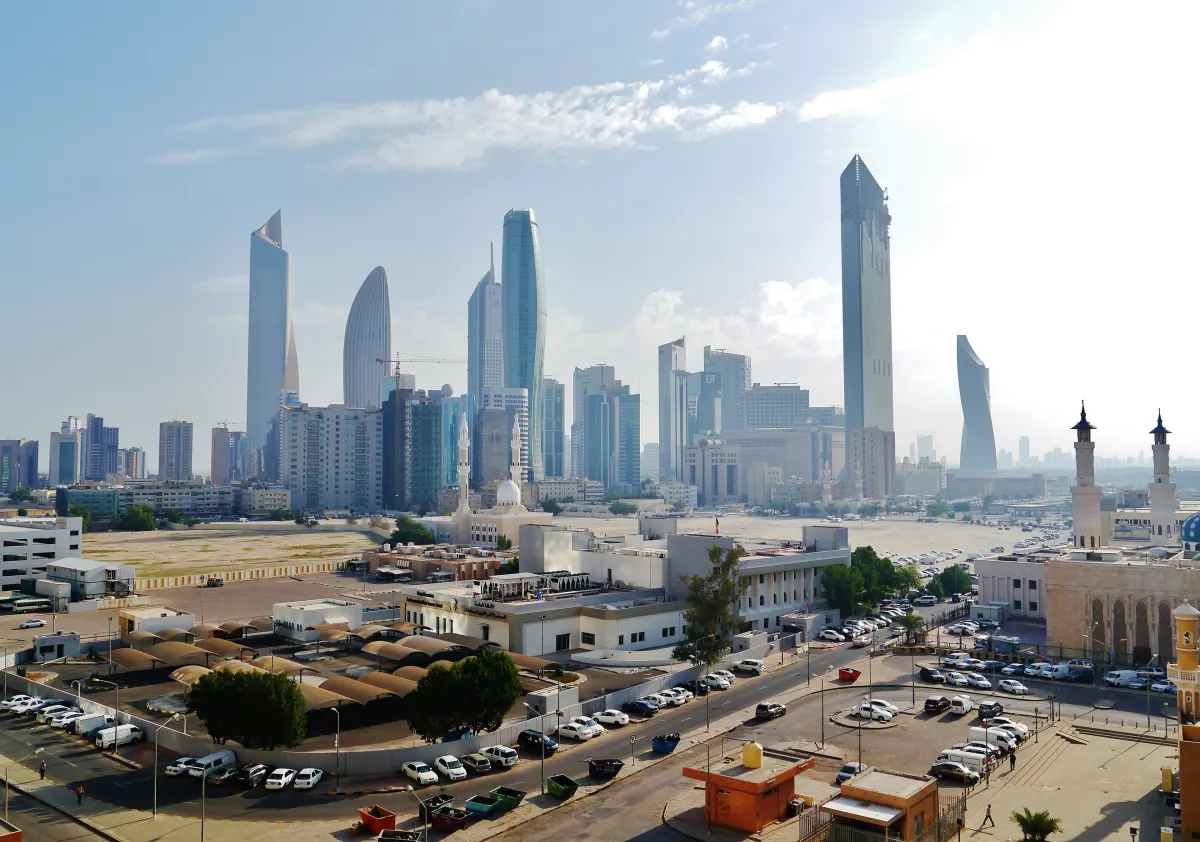
Iran has been attacking targets in Kuwait on and off since the end of February 2026, most recently in the middle of November. Most of the governments we checked tell their citizens not to go without a good reason, so this section has no itineraries: it's for people who have to be there, or who are changing planes. This is how things stood on 24 November 2026. They can change within hours, so read your own government's page.
What governments advise
- Germany (29 October 2026): strongly advises against travel to Kuwait. It isn't a formal travel warning. See auswaertiges-amt.de.
- Australia (30 October 2026): Reconsider your need to travel, which it says also means reconsider changing planes there. See smartraveller.gov.au.
- USA (advisory of 23 October 2026, alert of 18 November): Level 3, Reconsider travel, because of armed conflict, landmines and crime. US government employees need special permission to go. See the embassy's alerts.
- Canada (21 August 2026): Avoid non-essential travel, and avoid all travel within 5 km of the border with Iraq. See travel.gc.ca.
- New Zealand (22 October 2026): Avoid non-essential travel. See safetravel.govt.nz.
- France (29 October 2026): advises against going unless you have a pressing reason, and formally against a strip 5 km wide along the Iraqi border and the islands of Warbah and Bubiyan. See diplomatie.gouv.fr.
- United Kingdom (updated 18 November 2026): doesn't advise against travel, but says the region is deeply unpredictable and the risk of sudden escalation is high. See gov.uk.
If your trip is for fun, put it off.
What has happened
- The USA and Israel began strikes on Iran on 28 February 2026. The same day Iranian drones hit Kuwait International Airport and the Ali Al Salem air base. In the weeks that followed, bases, ports, oil refineries, power and desalination plants and the airport were hit again and again, and soldiers and civilians were killed. The airspace was closed for almost two months.
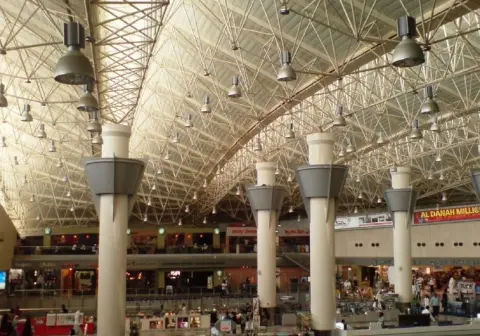
- On 3 June a drone hit the airport's Terminal 1, killing one person and injuring more than 60. Iran denied responsibility. The terminal was still closed in November.
- There were more attacks in July, on a desalination plant among other places.
- After a quieter autumn, on about 17 and 18 November Iran said it had attacked American drone and missile sites at Ali Al Salem air base, after US strikes on the Iranian island of Qeshm. Kuwait's army said its air defences had met hostile drones.
- In the same weeks Iran was attacking Bahrain and ships near the Strait of Hormuz, and the Houthis were attacking Saudi Arabia: see Is it safe to visit Bahrain now? and Travel warnings for Saudi Arabia.
Where to keep away from
- Military bases, such as Ali Al Salem, west of Kuwait City, and any camp or convoy.
- Oil refineries, ports, power stations, desalination plants and other industry, many of them along the coast south of the city.
- The US embassy, and businesses, hotels and other places clearly linked with the USA.
- New Zealand also says to limit your time at the airport and on the Sheikh Jaber Al-Ahmad Al-Sabah Causeway.
- The borders. It's illegal and dangerous to go near them without permission. The strip along Iraq is a military zone.
- The open desert and lonely beaches, above all north of the Mutla Ridge and near Iraq: mines and unexploded bombs from 1990 and 1991 are still there, unmarked, and rain moves them. Stay on surfaced roads and don't touch metal objects.
- Jleeb Al-Shuyoukh, near the airport, and parts of Jahra, because of crime.
If there's an alert
- Kuwait has sirens. They're tested on the first day of the month at 10am, so a siren then may only be the test. Local media say a long, steady tone means the danger has passed.
- Go indoors at once and away from glass: a basement, an inside stairwell, or a bathroom or corridor without windows. Falling debris is the biggest danger.
- Stay there until the all-clear, and follow the Ministry of Interior and the state news agency KUNA, not rumours.
- Don't film, photograph, post or forward anything: people have been arrested for it. See Kuwait's laws.
- Don't touch debris. Keep away and call 112.
- Ask your hotel on arrival where its shelter is. Keep your passport, medicines, water, cash, a torch and a charged power bank together.
Flights and changing planes
- In November 2026 the airport was working from Terminal 4 and Terminal 5, with Kuwait Airways, Jazeera Airways and foreign airlines, on reduced schedules. Check with your airline on the day, including which terminal.
- The American aviation authority, the FAA, has a warning in force about flying in and near the Gulf, Kuwait included.
- If you can change planes somewhere else, do. If not, keep everything on one ticket, with a long connection.
- Don't change planes in Kuwait with an Israeli passport, or with signs of a visit to Israel in your passport: see Arriving in Kuwait.
Getting out by road
- Saudi Arabia: Australia says the crossings at Nuwaiseeb and Salmi are open. You need a Saudi visa that allows you in by land. But New Zealand and Australia say not to travel to Saudi Arabia at all: see If you're in Saudi Arabia now.
- Iraq: governments warn against it. The crossing at Abdali can close without notice, and Germany says you might then need special permission to come back.
- So think about how you'd manage if you were stuck for two weeks or more. Canada tells its citizens not to count on the government to get them out.
Insurance
- Going against your government's advice can cancel your cover, even for ordinary illness. Many policies exclude war altogether. Ask in writing, also about a stopover.
- If the advice changed after you booked, speak to your airline, hotel and insurer before you cancel.
Everyday safety
- Violent crime against foreigners is rare. There's some petty theft, and fake calls from "the police" or "the bank" are common. Never give codes or card numbers.
- Women alone are sometimes bothered in taxis or when walking after dark. Use apps, sit in the back, and avoid empty streets. If you're assaulted, speak to your embassy first.
- Stay away from demonstrations. It's illegal for foreigners to take part.
- Governments also warn of terrorism, at mosques, hotels, malls and oil and transport sites.
- Register with your embassy or government, so that it can find you.
Emergency number: 112 for police, fire and ambulance.

Comments
No comments yet.