
Is it safe to visit Bahrain now? Travel warnings, Iranian attacks, sirens, flights and transit
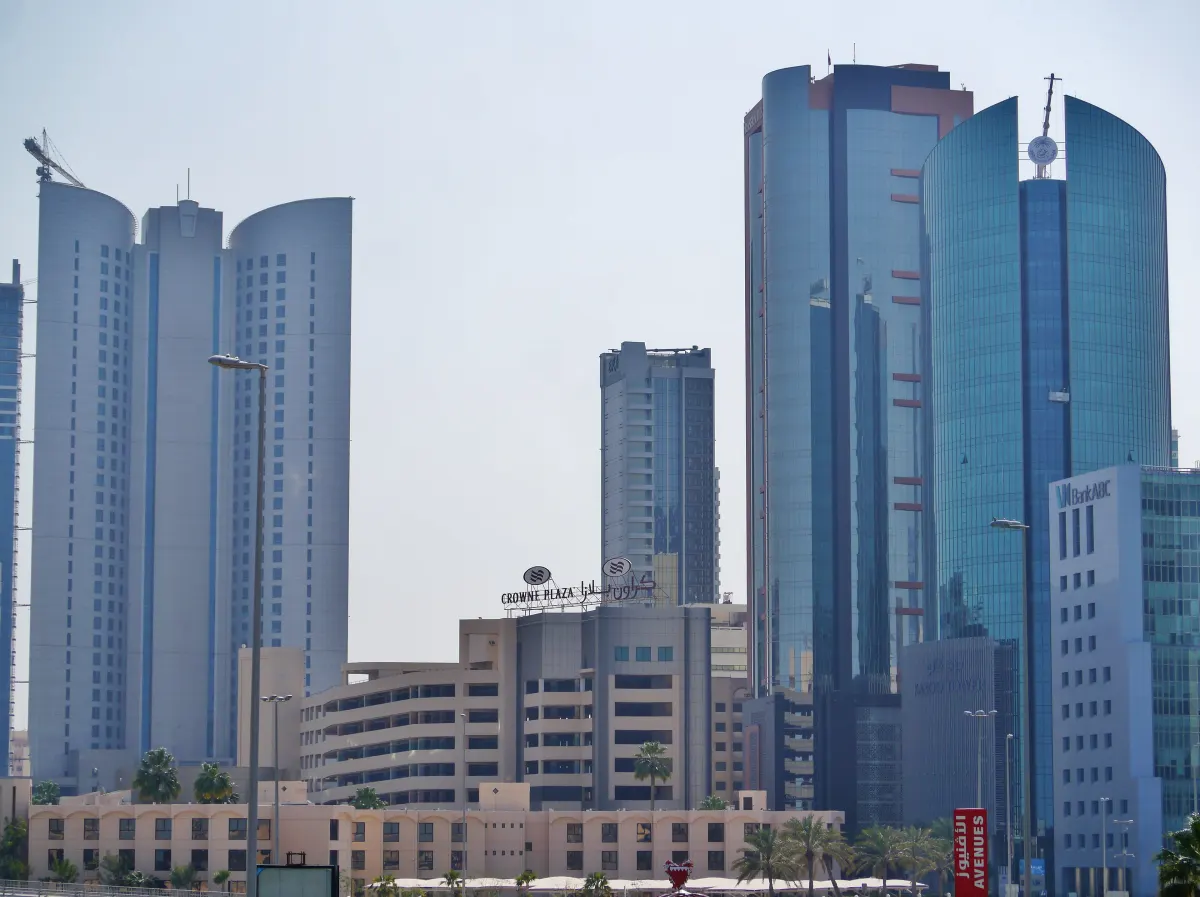
Bahrain is being attacked. Iran has fired missiles and drones at the island on and off since the end of February 2026, and after a lull it began again in the middle of November: on 21 November an industrial site in Sitra, near Manama, was set on fire and two people were hurt. Most of the governments we checked tell their citizens not to go without a good reason, so this section has no itineraries. It's for people who have to be there, or who are changing planes. This is how things stood on 24 November 2026. Read your own government's page before you decide anything.
What governments advise
- Germany (29 October 2026): strongly advises against travel to Bahrain. It isn't a formal travel warning. See auswaertiges-amt.de.
- Australia (23 October 2026): Reconsider your need to travel, which it says also means reconsider changing planes there. See smartraveller.gov.au.
- USA (advisory of 23 October 2026, alert of 22 November): Level 3, Reconsider travel. US government employees need special permission to go. Americans there are told to keep a low profile. See the embassy's alerts.
- Canada (21 August 2026): Avoid non-essential travel. See travel.gc.ca.
- New Zealand (22 October 2026): Avoid non-essential travel. See safetravel.govt.nz.
- France (16 November 2026): advises against going unless you have a pressing reason. See diplomatie.gouv.fr.
- United Kingdom (updated 18 November 2026): doesn't advise against travel, but says the region is deeply unpredictable and the risk of sudden escalation is high. See gov.uk.
Several of these pages were last changed before the November attacks, so they may get stricter. If your trip is for fun, put it off.
What has happened
- The USA and Israel began strikes on Iran on 28 February 2026. Iran answered the same day with missiles and drones at Bahrain, where the US Navy's Fifth Fleet has its headquarters, in the Juffair district of Manama. Tower blocks and at least one hotel were hit in the first days.
- In March and April an office tower in the Seef district was struck, killing a woman, a shipyard worker was killed at the port, and the refinery, the aluminium smelter, a desalination plant and a fuel store near the airport were hit.
- On 7 April the airspace and the causeway to Saudi Arabia were both closed for a time, so there was no way off the island.
- There were more attacks in June and July. On 11 June drones that had been shot down fell on houses and cars in Manama. In late July the US embassy warned that Iran might strike unnamed places in central Manama.
- After about two quiet months, Iran attacked again on about 13, 17 and 18 November, and on 21 November, when the sirens sounded and the Sitra fire started. Iran said it was aiming at US radars at the Riffa and Awali bases.
- Kuwait and Saudi Arabia have been attacked in the same weeks: see Is it safe to visit Kuwait now? and Travel warnings for Saudi Arabia.
Where to keep away from
- Military bases: the US naval base and the streets around it in Juffair, Mina Salman port, Riffa, Awali, and Sheikh Isa air base in the south. They aren't always signposted.
- Industry: the refinery and factories in and around Sitra and Ma'ameer, oil fields, power and desalination plants.
- Places linked with the USA or Israel: embassies, companies, hotels used by foreign forces, and Jewish sites.
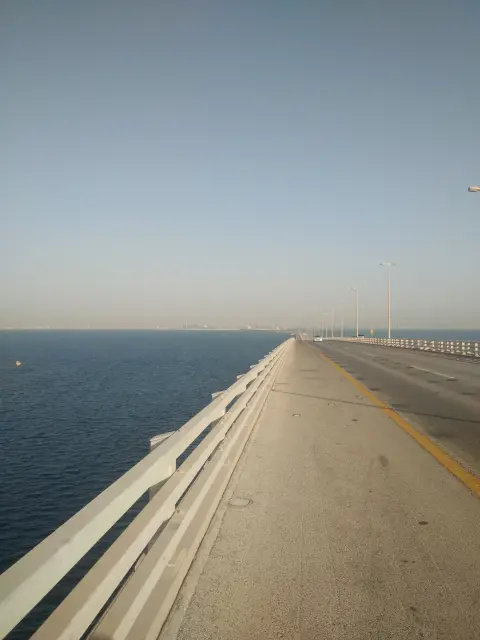
- New Zealand also says to limit your time at the airport and on the King Fahd Causeway.
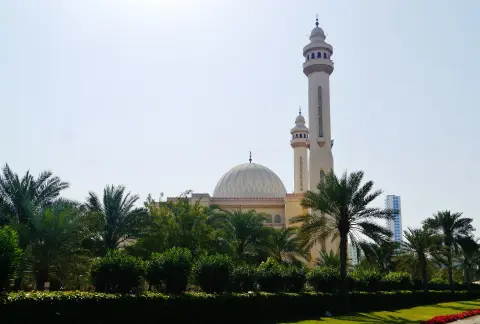
- That puts several sights close to possible targets: the Al Fateh Mosque is in Juffair, the Pearling Path is near the airport, and the road to the Tree of Life runs past Awali and the oil fields.
Protests
- There have been pro-Iranian protests in Shia districts, some of them violent, and gatherings in roads and squares are banned for now. Trouble is likeliest after Friday midday prayers and around anniversaries such as 14 February and Ashura (mid-June in 2027).
- The UK lists Sitra, Bani Jamra, Karbabad, Saar, Karzakan, the Budaiya Highway and its villages, Diraz, Sanabis, Al Dair, Adliya and Nuwaidrat as places where there have been protests. (Karbabad is next to Qal'at al-Bahrain.)
- Leave at once if you see a crowd, and don't film it. Expect police checkpoints.
If the sirens sound
- Bahrain warns people with sirens and through the government's MyGov app: install it and turn on notifications. A system that sends alerts straight to phones was being tried out in the spring.
- Go indoors at once and away from glass: an inside stairwell, a corridor, or a room with few outside walls. Falling debris is the biggest danger.
- If you're driving, keep steady, leave the left lane free for emergency vehicles, and stop when you can at a solid building, not under a bridge or beside a glass front.
- Wait for the all-clear from the Ministry of Interior or MyGov.
- Don't film, post or forward anything. Courts have given people years in prison for it: see Bahrain's laws.
- Don't touch debris. Call 999.
- Choose a hotel away from Juffair, the port and Seef's towers if you can, and a room on a low floor away from the street. Ask where the shelter is. Keep your passport, medicines, water, cash and a charged power bank together.
Flights and changing planes
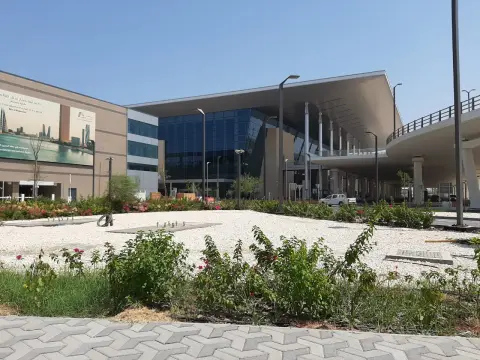
- The airport was open in November 2026 and Gulf Air was flying, but the airspace can close within minutes. The FAA, the American aviation authority, has a warning in force about flying in and near the Gulf.
- If you can change planes somewhere else, do. If not, put everything on one ticket and allow a long connection.
- Bahraini law applies in transit too, above all on drugs and CBD: see Arriving in Bahrain.
Getting out
- The only road out is the King Fahd Causeway to Saudi Arabia, where Australia, New Zealand and Germany say not to go at all. Dammam's airport, on the other side, has been attacked too. See If you're in Saudi Arabia now.
- If you might need it, have a Saudi visa that allows entry by land before there's a crisis: some only work for arrivals by air. See Getting around Bahrain.
- There's a curfew at sea around the island at night, roughly from 6pm to 4am. Don't think of leaving by boat.
- Plan for being stuck for two weeks or more. Canada tells its citizens not to rely on the government to get them out. Australia and New Zealand have no embassy in Bahrain.
Insurance
- Going against your government's advice can cancel your cover, even for ordinary illness, and many policies exclude war altogether. Ask in writing, also about a stopover.
- If the advice changed after you booked, speak to your airline, hotel and insurer before you cancel.
Everyday safety
- Crime is low. Watch your bag in markets. Women alone may be bothered, above all at night: use a known taxi company or app.
- A woman who reports a rape can be accused of sex outside marriage. Talk to your embassy first.
- Scams include job offers, gold, romance and fake calls from officials. The cybercrime line is 992.
- Register with your embassy or government, so that it can find you.
Emergency number: 999 for police, fire and ambulance.
Comments
No comments yet.