
If you're in Saudi Arabia now: alerts, shelter, airports and leaving by road
Many people are in Saudi Arabia for work, family or a pilgrimage and can't just leave. This is what the British, American, Australian, New Zealand, French and German governments say they should do, as of 24 November 2026. It changes quickly, so follow your own embassy and Saudi Civil Defence first. Read the travel warnings for the background.
Be ready
- Register with your embassy or your government's travel service, so that they can reach you.
- Turn on emergency alerts (cell broadcast) in your phone's settings: Saudi Civil Defence sends warnings to phones in the area, and another when the danger has passed. Keep the sound on at night.
- Keep your phone and a power bank charged, and have food, water, medicines and some cash for several days.
- Keep your passport, visa and other papers up to date and close at hand, with copies. If you're a resident, check that your exit and re-entry permit is valid: you can't leave without one. Australia says that people on tourist, business and visit visas don't need an exit permit.
- Pay traffic fines, hotel bills and other debts, as they can stop you at the border.
- Keep away from airports, oil and power sites, ports, military areas, Riyadh's financial district and places linked to the USA.
If there's an alert
- Go inside a solid building straight away, or stay in. Choose an inner stairwell, a corridor or a room with as few outside walls and windows as possible, and stay away from glass.
- Most of the danger is from falling debris when missiles and drones are shot down. Stay in until the all-clear.
- If you're driving, stop somewhere safe and get into a building if you can. Don't stop under anything that could fall.
- Don't go near debris. Move away and tell the authorities.
- Never film, photograph, post or forward anything about an attack, an interception or damage. It's a crime, and the US embassy says that Americans have been detained for it. That includes sending a video to your family.
Emergency numbers: 911 for police, fire and ambulance (112 works without a Saudi SIM card, says the UK). Australia and the USA also give 997 for an ambulance and 999 for the police, and 998 is Civil Defence and the fire service.
Flying out
- Australia says not to go to the airports of Riyadh (RUH), Dammam (DMM) or Abha. Germany says that Riyadh's has been attacked almost daily at times.
- On 17 November, the US embassy said that Riyadh was open for domestic flights and some international flights of the Saudi airlines, that some Riyadh flights were using Qassim airport, and that Jeddah and Dammam were working, with delays and cancellations. Some foreign airlines have stopped flying to the country.
- Don't set out for the airport until your airline has confirmed the flight. Arrive no earlier than you have to, stay inside, keep away from windows, and spend as little time there as you can.
Leaving by road
The UK, Australia and New Zealand suggest thinking about leaving overland and flying from a neighbouring country. On 17 November the US embassy said that all land crossings were open, and so were the main airports in Bahrain, Jordan, Kuwait, Oman, Qatar and the UAE. Borders can close or change their hours without notice: check with the embassy of the country you're heading for.
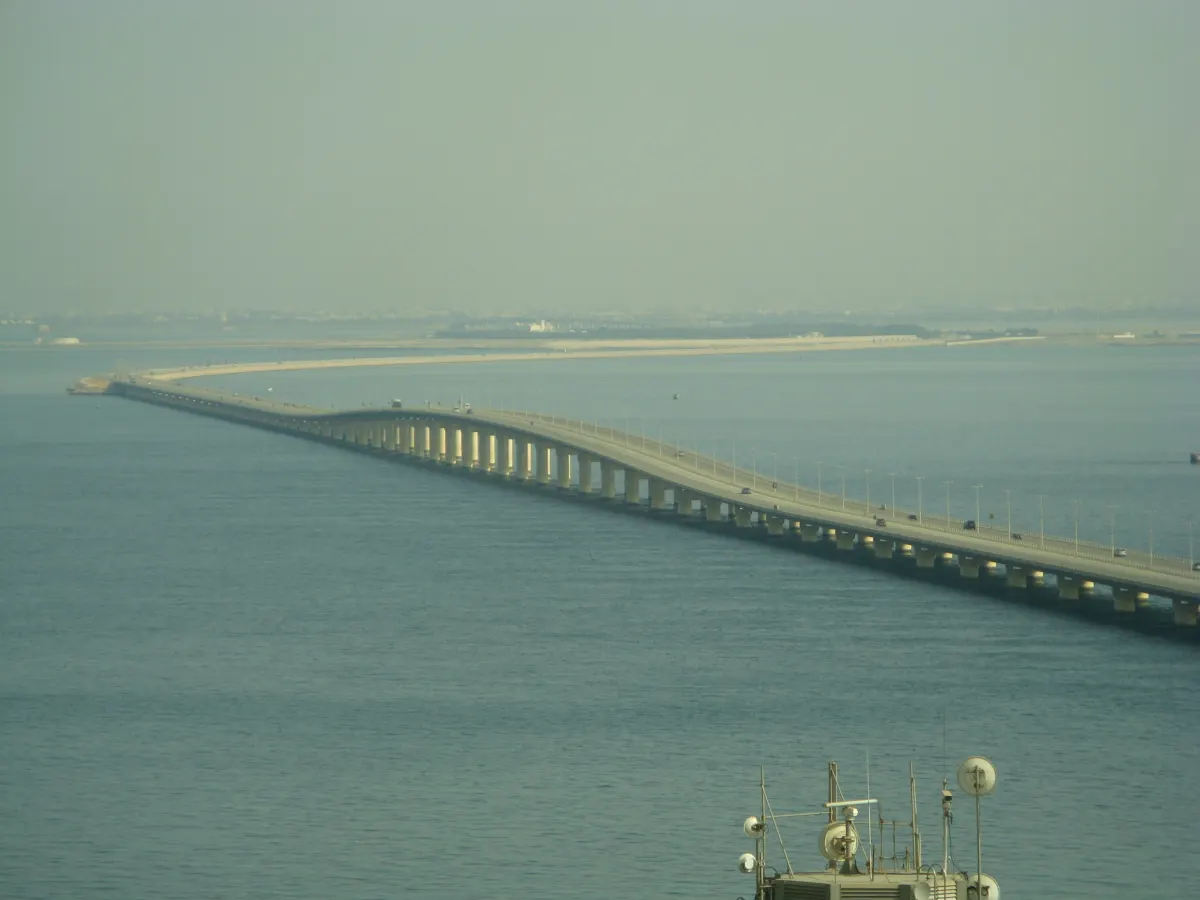
- Bahrain: over the King Fahd Causeway from Khobar. It's open, and is the only land route.
- Qatar: by the Salwa / Abu Samra crossing, south-east of Al-Ahsa. Open.
- United Arab Emirates: by Batha / Ghuwaifat, west of Abu Dhabi. Open. See Arriving in the UAE.
- Oman: by the long road through the Empty Quarter, to near Ibri. Open, but it's very remote: carry fuel, water and food. See Arriving in Oman.
- Jordan: from Tabuk to Aqaba, or from Qurayyat in the north. Open. See Arriving in Jordan.
- Kuwait: Australia says that only foreigners with a Kuwaiti residence permit are let in by land.
- Yemen and Iraq: don't try.
On the way to the border
- Check the entry rules of the next country for your passport: some give a visa on arrival, others want one in advance, and some ask for an onward ticket.
- Check that your Saudi visa isn't marked for air travel only, if you plan to come back by land.
- Cars: the UK says that the car must be wholly owned by and registered to you. A family member over 18 can be authorised to drive it through the Absher website. A rental car usually can't leave the country: ask the company. You'll need insurance for the next country.
- Buses: SAPTCO and SAT run coaches, some across borders; ask about seats, times and where they stop. Trains (SAR) run from Riyadh to Dammam, close to the Bahrain causeway, and north to Qurayyat near Jordan.
- Travel by day, with a full tank, water, food, medicines and a charged phone, and tell someone your route. Expect queues at the border, and have papers for everyone in the car.
Embassy numbers
- UK: +44 20 7008 5000 (24 hours).
- USA: Riyadh +966 11 835 4000, Jeddah +966 12 220 5000, Dhahran +966 13 839 5700; from abroad +1 202 501 4444.
- Canada: +966 11 202 3288 or +1 613 996 8885.
- Australia: +61 2 6261 3305.
- New Zealand: Riyadh +966 11 488 7988; from abroad +64 99 20 20 20.
See also: Practical facts about money, phones, driving and heat.


Comments
No comments yet.