
Saudi Arabia: practical facts for essential trips (transport, driving, money, phones, heat, weather and health)
Many governments advise against travel to Saudi Arabia at the moment, some of them completely, so this isn't a guide for a holiday: read the travel warnings. It's for people who have to be there for work, family or study, as of November 2026.
Flights and trains
- Domestic flights (Saudia, flynas, flyadeal and Riyadh Air) normally link all the cities, but airports are targets and timetables are badly disrupted. Read If you're in Saudi Arabia now before you fly.
- Trains are a good alternative. Saudi Arabia Railways runs the East line from Riyadh to Al-Ahsa and Dammam (a little over four hours), and the North line from Riyadh by Qassim and Hail to Al-Jouf and Qurayyat. They use different stations in Riyadh. The Haramain line links Makkah, Jeddah and Madinah. Book ahead, and bring your passport.
- Coaches: SAPTCO and others link cities, and some neighbouring countries.
In the cities
- The Riyadh Metro has six lines, opened from December 2024, with feeder buses. Pay with the Darb card or app, or a bank card. There are first-class, family and singles cars.
- Ride apps such as Uber and Careem are the usual way to get about. Canada says to use only pre-arranged and licensed taxis or ride services, and not shared or unregistered ones.
Driving
- Women can drive, and have been able to since 2018, on the same terms as men.
- Licence: a UK photocard is valid for three months after you arrive; Germany and Australia say that you need an international driving permit with your own licence. Rental companies may ask for one too. Australia says that visitors can drive only rental cars, not private ones.
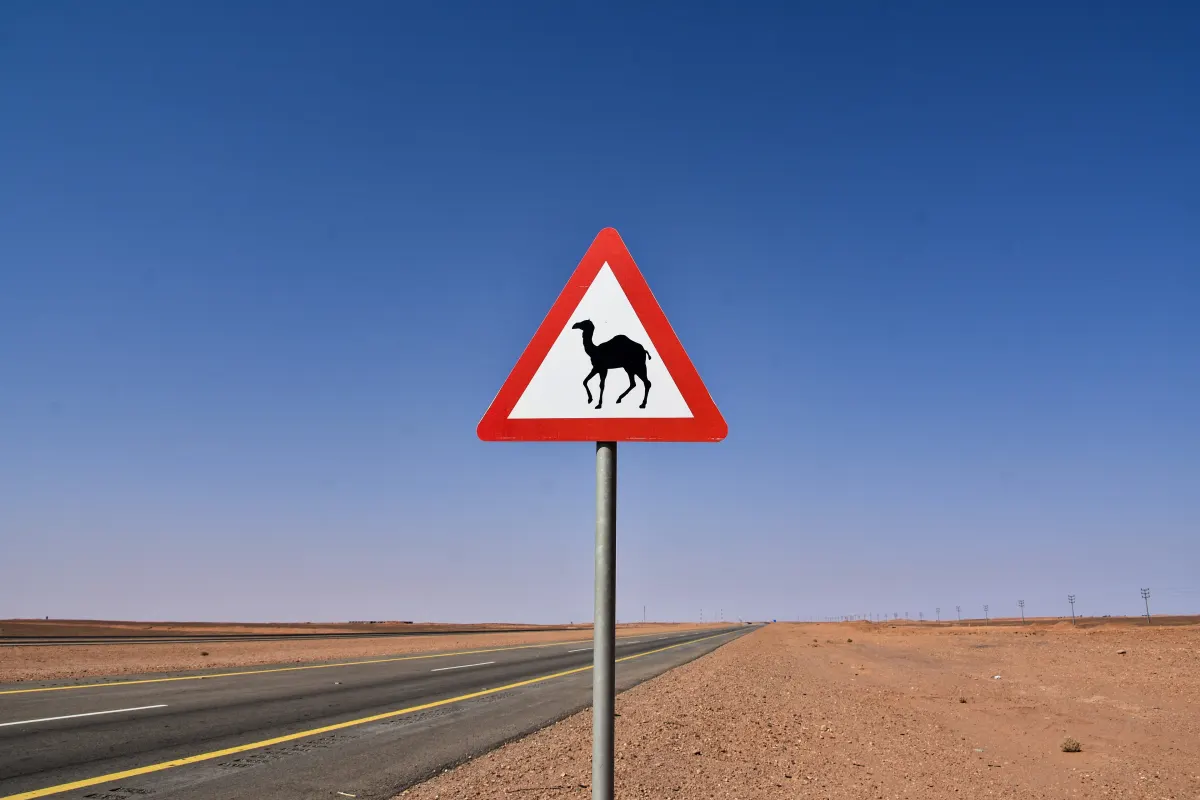
- The roads are dangerous: people speed, overtake on both sides and change lanes without warning. Keep to main roads, avoid driving at night outside towns, and look out for camels. Filling stations can be far apart, so carry water and fill up often.
- Speed and phone cameras are everywhere. Fines are sent by text message and recorded, and have to be paid before you leave.
- After an accident, don't move the car or leave. Call the police, and Najm, which handles insured accidents, says Canada. If someone's hurt, drivers can be held for days until it's settled.
- In the desert go in convoy and by day. Don't touch the 20 km strip along the northern border, or anywhere near Yemen.
Money
- The currency is the riyal (SAR), fixed at 3.75 to the US dollar.
- Cards and phone payments work nearly everywhere, even for tiny amounts. Keep some cash for small towns, tips and emergencies, and, as Germany suggests, some dollars or euros: in a crisis, machines and networks can fail.
- Prices in shops include 15% VAT. Tipping isn't expected, but about 10% is welcome in a restaurant that hasn't added service, and people often round up for drivers and give hotel staff 10 to 20 riyals.
- Bargain in the souqs, not in shops and malls.
Phones and apps
- The networks are STC, Mobily and Zain. Buy a SIM card or eSIM at an airport or official shop with your passport; coverage is good, apart from the remote desert. A foreign eSIM works too.
- WhatsApp messages work. Its voice and video calls have been blocked for years; some users say they've worked since early 2026, but nothing official has been announced.
- VPNs: the law is unclear, and using one to reach blocked or banned content can be an offence.
- Useful apps: Tawakkalna (the government's all-in-one app; residents use it to show their ID and, says the UK, to report suspicious aircraft or drones), Kollona Amn (reports to the police), Absher (Interior Ministry services, traffic fines and permits), Nusuk (for Umrah and Hajj), and a maps app with offline maps.
- Turn on emergency alerts. And remember that what you post can be a crime: see Laws and customs.
Weather
- November to March is the mild season: about 20 to 25°C by day in Riyadh, and cold nights, sometimes close to freezing in the centre and the north.
- May to September is fiercely hot: above 40°C in Riyadh and the east, and very humid on both coasts. The mountains of Asir are far cooler, but that's one of the areas to keep out of.
- Floods: heavy rain from about November to April can flood streets and wadis within minutes, above all in Jeddah. Never drive or walk through moving water, and don't camp in a wadi. Civil Defence is on 998.
- Dust storms are commonest in spring. Stay in, or pull well off the road.
Heat and health
- In summer stay inside from late morning to late afternoon, drink more than you think you need, and cover up from the sun. Never leave anyone in a parked car.
- Hospitals in the big cities are good, and expensive without insurance; small towns have only basic care. Pharmacies are everywhere, but foreign prescriptions aren't accepted.
- Check that your medicines are allowed before you travel: see Entering Saudi Arabia.
- Drink bottled or filtered water. Avoid camels, raw camel milk and undercooked camel meat, because of MERS.
- In the south-west and on the Red Sea coast use mosquito repellent: ask a travel clinic about dengue and malaria.
- Emergencies: 911; ambulance 997.
Food
Try kabsa, spiced rice with meat, and coffee with dates. Restaurants run from Yemeni, Indian and Lebanese places to international chains, and they stay open late. In Ramadan most are closed by day.

Comments
No comments yet.