
Entering Saudi Arabia: e-visas, stopover visas, what you can't bring in, and the rules for Makkah and Madinah
Many governments advise against travelling to Saudi Arabia at the moment, some of them completely: read the travel warnings first. If you have to go, these are the rules as of November 2026. They can change at short notice, so check with the Saudi tourism site, your airline and a Saudi embassy.
The tourist e-visa and visa on arrival
- Citizens of 72 countries can get a tourist visa online or on arrival at an airport, according to the visa news site VisasNews. They include the USA, the UK, Canada, Australia, New Zealand, the EU countries, Japan, South Korea and China. Bosnia and Herzegovina, Mexico, North Macedonia and Serbia were added on 5 November 2026.
- It's usually valid for a year, with many entries, for up to 90 days in total. It can't be extended, and you can't work on it.
- Apply at the official portal, visa.visitsaudi.com. Getting it before you travel is safer than on arrival. Australia warns of fake visa links, and many commercial sites charge more.
- The UK says that the e-visa includes medical insurance for up to 100,000 riyals. That's no substitute for travel insurance.
- Other nationalities may qualify if they live in a Gulf (GCC) country, or hold a US, UK or Schengen visa that they've used. Otherwise apply to a Saudi embassy or visa centre. Check your own case on the portal.
- Your passport needs six months' validity from the day you arrive.
- Australia says that tourists under 18 may be refused without a guardian.
British travellers
The UK lists three choices: the e-visa above; an electronic travel authorisation (ETA), valid for 730 days with up to 180 days in the country in total, and no insurance included; and an electronic visa waiver for one visit of up to 180 days, to be requested at least 48 hours before your flight.
Transit and the stopover visa
- You may need a transit visa if you pass through immigration, change to a flight on a separate ticket, or wait more than 12 hours, says the UK.
- Passengers of Saudia and flynas have been able to get a stopover visa of up to 96 hours with their ticket. The visa is free, apart from fees for processing and insurance, and it can't be extended. Ask the airline whether it's still offered.
- With airports under attack, avoid transit through Saudi Arabia for now.
Reasons you could be refused
- Evidence of travel to, or birth in, Israel: the UK says that you may not be allowed in.
- Ebola: Australia says that visas are suspended for travellers from the Democratic Republic of the Congo, Uganda, South Sudan and Kenya, and for anyone who's been there in the last 21 days.
- A yellow fever certificate is needed if you come from a country with a risk of it.
- Old fines, court cases or a travel ban: you could be arrested when you arrive.
- Two passports: carry only one. The UK says that officials will take the second.
- Posts on social media, even years old and from abroad. See Laws and customs.
What you can't bring in
- Alcohol, in any quantity, and don't arrive drunk.
- Drugs of any kind, including cannabis. Trafficking can bring the death penalty.
- Pork, pornography (Australia says that this can include pictures of scantily dressed people), weapons, and religious symbols or literature other than for personal use.
- Drones, without approval in advance. You may also need a licence for satellite phones, radios, recording devices, and powerful cameras or binoculars.
- Medicines: some ordinary prescription and over-the-counter medicines are controlled. Since 1 November 2025 travellers carrying anything narcotic or psychotropic need a clearance permit from the Saudi Food and Drug Authority before they travel. Carry the prescription and a signed and stamped doctor's letter that gives the dose.
- Cash, gold and jewellery: you must declare large amounts. Saudi customs (ZATCA) and news reports give 60,000 riyals, or more recently 40,000, so declare if you're near either.
All bags are scanned when you arrive, and phones and other devices can be searched.
Makkah and Madinah
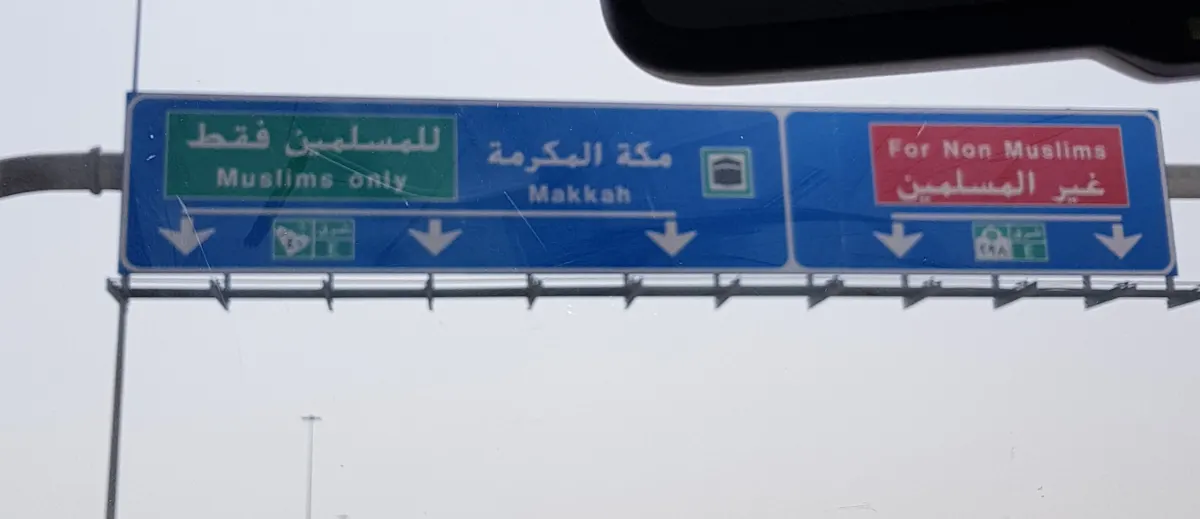
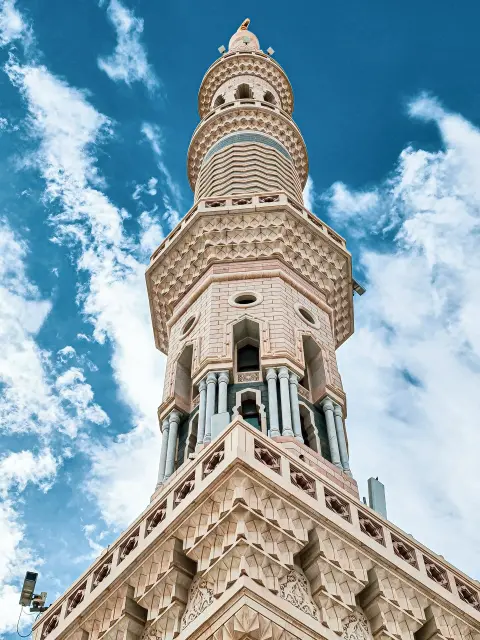
- Makkah (Mecca): only Muslims may enter. The closed zone is far larger than the mosque, and covers the city and the pilgrimage sites. There are checkpoints on all the roads, and signposted bypasses for non-Muslims. Follow them carefully, and check what your navigation app suggests.
- Madinah (Medina): advice differs. Australia says that only Muslims are allowed to enter it. Other sources say that non-Muslims can visit the city, but not the Prophet's Mosque and the marked area around it. If you aren't Muslim and have to go there, ask first, and never pass a sign or a checkpoint that says Muslims only.
- In the Hajj season the rules for Makkah, and for flights to Jeddah, Madinah and Taif, are much tighter. The next Hajj is expected on about 14 to 19 May 2027. See Umrah and Hajj.
Arriving by land
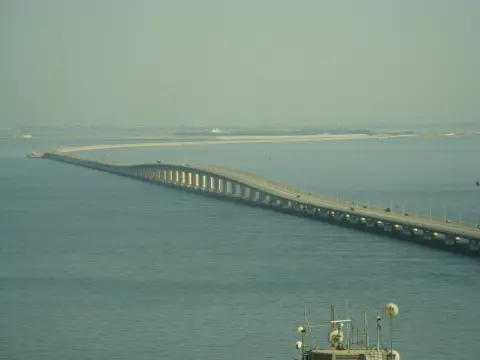
You can cross from Bahrain, Qatar, the UAE, Oman, Jordan and Kuwait, but make sure your visa isn't marked "via air" (it may be in Arabic). Reports say that online registration before arrival, at first for the King Fahd Causeway and Salwa, will become compulsory in 2027.
Leaving
Overstaying means a fine, detention and a possible ban, and you can't leave until it's paid. Pay traffic fines, hotels and hospital bills before you go to the airport or border: people with debts or court cases can be banned from leaving for months or years. Residents need an exit permit.

Comments
No comments yet.