
Money and phones in Kuwait: dinars, cards, tipping, bargaining, SIM cards, eSIMs and useful apps
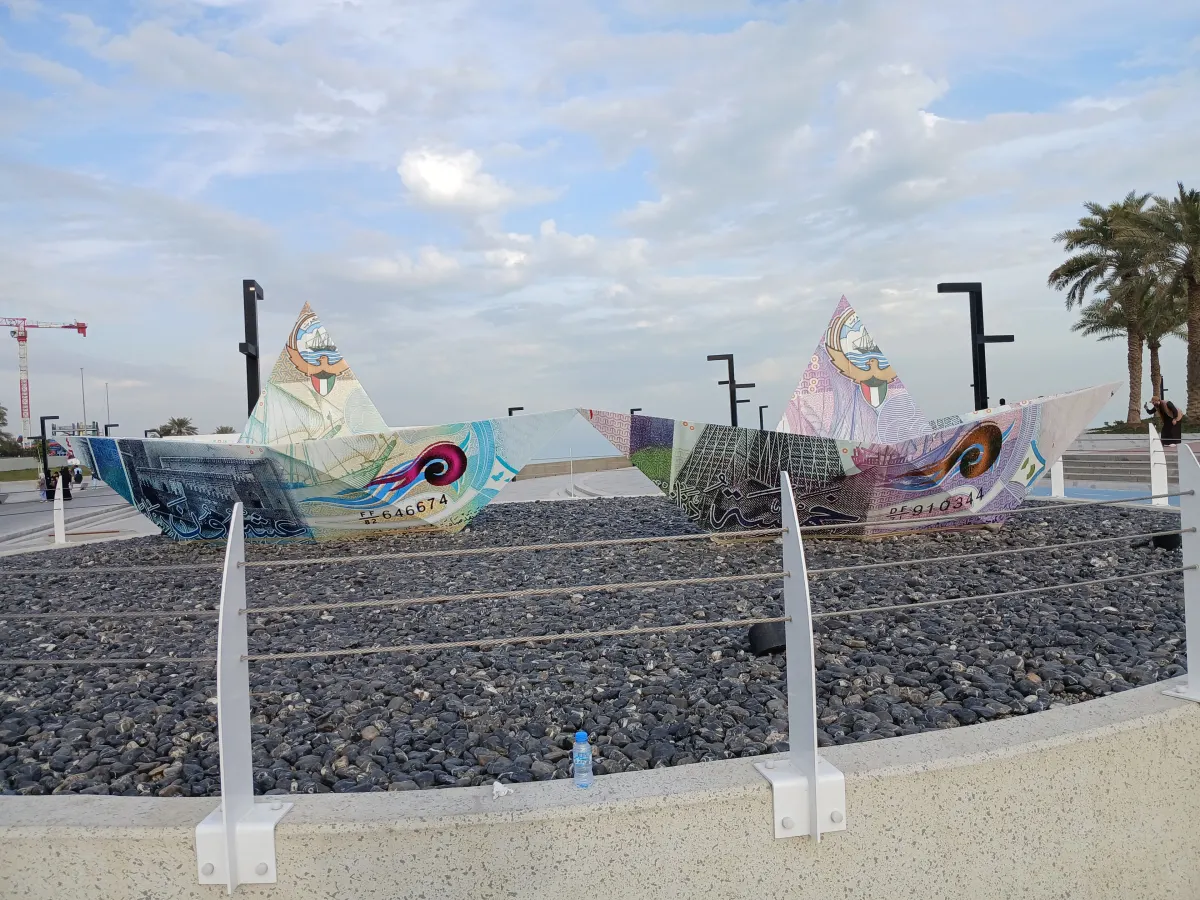
The Kuwaiti dinar is the most valuable currency in the world, so prices look small: a lunch for 3 dinars costs about 10 US dollars. It's divided into 1,000 fils, not 100, and that's the one thing to get right.
Dinars and fils
- One dinar (KD or KWD) is worth a little over 3 US dollars. The rate moves slightly, as it's tied to several currencies.
- Prices have three decimals: 1.250 KD is one dinar and 250 fils. Read the point carefully when you sign.
- Notes are a quarter, a half, 1, 5, 10 and 20 dinars. There are coins of 5 to 100 fils.
- Bring US dollars or euros in cash as a reserve, as Germany suggests, above all now: card systems and flights can fail together. Change them at a bank or a proper exchange company, not in the street.
- Declare 3,000 dinars or more, in any currency, when you arrive and when you leave.
Cards
- Cards and phone payments are taken almost everywhere in malls, hotels, supermarkets and restaurants. Some shops and machines take only K-Net, the local bank card, and Australia warns that some banks refuse foreign cards.
- Cash machines are common. Choose to pay in dinars, not in your own currency.
- Carry small notes for buses, taxis, the souq and tips.
- Canada warns of cybercrime and copied cards. Don't use public Wi-Fi for banking.
Costs, tax and tips
- There was no VAT in November 2026. Hotels are dear, petrol and everyday food cheap.
- Tipping isn't expected everywhere. Leave about 10% in a restaurant if there's no service charge, round up taxis, and give half a dinar to a porter. Most people serving you are migrant workers on low pay.
Shopping and bargaining
- In Souq Al-Mubarakiya you can bargain, politely and with a smile, for carpets, perfume, cloth and souvenirs, less so for food. Prices in malls are fixed.
- Good things to take home: dates, saffron, spices, oud and perfume, and the woven wool called sadu.
- Don't buy old weapons, shell cases or other war souvenirs, or anything that could be an antiquity.
Phones
- The networks are Zain, Ooredoo and stc. Their shops in malls sell prepaid SIM cards to visitors, with your passport. With the airport half closed, don't count on a counter there.
- A travel eSIM bought before you leave means you're online when you land, which matters now. Coverage is good wherever people live.
- Calls on WhatsApp and similar apps usually work in Kuwait, unlike in Qatar, but that can change.
- Everything you send or share can be read as a public statement. See Kuwait's laws, above all on the war.
- Scam calls: people pretending to be the police, customs or a bank, often with a logo on a video call. Hang up.
On your phone before you arrive
- Your embassy's number, your government's travel alerts, and your airline's app.
- KUNA (the state news agency) and the Ministry of Interior's accounts, for official news in an alert.
- Google Maps or another map, with Kuwait downloaded, and Google Translate with Arabic.
- Careem and another ride app, and Talabat for food.
- Copies of your passport, visa, marriage certificate and medicine papers. A charged power bank.
Plugs, time and opening hours
- Sockets are the British three-pin type, 240 volts. The time is three hours ahead of GMT all year.
- The weekend is Friday and Saturday. Offices and embassies work from Sunday to Thursday, mostly in the morning. Many shops close for a few hours after lunch and stay open late, and on Friday most open only in the afternoon.
- English is widely spoken and most signs have it.
Comments
No comments yet.