
Heat, health and weather in Kuwait: month by month, 50-degree summers, dust, floods, water, doctors and insurance
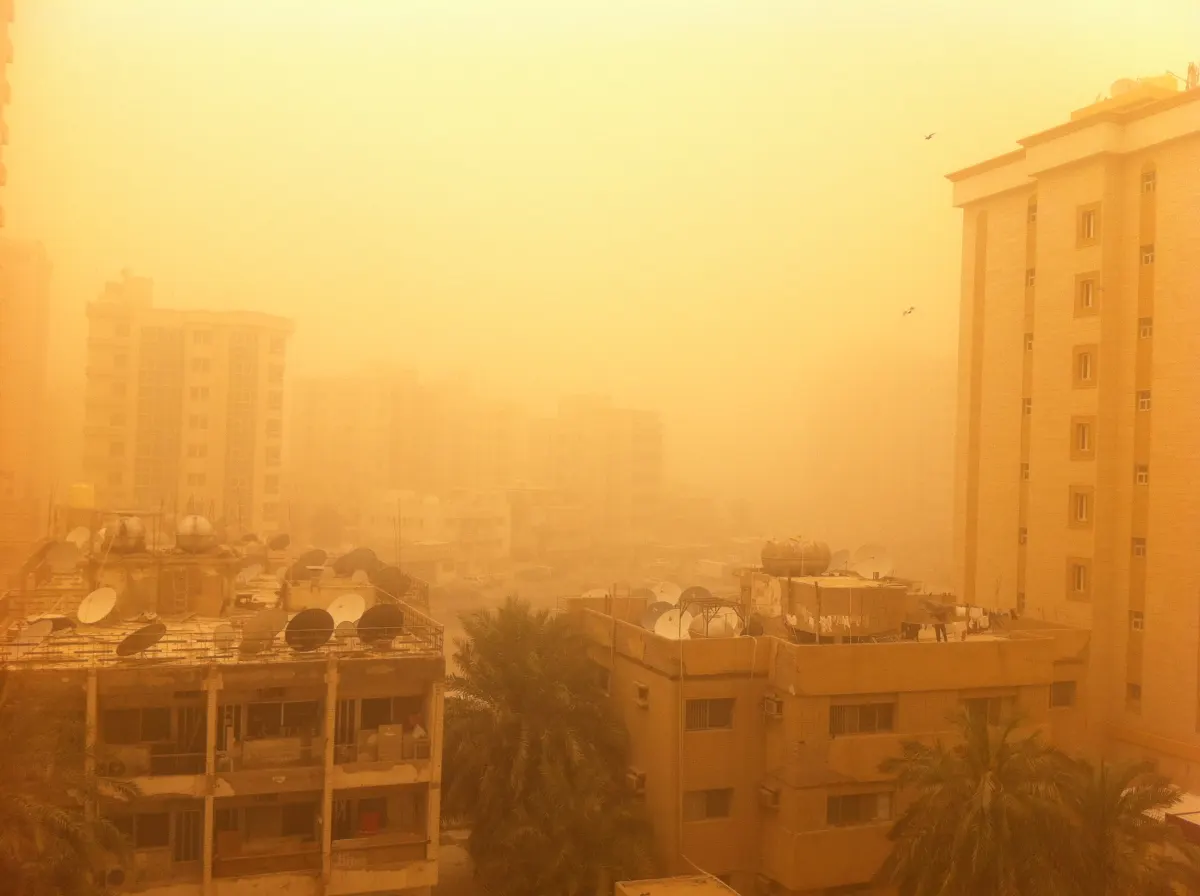
Kuwait has some of the highest temperatures ever measured: nearly 54°C. But winter days are mild and winter nights can be cold. Dust, dirty air and sudden floods catch out people who have only thought about the heat.
Month by month
Average night and day temperatures in Kuwait City for 1991 to 2020:
- December 9 to 22°C, January 8 to 20°C, February 9 to 22°C: pleasant days, cold nights, and the most rain. Bring a warm coat.
- March 13 to 27°C, April 19 to 33°C: warm, with thunderstorms and the first dust.
- May 25 to 40°C, June 29 to 45°C: hot, dry and windy, with the worst dust storms.
- July and August 30 to 47°C: extreme. Temperatures above 50°C aren't rare, and August can be humid too.
- September 26 to 43°C, October 21 to 36°C: slowly cooling.
- November 14 to 27°C: lovely, but it can bring the heaviest rain.
The best months are November to March. Germany advises people with health problems not to travel to Kuwait at all from late May to early September.
Coping with the heat
- Stay indoors from about 10am to 5pm from May to September. Walk early or after dark.
- Drink before you're thirsty, with rehydration salts or something salty. Carry more water than you think you need, even for a short drive.
- Wear a hat, sunglasses, sunscreen and loose long sleeves. Seat belts, door handles and sand can burn you.
- In a breakdown, stay in the shade of the car and call for help. Don't set out walking.
- Never leave a child or an animal in a parked car.
- In heavy demand the electricity can be cut, and power and water plants have been attacked this year. Keep bottled water in your room and know where there's another cool place.
- Heat exhaustion: headache, dizziness, sickness, cramps, cold sweaty skin. Get into the cool, lie down, sip water. Heatstroke: confusion, very hot skin, a fit, collapse. Call 112 and cool the person with water, wet cloths and a fan until help comes.
Dust and dirty air
- Dust storms come all year, most from May to August. Stay in, shut the windows, turn off fresh-air vents, and wear a tight mask if you must go out. Flights and roads are affected.
- Air pollution often reaches dangerous levels, and smoke from attacks on oil plants makes it worse. Check an air-quality app. People with asthma, heart or lung disease should bring extra medicine and talk to a doctor before they go.
Rain and floods
It rains little, about 116 mm a year, but some years a month's worth falls in an hour, mostly from November to March. Underpasses fill up and roads close. Don't drive into water, and don't camp in low places. Rain also uncovers and moves old mines.
Water, food and illness
- Tap water is desalinated. Locals mostly filter it, and Germany advises not drinking it: buy bottled water, which is cheap.
- Check routine vaccinations, measles above all, and hepatitis A. Ask a travel clinic about hepatitis B, typhoid and rabies, six to eight weeks before you go.
- MERS, a serious virus from camels, has occurred here. Keep away from camels and raw camel milk or meat.
- Tell a doctor at home about any fever after your trip.
- Swim at pools and clubs rather than in the bay near outfalls, and watch for jellyfish and stingrays.
Doctors and hospitals
- Call 112 for an ambulance. Germany says the state ambulances take people only to public hospitals.
- Canada says visitors can use only private hospitals and clinics. They're modern and dear, and often want payment at once. Psychiatric care is limited.
- Australia says a married woman may be asked for her husband's permission for some procedures. Pregnant women who aren't married should talk to their embassy before they see a doctor.
- Pharmacies are plentiful, but some medicines are kept for Kuwaiti citizens. Bring enough of your own with the certificate that controlled medicines need: see Arriving in Kuwait.
Insurance
- You need cover for hospital bills and medical evacuation. Don't rely on the insurance you pay for with the visa.
- Many policies don't pay where governments advise against travel, or for anything caused by war. Ask in writing. See Is it safe to visit Kuwait now?
Packing
Loose cotton clothes that cover shoulders and knees, a warm layer for winter nights and air conditioning, a tight-fitting mask, eye drops, sunscreen, rehydration salts, your medicines with papers, a torch, and a power bank.



Comments
No comments yet.