
Festivals in Bhutan: tshechus, masked dances, thongdrels and the main dates
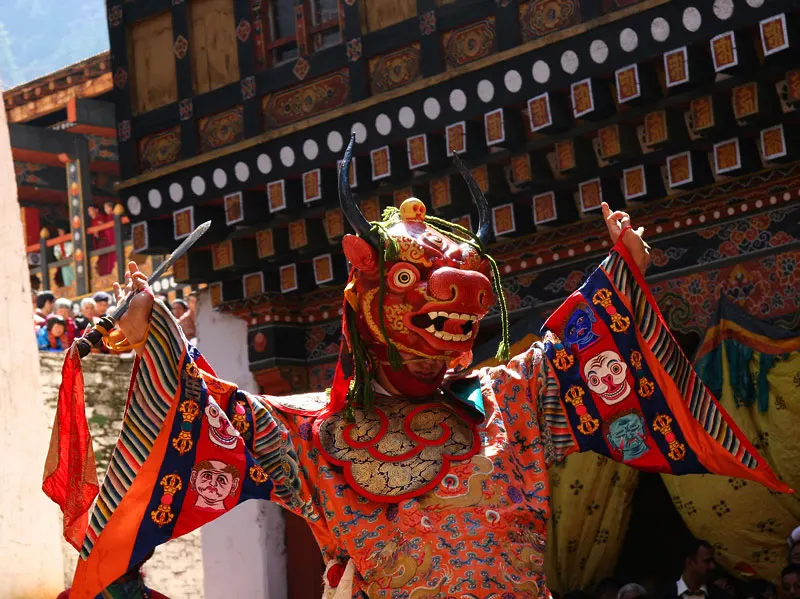
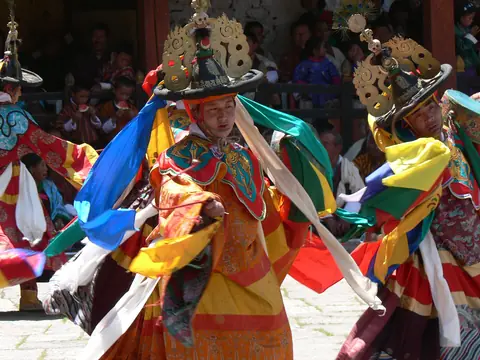
A tshechu is a religious festival in honour of Guru Rinpoche, who brought Buddhism to Bhutan, held once a year at each dzong and at many temples. Monks and laymen perform masked dances (cham) in the courtyard over several days, while whole valleys come in their finest clothes to watch, picnic and be blessed. Seeing one is the highlight of many trips.
What you'll see
- The dances tell stories: the Black Hat dance, the drummers of Drametse, the stag and the hounds, the Lords of the Cremation Grounds, and the long Judgement of the Dead, with a black demon and a white god arguing over souls. The dance of the Eight Manifestations shows the forms of Guru Rinpoche himself.
- Atsaras, red-masked clowns with wooden phalluses, tease the dancers and the crowd, including tourists.
- On the last morning of some tshechus, a thongdrel, a huge appliqué painting, is unrolled down a wall before dawn and rolled up before the sun reaches it. Seeing it is said to free you from sin, so expect to get up at 3 or 4am.
- Between the dances, women sing and dance in lines. Outside, there are stalls, food and gambling games.
Tours and activities
Paro Tsechu festival
Paro
One of Bhutan's biggest festivals, held each spring (March or April) in the courtyard of Paro Dzong.
The main festivals
Dates follow the Bhutanese lunar calendar, so they move each year. These are the Department of Tourism's tentative dates for 2027: check with your operator before you book.
- Punakha Dromchoe and Tshechu, at Punakha Dzong: 13–15 and 16–18 February. The Dromchoe re-enacts a 17th-century battle with Tibet. (Punakha Dzong was closed to visitors after a flood in late October 2026: see Health and safety.)
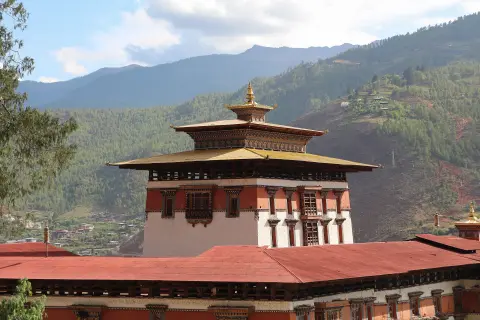
- Paro Tshechu, at Rinpung Dzong: 18–22 March, with the thongdrel on the last day. One of the biggest.
- Rhododendron Week at Merak, in the east: 3–9 April, and the Rhododendron Festival at Lamperi, near Dochula: 22–23 April.
- Ura Yakchoe, a village festival in Bumthang: 18–22 April.
- Nimalung and Kurjey tshechus, in Bumthang: 12–14 June, in the quiet season.
- Wangdue Tshechu: 8–10 October.
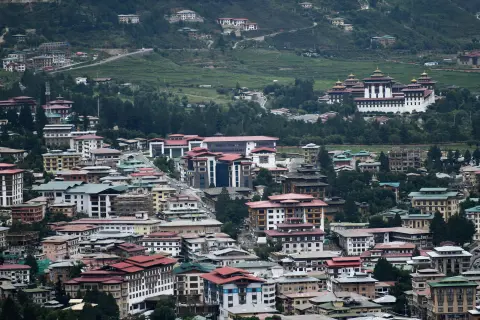
- Thimphu Tshechu, at Tashichho Dzong: 10–12 October, after the Thimphu Drubchen. The biggest of all.
- Gangtey Tshechu, in Phobjikha: 13–15 October.
- Jomolhari Mountain Festival, with yaks, horses and highland sports: 14–15 October. The Royal Highland Festival in Laya is also in October.
- Jakar Tshechu: 6–9 November, and Jambay Lhakhang Drup: 14–17 November, both in Bumthang. Jambay Lhakhang's is known for its midnight fire and naked dances.
- Black-necked Crane Festival, at Gangtey in the Phobjikha Valley: 11 November every year, with dances and songs by local schoolchildren.
- Mongar and Trashigang tshechus, in the east: 6–9 December.
- Druk Wangyel Tshechu, at the Dochula Pass: 13 December every year, danced by soldiers with the Himalaya behind.
- National Day: 17 December every year, with a big celebration in a different district each year.
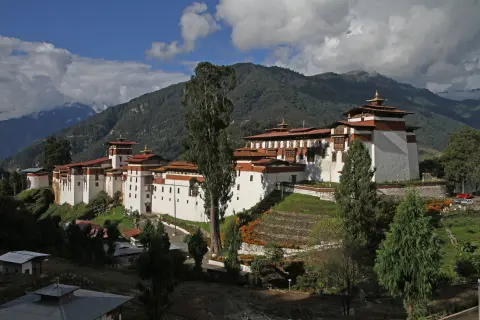
- Trongsa Tshechu: 5–9 January 2028.
Planning your trip around one
- Book six months or more ahead for Paro and Thimphu: hotels, flights to Paro and good guides all fill up.
- Smaller festivals, in villages and in Bumthang, are more relaxed, with fewer tourists and better views.
- One day, or a morning and an afternoon, is enough for many people, as the dances are long. The last day, with the thongdrel, is the most special and the most crowded.
- Festivals last all day, outdoors. Bring sun protection, warm layers, water, snacks and something to sit on.
How to behave
- It's a religious event: wear long sleeves, and long trousers or a skirt, or hire a gho or kira. See Culture and etiquette.
- Don't walk onto the dance ground or into the dancers' space, and don't stand up in front of people sitting down. Don't use flash.
- You can usually photograph the dances, but not inside the temples. Ask before taking close-ups of people.
- If the King or the Je Khenpo (chief abbot) is there, follow your guide's instructions: cameras may have to be put away and bags checked.
- When a lama gives blessings, you're welcome to join the queue.
Comments
No comments yet.