
Money and phones in Bhutan: ngultrum, Indian rupees, cards, ATMs, tipping, SIM cards and eSIMs
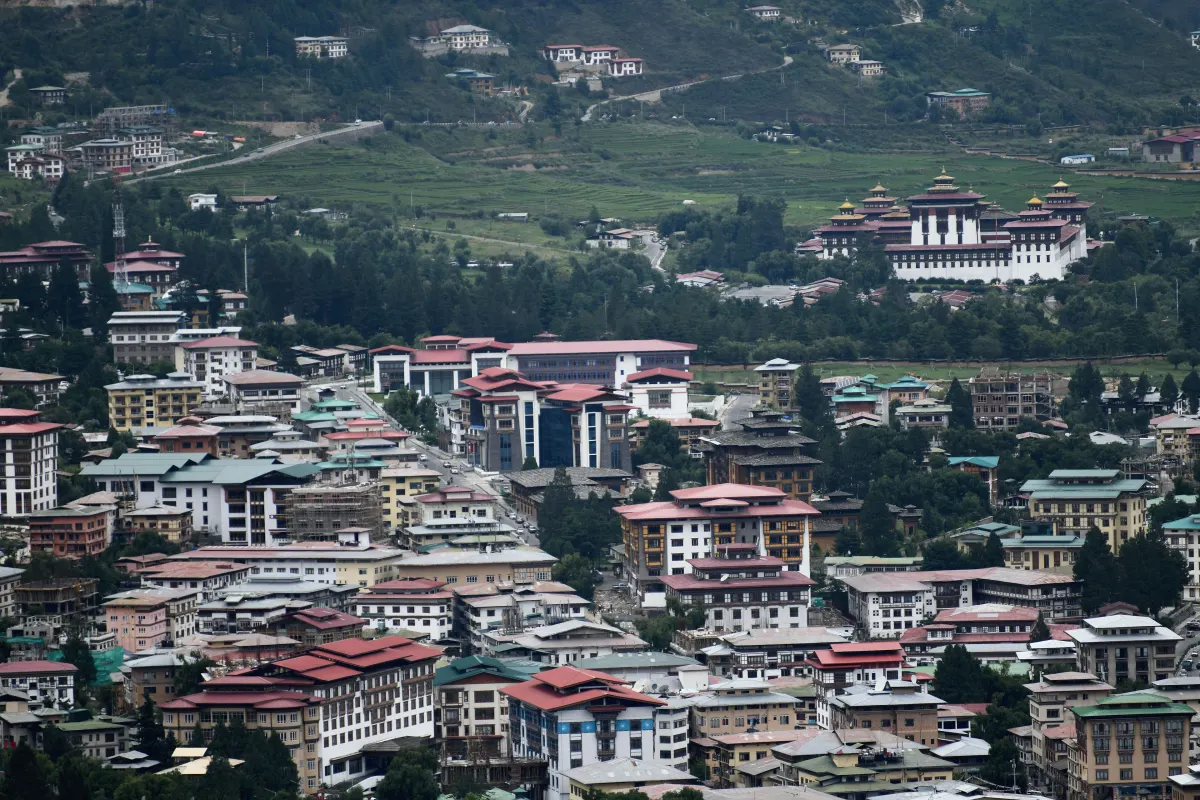
Most of your trip is paid for before you arrive, so you don't need much money in Bhutan: mainly for drinks, souvenirs, tips and the odd meal. Bring some cash, as cards don't work everywhere.
Ngultrum and rupees
- The currency is the ngultrum (Nu or BTN), worth exactly the same as the Indian rupee. You'll get change in either.
- Indian rupees are widely accepted, especially ₹100 notes and smaller. The rules on bigger notes have changed several times: ₹500 notes have been allowed within a limit of ₹25,000 a person, but some shops won't take them, and don't bring ₹2,000 notes.
- Ngultrum are hard to change outside Bhutan. Spend them or change them back before you leave. You can take up to Nu 30,000 in or out.
- Declare foreign currency worth US$10,000 or more.
Changing money
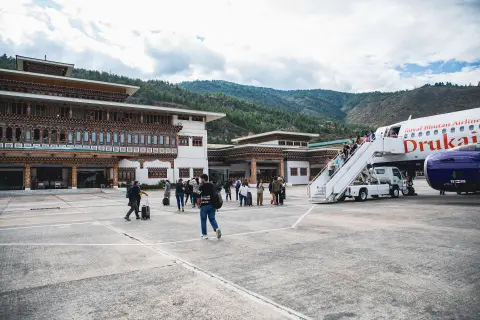
- Change money at Paro airport when you arrive, at banks and authorised exchange offices in Thimphu, or at bigger hotels.
- Bring clean US dollar, euro or pound notes, or Indian rupees. US dollars are also accepted directly in many hotels and craft shops.
- Outside Paro, Thimphu and Punakha, assume that you'll need cash in ngultrum or rupees.
Cards and ATMs
- Visa and Mastercard work in bigger hotels, restaurants and craft shops in the towns, and for paying the visa and SDF online.
- The Bank of Bhutan says it has about 85 ATMs that take foreign cards, with a limit of Nu 15,000 for each withdrawal and a charge of Nu 315 each time, at the time of writing. Your own bank may add fees too.
- Tell your bank you're going to Bhutan and turn on international use: cards are often blocked as suspected fraud. Magnetic stripe or chip cards need a PIN at ATMs.
- Some ATMs will refuse your card or be out of order, so carry enough cash not to depend on one, especially in Bumthang and further east.
Paying by phone
- Bhutanese people pay for nearly everything by scanning QR codes with banking apps. Visitors can use the Bank of Bhutan's goBoB wallet or Bhutan National Bank's MyPay, with a local SIM card, topped up from a foreign card.
- Apple Pay and Google Pay work on the Bank of Bhutan's card machines.
- Since 2025, some hotels, shops and tour companies have also taken cryptocurrency through Binance Pay.
Tipping
- Tipping isn't a Bhutanese tradition, but guides and drivers on tours have come to expect a tip at the end, in cash in an envelope. Ask your operator what's usual. Guides usually get more than drivers.
- On a trek, tip the cook, helpers and horsemen too, usually through the guide.
- Service may be added in hotels and restaurants; otherwise, small tips are appreciated but not expected. It's polite to leave a small offering on the altar in temples.
Shopping
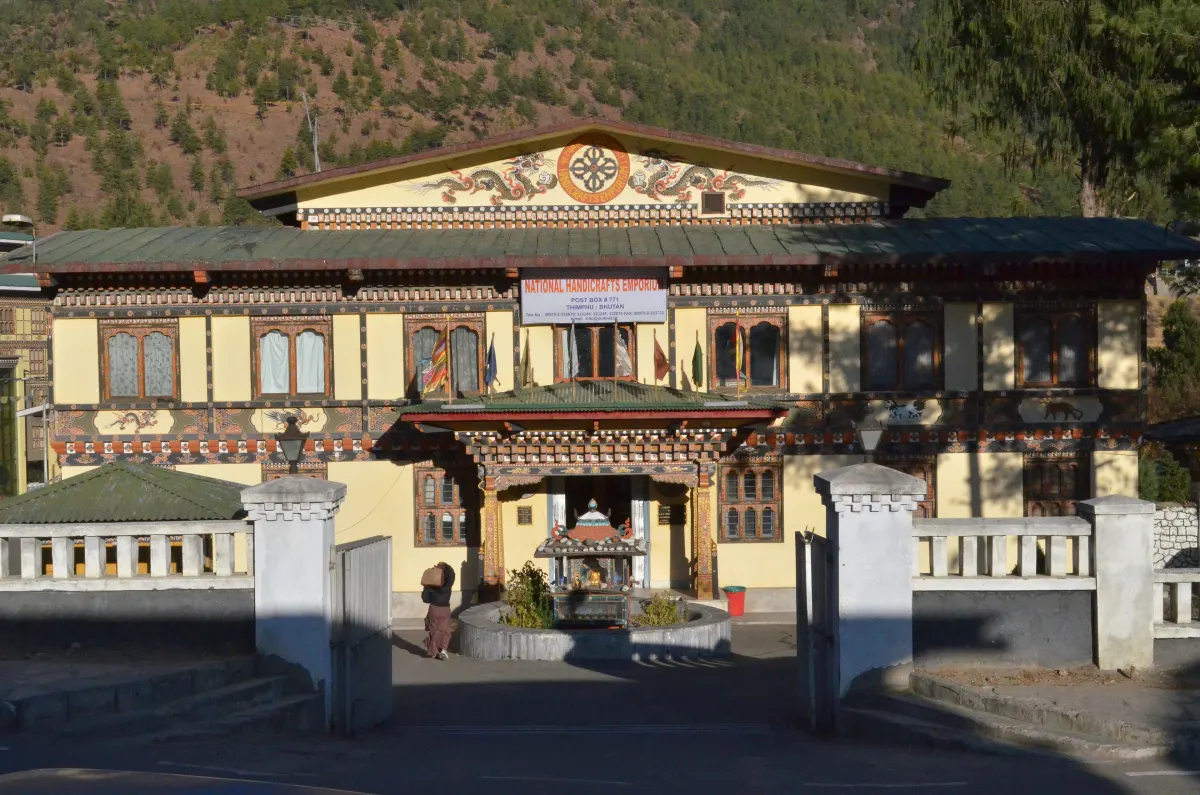
- Good buys include hand-woven textiles, handmade paper (dezo), carved wooden bowls and masks, incense, thangka paintings, stamps, lemongrass oil, red rice and honey.
- Try the craft market and the weekend farmers' market in Thimphu. Some souvenirs sold to tourists are made in India or Nepal: ask.
- Bargaining is gentle, and fixed prices are common.
- Antiques can't be exported. See Arriving in Bhutan.
SIM cards and eSIMs
- The two networks are B-Mobile (Bhutan Telecom) and TashiCell. You can buy a SIM card at the visitor information centre in Paro airport, or in towns. Bring your passport.
- Bhutan Telecom's tourist SIMs and eSIMs cost Nu 1,100 for a week or Nu 1,900 for two weeks with unlimited data, at the time of writing, or Nu 200 to 500 for 1 to 3 GB. You can order ahead online. Its 4G uses the 1800 MHz band, so check that your phone has it.
- Roaming is often expensive or not available: check with your network. Some international travel eSIMs cover Bhutan too, usually at a higher price.
- Coverage is good in the towns and along the main roads, with 4G and some 5G, and poor or non-existent on treks, passes and in remote valleys.
- Most hotels have Wi-Fi, though it can be slow.
Useful numbers and apps
- Police 113, ambulance 112, fire 110. The Department of Tourism's helpline is 2300 within Bhutan, or +975 17661974.
- Bhutan's country code is +975, and it's six hours ahead of UTC all year.
- Download offline maps before you come. Bhutan RoadWatch shows road closures: see Getting around.
- English is taught in schools and widely spoken, so you won't need a translation app much.
Plugs
Electricity is 230 volts. You may find British three-pin, European two-pin and Indian round-pin sockets, so bring a universal adaptor, and a power bank for treks.
Comments
No comments yet.