
Getting around Bhutan: guides and drivers, mountain roads, taxis, buses and domestic flights
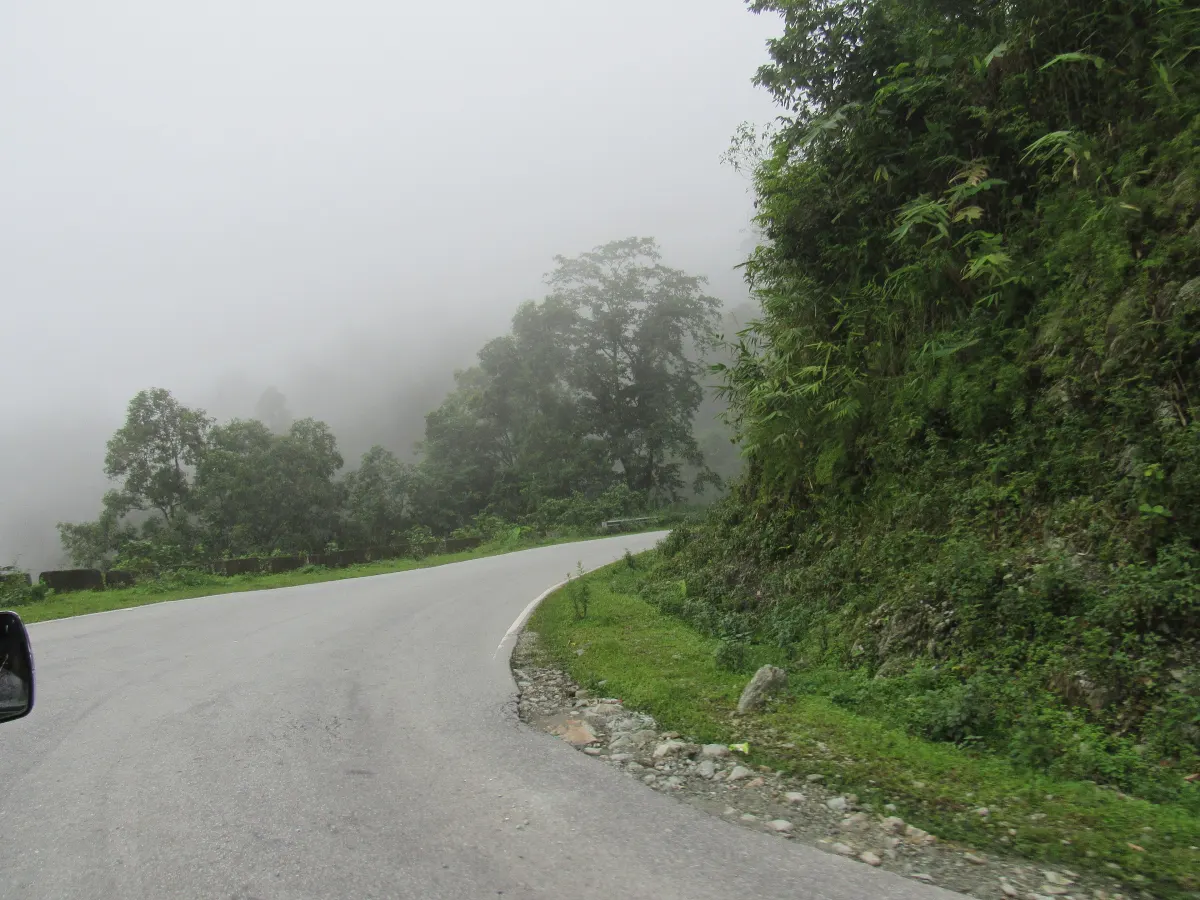
Bhutan has no railways and few straight roads. You'll travel in a car or minibus with a driver and a guide, winding slowly over mountain passes. Distances look tiny on the map, but the drives take a lot longer than you'd think, and they're a big part of the trip.
By car with a driver
- You can't rent a self-drive car in Bhutan: cars come with a driver. Your operator arranges one, or you can hire one through a hotel or a car hire company.
- The rules call for one guide for each vehicle, or two if there are more than 12 tourists in it.
- If you get travel sick, bring tablets and sit in the front: the bends never stop. Ask the driver to stop for views, tea and photos as often as you like.
- Wear a seat belt, and avoid travelling at night. Cows, dogs, trucks and road works are all normal hazards.
How long the drives take
These are typical times without long stops. Allow more in the monsoon, or when there are road works.
- Paro to Thimphu: about 1 to 1½ hours.
- Thimphu to Punakha, over the Dochula Pass: about 2½ to 3 hours.
- Punakha to the Phobjikha Valley: about 2½ to 3 hours.
- Phobjikha to Trongsa, over the Pele La pass: about 4 hours.
- Trongsa to Jakar, in Bumthang: about 2 to 2½ hours.
- Paro to Haa, over the Chele La pass at nearly 4,000 metres: about 2½ hours.
- Phuentsholing, on the Indian border, to Thimphu or Paro: about 5 to 6 hours.
- Bumthang on to Mongar and Trashigang in the far east: two long days.

Natural features
Dochula Pass
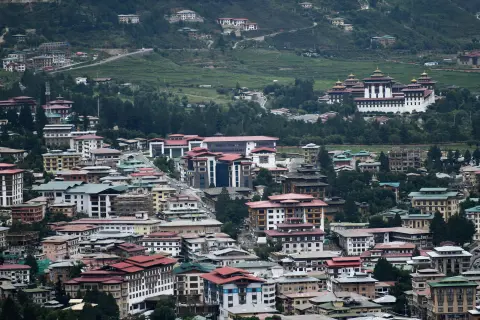
Thimphu
A mountain pass at 3,100 m on the road from Thimphu to Punakha, with 108 white memorial chortens and, on clear days, a panoramic view of the snow-cap…
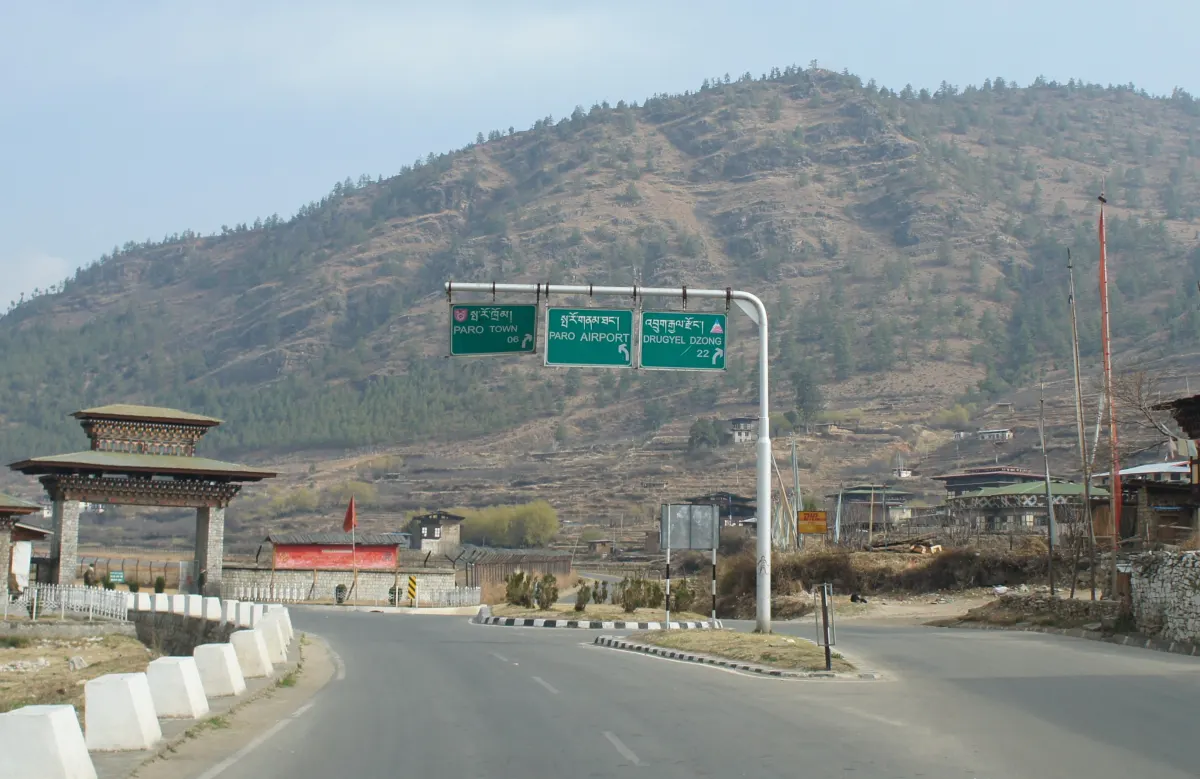
Landslides and closures
- In the monsoon, from June to September and sometimes into October, landslides can close roads for days. The government says the Phuentsholing to Thimphu highway is the country's most vulnerable, and the east-west highway is often disrupted too.
- In recent monsoons, a blocked road has often stayed closed for several days. Build in a spare day at the end of your trip.
- In winter, snow or ice can close the high passes for a few hours, usually not longer.
- Your driver will know what's open. The Department of Surface Transport posts closures on Facebook and in the Bhutan RoadWatch app.
- A glacial lake flood on 29 October 2026 washed away parts of the roads to Gasa and Laya, north of Punakha. Temporary access had been restored by late November, but check before planning to go there.
Domestic flights
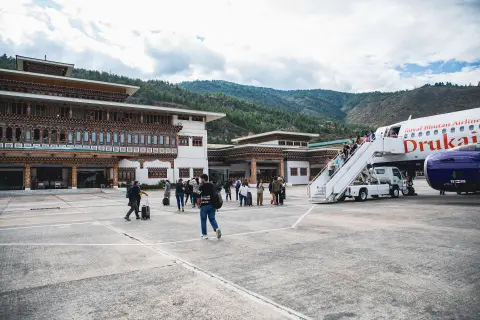
- Drukair flies small planes from Paro to Bumthang (about 35 minutes, instead of a day or two by road), Yonphula near Trashigang in the east, and Gelephu in the south. There are only a few flights a week: in December 2026, for example, Bumthang flights were on Thursdays and Sundays. See the monthly schedules.
- Flights depend on the weather, and Yonphula is especially unreliable in the summer. Don't rely on a domestic flight the day before you leave the country.
- The baggage limit is usually 20 kg in economy.
- Helicopters can be chartered for sightseeing and transfers, and are used for medical evacuations, in clear weather.
Taxis, buses and walking
- There are taxis in Thimphu, Paro and Phuentsholing. Agree the fare before you get in. Many are shared between towns.
- Public buses link the towns, and they're cheap and slow. As you must travel with a guide, few tourists use them.
- The towns are small enough to walk around. Thimphu famously has no traffic lights: a police officer directs the traffic by hand at the main junction.
Bringing your own car or motorbike
- You can drive in from India, but beyond the border towns you pay Nu 4,500 a vehicle for each day, the same for a motorbike, and you must have a guide with you.
- You need your driving licence (an Indian licence is accepted), the vehicle's registration, insurance and pollution papers, and an entry permit. If the vehicle isn't yours, bring a letter from the owner.
- Motorbike tours need a guide or road captain and a back-up vehicle. The roads are beautiful for riding, but narrow, with big drops, gravel and sudden cows.
By bicycle
Mountain biking is popular, and most operators can arrange bikes with a support vehicle. The Tour of the Dragon, each September, is a one-day race from Bumthang to Thimphu over four passes, and one of the hardest there is.
Comments
No comments yet.