
Arriving in Bhutan: visa, the Sustainable Development Fee, guides, Paro flights and land borders
Most visitors to Bhutan need a visa, approved before they travel, and pay a daily tourist tax, the Sustainable Development Fee (SDF). You can book with a tour operator or arrange the parts yourself, but either way you travel with a licensed guide. Indian citizens need a permit instead of a visa and pay a lower fee.
The Sustainable Development Fee
- The fee is US$100 per adult per night for visitors of every nationality except Indians, at the time of writing. It's US$50 for children from 6 until they turn 12, and free for children under 6.
- The full rate in law is US$200. In November 2026, the Department of Tourism announced that the half-price rate has been extended until 31 December 2029.
- You pay it up front, with your visa application, for every night of your stay. If you shorten or cancel your trip, the nights you don't use can be refunded, less bank charges.
- It's a government tax: it doesn't pay for your hotel, guide, car, meals or flights. See Choosing a tour for what the whole trip involves.
The visa
- You apply online through the link on the Department of Tourism's visa page, or your tour operator or hotel applies for you. The application costs a one-off US$40, which isn't refundable.
- You need a scan of your passport, a digital photo and your travel dates. Allow at least five working days, and tell your bank first, as card payments to Bhutan are sometimes blocked.
- The visa lets you stay for up to 90 days from entry, as long as you've paid the SDF for each night. If you want to stay longer, apply before it runs out.
- Your passport should be valid for at least six months after you leave Bhutan. Carry the visa approval with you: your airline will ask for it, and the visa is stamped in your passport on arrival.
You need a guide
- Since 2022, you haven't had to book through a tour operator, but a licensed guide is mandatory. In April 2026, the Department of Tourism repeated that tourists must be with a guide at all times, including at dzongs and other monuments, and on the road from Paro airport to other districts such as Thimphu.
- The rules also expect you to have certified accommodation and transport arranged, so have your guide and driver meet you at the airport. Treks need a licensed trekking guide.
- The exception is the border towns: you don't need a guide until the first checkpoint, such as Rinchending above Phuentsholing.
- With a guide, you no longer need a route permit, apart from a few restricted and prohibited areas, mostly near the northern border.
Indian, Bangladeshi and Maldivian visitors
- Indians need an entry permit, with an Indian passport or a voter ID card. Children under 18 can use a passport or birth certificate, and must be with a parent or guardian. Apply online beforehand, through a hotel or operator, or at the border, where the queue can be long (bring a passport photo). The SDF is Nu 1,200 (or ₹1,200) a night, half that for children from 6 until they turn 12, and free under 6.
- Bangladeshis need a visa, which they can get in advance or on arrival. The first 15,000 visitors from Bangladesh pay the lower SDF, about US$15 or Nu 1,200 a night: check that the quota hasn't run out.
- Maldivians need a visa, which they can also get in advance or on arrival.
- These visitors need a guide too, beyond the border towns. Book one before you arrive at the border in busy seasons.
Flying to Paro
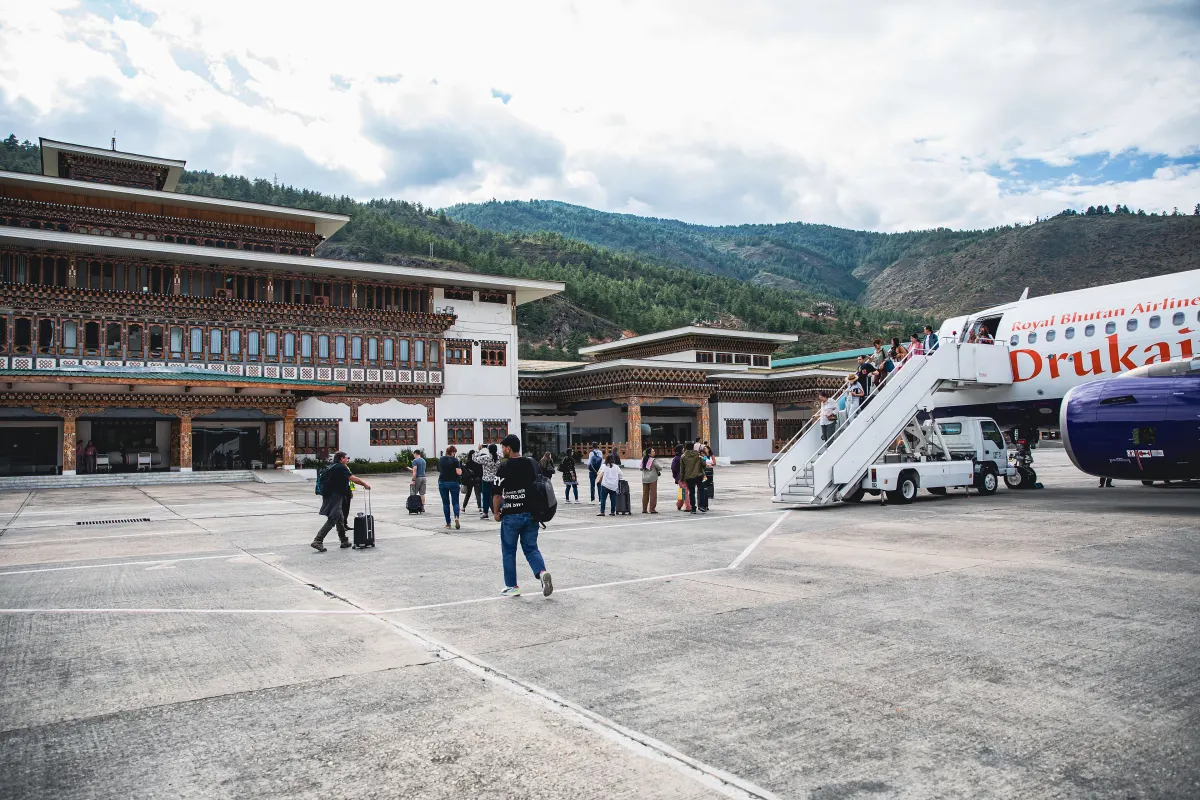
- Almost everyone from further away flies into Paro, on Drukair or Bhutan Airlines, the only airlines that fly there. Drukair's routes include Bangkok, Delhi, Kathmandu, Kolkata, Bagdogra, Guwahati, Gaya (in winter), Dhaka and Singapore. Its Dubai flights were suspended in 2026: check whether they're back.
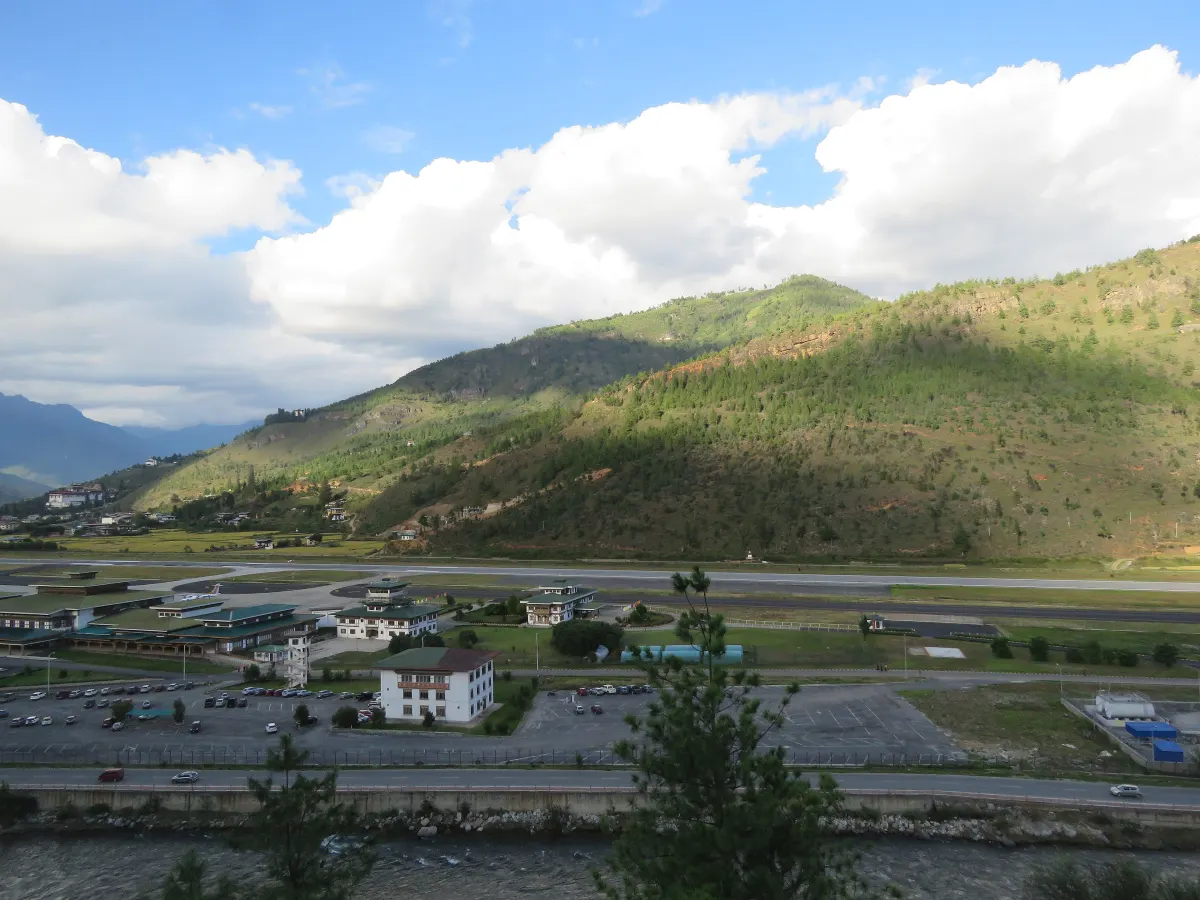
- Paro is in a narrow valley at about 2,200 metres, and the approach between the hills is one of the world's most dramatic. Planes only land there by daylight in good visibility, so delays happen, especially in the monsoon and on windy afternoons. Keep a spare day before a long-haul connection on a separate ticket.
- Coming from Delhi or Kathmandu, sit on the left for a chance of seeing Everest and the Himalaya (on the right going back).
- Some Drukair flights to Kolkata also stop at Gelephu in the south.
- You can change money and buy a SIM card at Paro airport: see Money and phones.
By land from India
- Phuentsholing, opposite Jaigaon in West Bengal, is the main crossing, about four to five hours by road from Bagdogra airport, and another five to six hours up to Thimphu or Paro. It's handy for combining Bhutan with Darjeeling and Sikkim.
- Samdrup Jongkhar, opposite Darranga in Assam, is the gateway to eastern Bhutan, a few hours from Guwahati. There are also border posts at Gelephu and Samtse, but ask your operator whether the Indian side handles foreign passports there: the UK government lists only Paro and Phuentsholing for British travellers.
- Your visa and SDF work the same by land as by air.
- Check your Indian visa. Leaving Bhutan by road means entering India. Jaigaon and Darranga were reported to have been added to India's list of land crossings for e-Visas in August 2026, but a regular visa is safer until that's well established: see the official Indian e-Visa site. If you go India, Bhutan, India, you need a visa valid for two entries.
- A day in a border town: you don't pay the SDF for up to 24 hours in Phuentsholing, Samtse, Gelephu or Samdrup Jongkhar, as long as you don't go past the town checkpoint. You still need the visa or permit for your nationality. The waiver was extended again in November 2026.
Customs
- You can bring in a small amount of tobacco for your own use, but you must pay duty and tax on it, and keep the receipt to show if you're asked.
- Declare foreign currency worth US$10,000 or more. You can carry up to Nu 30,000 of Bhutanese currency in or out.
- Tourists generally aren't allowed to bring drones.
- It's illegal to take antiques out. For anything that looks old, get an export permit for non-antique artefacts.
Fees and rules have changed several times in the last few years, so check the Department of Tourism's FAQs and announcements before you book.
Comments
No comments yet.