
Culture and etiquette in Bhutan: dzongs, temples, dress, photos, the royal family, and tobacco and drug laws
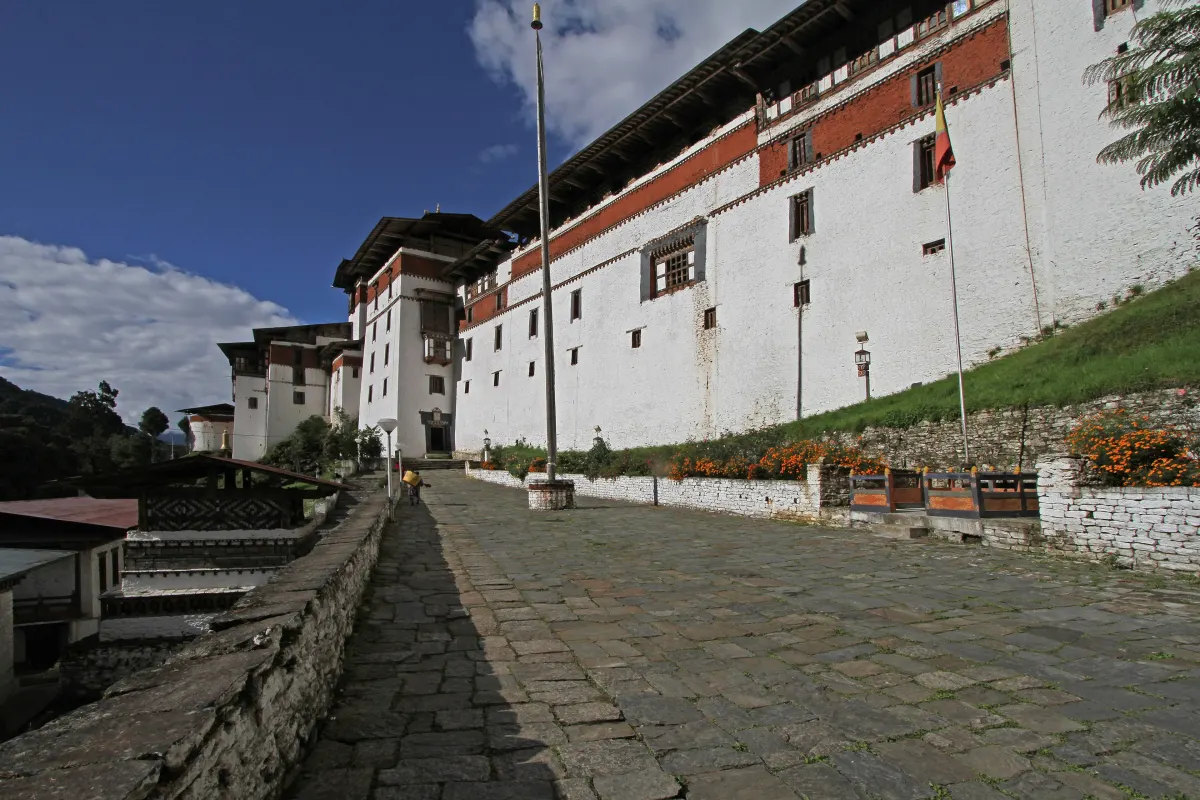
Bhutan is a Buddhist kingdom that has guarded its culture carefully. Religion, the royal family and good manners (called driglam namzha) are taken seriously, but people are warm and forgiving of visitors who try. Your guide will tell you what to do.
Visiting dzongs and temples
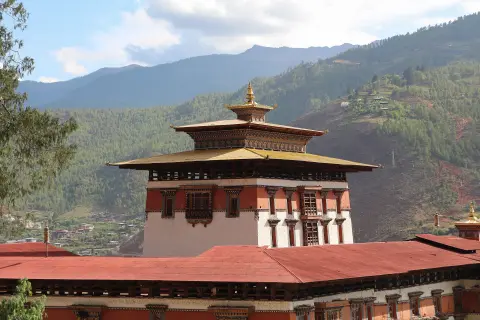
- A dzong is a fortress that's both a monastery and the district government. You need a guide to go in, and dress rules are enforced.
- Cover your shoulders, arms and knees: long sleeves and long trousers or a long skirt. Take off hats, and don't put up an umbrella inside. Bring a shirt or jacket for the car.
- Take off your shoes before going into a temple room. Socks help on cold floors.
- No photos inside temples. At some, such as Tiger's Nest, you leave your phone, camera and bag at the entrance. Photos of courtyards are usually fine, but ask.
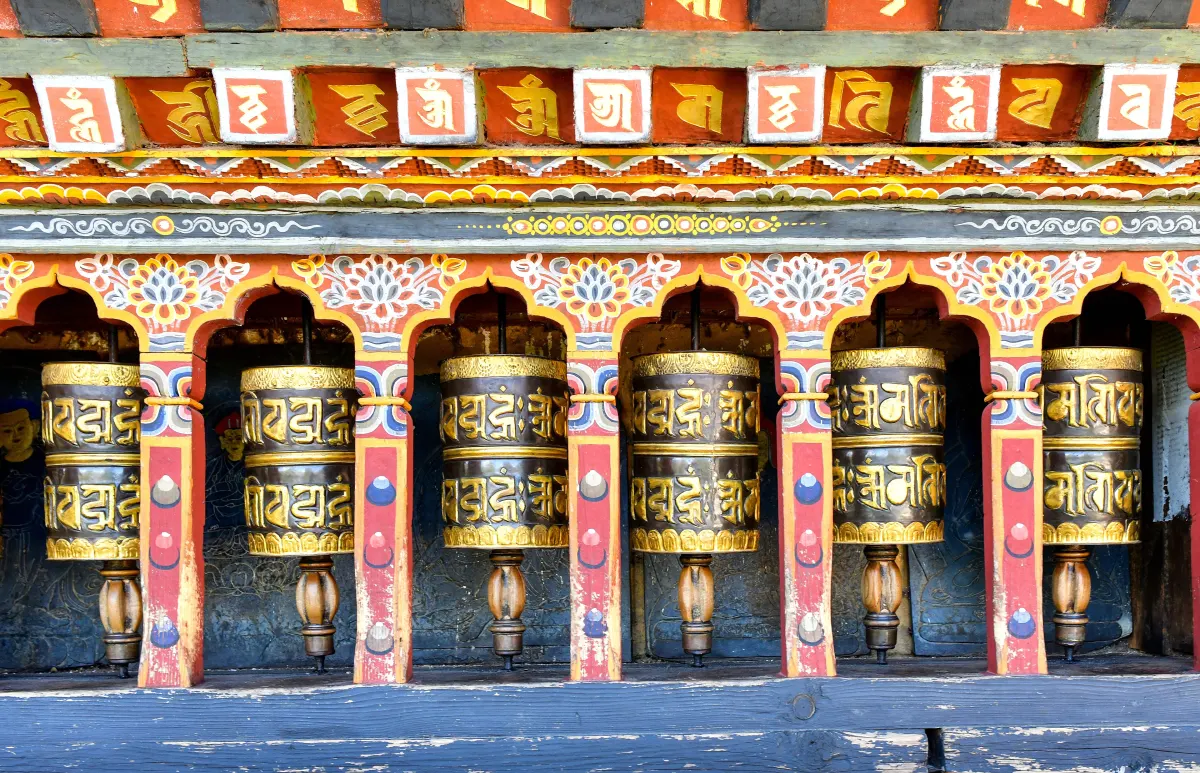
- Walk clockwise around temples, chortens, mani walls and prayer wheels, and turn the wheels clockwise.
- Don't sit on lamas' thrones, touch paintings or statues, or point with a finger: use an open hand. When sitting on the floor, cross your legs, with your feet away from the altar.
- Keep quiet during prayers, and don't stand between worshippers and the altar. Your guide may offer you holy water: cup your hands, sip a little and wipe the rest on your head.

Punakha Dzong
Probably the most beautiful dzong (fortress-monastery) in Bhutan, built in 1637 at the meeting of two rivers, the Pho Chhu and the Mo Chhu.
People and manners
- Say kuzuzangpo la for hello and kadrinchey la for thank you. Adding "la" to a sentence makes it polite, in English too.
- Give and take things with both hands, or your right hand. Don't touch anyone's head, or point your feet at people.
- Take off your shoes in homes. A small gift from your country is welcome in a farmhouse.
- Ask before photographing people, and be especially careful with monks and at prayers.
- Don't give sweets or money to children.
- Public affection is best kept low-key. Same-sex relationships were decriminalised by a law passed in 2020, and there's little hostility, though same-sex marriage isn't recognised.
The royal family and politics
The King and the royal family are deeply respected, and their portraits are everywhere. Never criticise or joke about them, and don't damage or step on anything with their picture. Bhutan has been a democracy with a constitutional monarchy since 2008, and people talk easily about Gross National Happiness, but the history of the Nepali-speaking Lhotshampa people who left Bhutan around 1990 is a sensitive subject.
National dress
- Men wear the gho, a knee-length robe tied at the waist, and women the kira, an ankle-length dress with a short jacket. They're required for Bhutanese people at work in government offices and schools, and when visiting dzongs.
- In dzongs, men also wear a scarf (kabney) whose colour shows their rank.
- You're welcome to wear a gho or kira: your guide can help you hire or buy one, and people are pleased to see it at festivals. See Festivals.
Things you may notice
- Painted phalluses on houses, especially near Chimi Lhakhang by Punakha, keep away evil spirits. They go back to Drukpa Kunley, the 15th-century "Divine Madman".
- Prayer flags on passes and hilltops. Don't step on them. Tall white flags in groups of 108 are in memory of the dead.
- Archery, the national sport, with targets about 140 metres away, and singing and dancing after each hit. Watch from a safe place.
- More than 70% of the country is forest, and the constitution requires at least 60% to stay that way.
Laws to know
- Tobacco: a long ban on selling tobacco was lifted during the Covid pandemic, but smoking is frowned on and not allowed in many public places. Never smoke near a dzong, temple or festival. You pay duty on tobacco you bring in, and must keep the receipt.
- Drugs: possessing even a small amount can mean at least three years in prison, and up to life for trafficking. Cannabis grows wild by the road: leave it alone.
- Wildlife: hunting is illegal, and fishing is restricted and needs a permit. Harming protected species can mean prison.
- Littering and starting forest fires, even by accident, are offences.
- Mountaineering is banned out of respect for the spirits that live on the peaks. Drones generally aren't allowed.
- Taking antiques or religious objects out of the country is illegal without a permit.
Comments
No comments yet.