
Bhutanese food and drink: ema datshi, red rice, momos, butter tea and ara
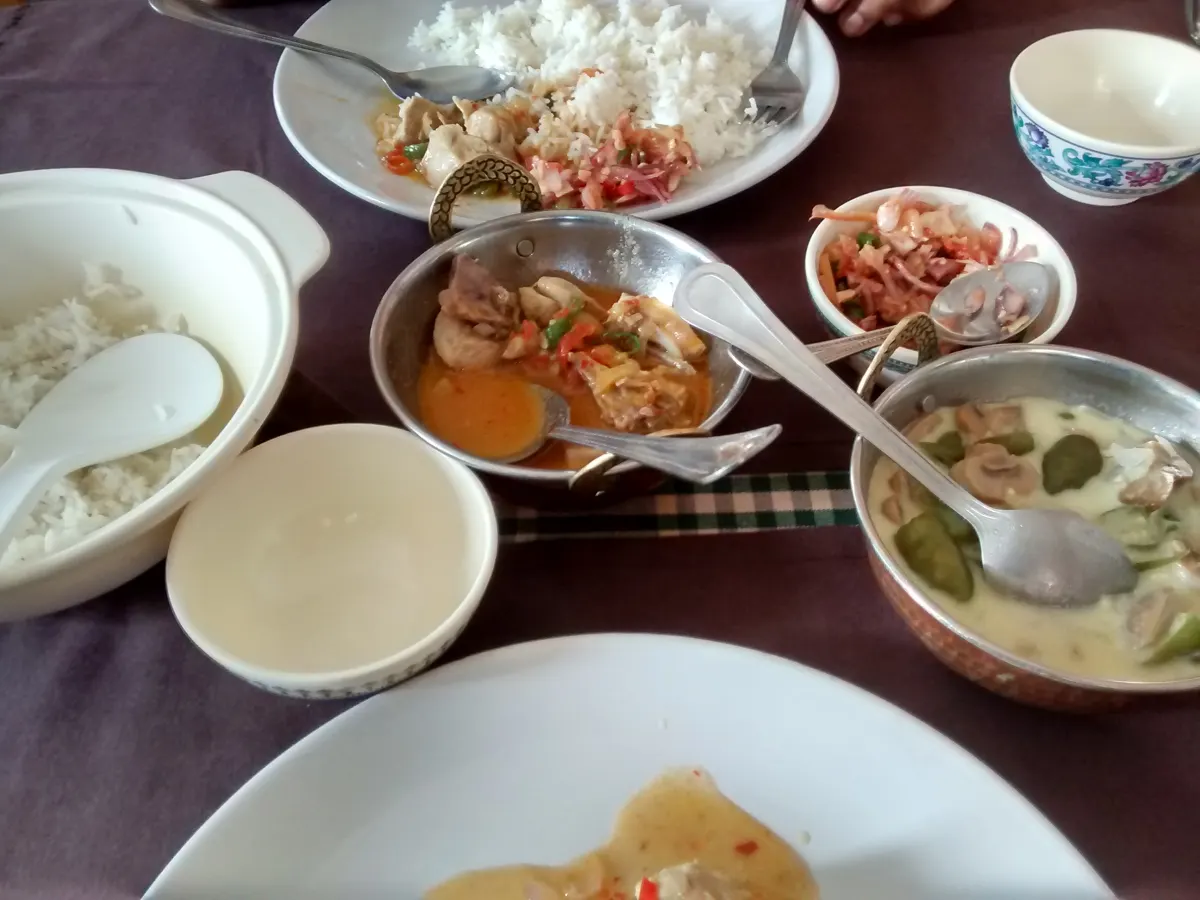
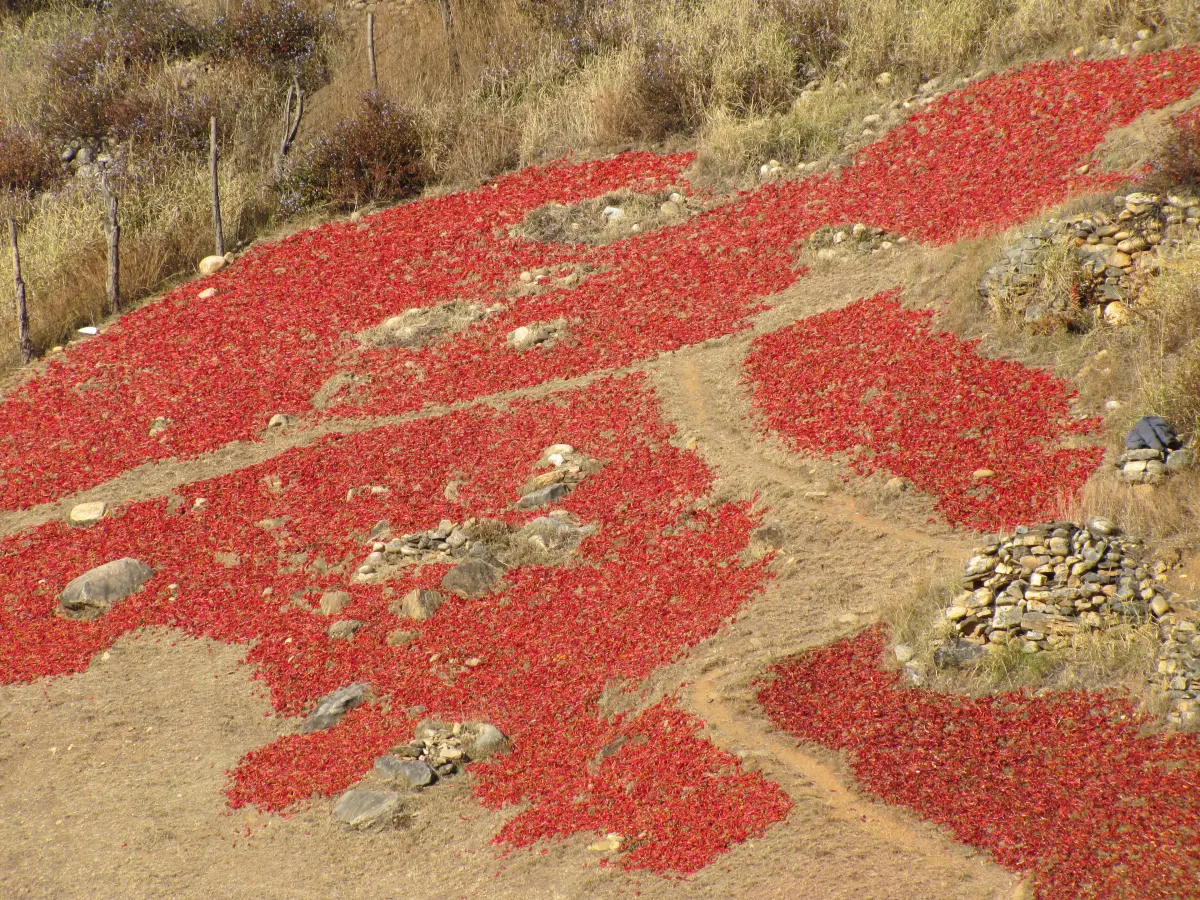
Bhutanese food is simple, hearty and very hot: chillies are eaten as a vegetable, and cheese goes with nearly everything. Tour hotels often serve mild buffets with Indian, Chinese and Western dishes, so ask your guide to take you to local restaurants too.
What to try
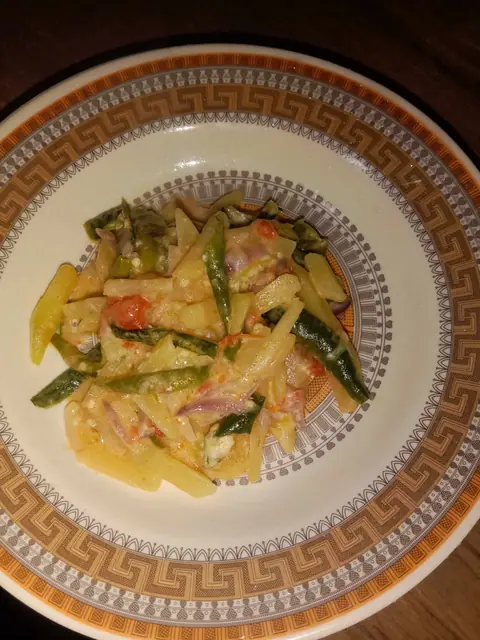
- Ema datshi, the national dish: whole chillies in a cheese sauce. Every family makes its own. Milder relatives are kewa datshi (potatoes and cheese) and shamu datshi (mushrooms and cheese).
- Red rice, nutty and slightly sticky, with almost every meal.
- Phaksha paa: pork with dried red chillies and radish or greens. Sikam paa is made with dried pork belly, and shakam paa with dried beef.
- Jasha maru: a spicy chicken stew with ginger and coriander.
- Momos, steamed dumplings with cheese, cabbage or meat, and ezay, a chilli relish on every table.
- In Bumthang, where rice doesn't grow well, try buckwheat: puta (noodles) and khuli (pancakes), with local cheese and honey.
- In Haa, hoentay: buckwheat dumplings stuffed with turnip leaves and cheese.
- Seasonal treats: wild mushrooms such as matsutake in late summer, fiddlehead ferns (nakey), and orchids (olachoto) in spring.
- Chugo: dried yak cheese so hard you suck it for an hour, strung on threads at market stalls.
Food and drink
Ema datshi
Thimphu
Bhutan's national dish: whole green or red chillies cooked in a sauce of melted cheese, usually made from cow or yak milk, with onion and tomato.
Where to eat
- On a package, most meals are included, often as buffets in hotels or restaurants for tourists. Tell your operator in advance if you'd rather eat local food or choose your own restaurants.
- Thimphu and Paro have good restaurants and cafés, including Bhutanese, Indian, Thai, Korean and pizza places, and bakeries.
- A meal in a farmhouse is the best way to taste home cooking, sitting on the floor around the stove. Arrange it through your guide.
- On drives, you'll stop at simple roadside restaurants. On treks, your crew's cook makes surprisingly big meals.
Vegetarians and special diets
- It's easy to be vegetarian: cheese and vegetable dishes are everywhere, and no animals are slaughtered in much of the country for religious reasons, so a lot of the meat is imported from India. In some holy months, meat isn't sold.
- Vegans need to explain carefully, as cheese and butter are in most dishes.
- Rice and buckwheat make gluten-free eating possible, but check sauces.
- Say "not spicy" early and often if you can't take chilli. Tour cooks are used to it.
What to drink
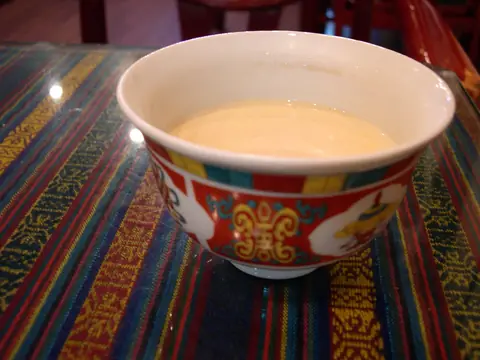
- Suja: butter tea with salt. Ngaja is sweet milky tea.
- Ara: home-distilled spirit from rice, maize, wheat or barley, drunk warm, sometimes with an egg and butter. It's strong, and refusing a refill takes determination.
- Bhutanese beer, including craft beers brewed in Paro, Bumthang and Thimphu, and Bhutanese whisky. Alcohol is legal, but there are limits on how much visitors can buy at once.
- Local apple and peach juice, and coffee grown in the south.
- Don't drink the tap water: drink boiled, filtered or treated water. Your guide's car usually has a supply. See Health and safety.
Food and drink
Suja (butter tea)
Thimphu
Tea churned with butter and salt, drunk across the Himalaya to keep warm at altitude.
Table manners
- When you're offered food or a drink, it's traditional to refuse once or twice ("meshu meshu", covering your mouth) before accepting.
- Hosts will keep refilling. Leave a little in your cup when you've had enough.
- Many people eat with their right hand. Spoons are always available.
- Doma, betel nut with lime in a leaf, is chewed all over the country and offered as a sign of friendship. You can decline politely: it's addictive and linked to mouth cancer.
Comments
No comments yet.