
Money in Japan: cash, cards, ATMs, tax-free shopping and tipping
Japan uses the yen (¥). Cards are now accepted in most hotels, shops, chain restaurants and stations, but Japan still uses more cash than most rich countries, so carry some.
Cash and cards
- Cards: Visa and Mastercard are the most widely accepted; American Express, JCB and others are taken in many places. Apple Pay and Google Pay work wherever contactless cards are accepted.
- Cash is still needed at many small restaurants, ramen shops with ticket machines, market stalls, temples and shrines, some ryokan in the country, rural buses and festivals. Japan is safe, and many people carry ¥10,000 or ¥20,000 in cash.
- Coins: you'll collect lots of ¥100 and ¥500 coins, so a coin purse is useful. Use them in vending machines, lockers and on buses.
- Pay in yen: if a card machine or ATM offers to charge you in your own currency, say no: the exchange rate is usually worse.
- At shop tills, put your money or card in the small tray on the counter rather than handing it over.
ATMs
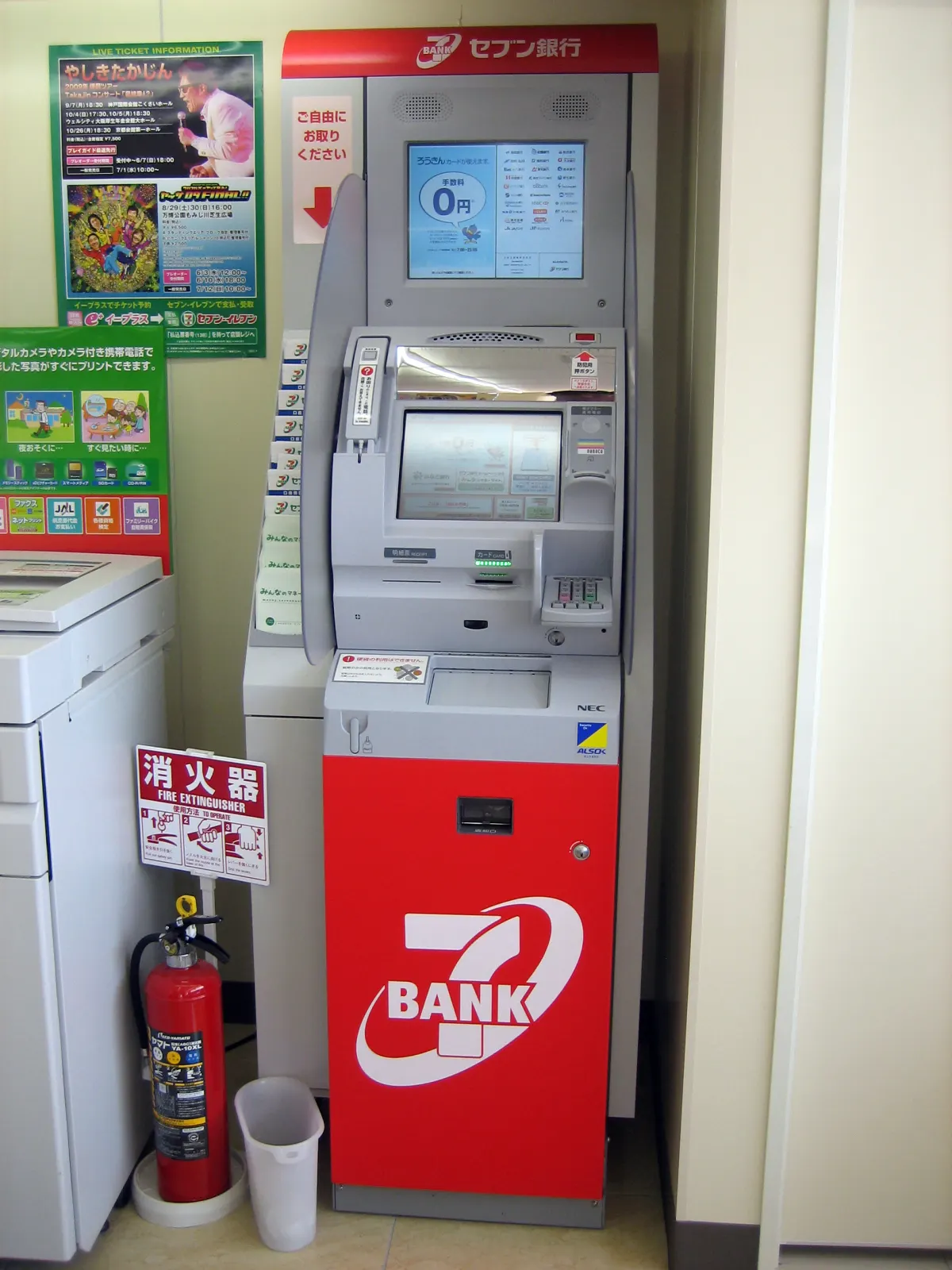
Many Japanese bank ATMs don't take foreign cards, but the ATMs in 7-Eleven stores (Seven Bank) do, have English menus and are open long hours, often 24 hours a day. Japan Post Bank ATMs in post offices, and the ATMs in many Lawson and FamilyMart stores, also take foreign cards. The ATM may charge a fee, and so may your bank, so take out larger amounts less often.
Prices and tax
Prices on display include the consumption tax: 10%, or 8% on food and drink you take away. So what you see is what you pay.
Tax-free shopping: the new refund system
Visitors can get the consumption tax back on shopping they take home, at shops with a "Tax-Free" sign. From 1 November 2026, the system changed: you now pay the full price, including tax, and get the tax back after you leave. The Japan Tourism Agency explains it.
- In the shop: you must spend at least ¥5,000 (before tax) in one shop in one day. Show your passport. The shop tells you how the refund will be paid: by the shop itself or a refund company, usually to your card.
- When you leave: at the departure airport or port, before you go through, scan your passport at the customs kiosk, within 90 days of buying the goods. If the screen shows green, you're done; if it shows red, take the goods to the customs counter to be checked. At the main airports you can also do this online with Visit Japan Web.
- Keep the goods with you, in your hand luggage, not your checked bags: customs can ask to see them, and if anything on a receipt is missing, you get none of the tax on that receipt back.
- Food, cosmetics and other things you use up while you're in Japan don't qualify.
- The old rules, where you got the tax off in the shop and goods were sealed in bags, ended on 31 October 2026, and so did the old ¥500,000 limit.
Don't tip
Tipping isn't part of Japanese culture: good service is expected, and staff may chase you down the street to give back money you've left. This goes for restaurants, taxis, hotels, hairdressers and guides. Some smart restaurants and hotels add a service charge of 10 to 15% to the bill instead, and many izakaya add a small table charge with a little starter dish (see Food and drink in Japan). In a ryokan, a gift of money in an envelope for your room attendant is an old custom, but it isn't expected.
Taxes on hotel stays and sights
- Tokyo, Osaka, Kyoto, Kanazawa, Fukuoka and other places charge an accommodation tax per person per night, often paid when you check in. Kyoto's went up on 1 March 2026 and now ranges from ¥200 to ¥10,000 per person per night, depending on the room price (see Kyoto City).
- Some sights charge visitors more, or charge new fees, to deal with crowds: for example the visitor tax for Miyajima and the fee to climb Mount Fuji. Check before you go.
Saving money
- Eat lunch out: many restaurants have set lunches (teishoku) for much less than dinner. Convenience stores, supermarkets and department store food halls have good cheap food.
- Stay in business hotels, which are small but clean and well priced (see Where to stay in Japan).
- Work out whether a rail pass really saves money before you buy one (see Trains in Japan).
- Shrines, many temple grounds, parks and city views (such as the free observation decks at Tokyo's Metropolitan Government Building) cost nothing.

Tsukiji Outer Market, Tokyo
The busy market streets left behind when Tokyo's wholesale fish market moved to Toyosu, packed with stalls selling fresh sushi, grilled seafood, tama…
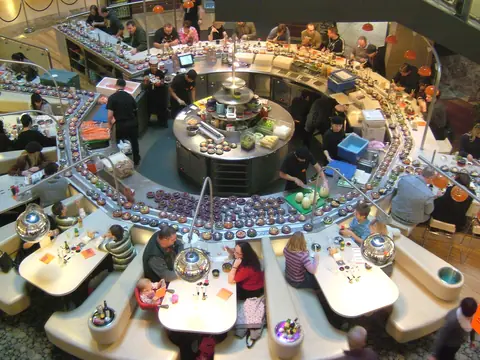
Kaiten-zushi (conveyor-belt sushi)
Sushi on a moving belt: plates circle the counter, and you take what you like, paying by the number and colour of plates.
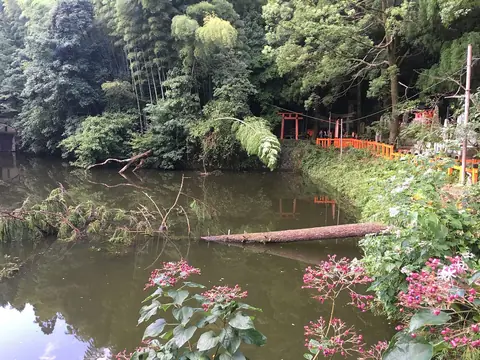
Fushimi Inari Taisha, Kyoto
The head shrine of Inari, the god of rice and business, famous for its thousands of bright vermilion torii gates, donated by businesses, which form t…
Comments
No comments yet.