
Trains in Japan: the JR Pass, regional passes, shinkansen seats and big luggage
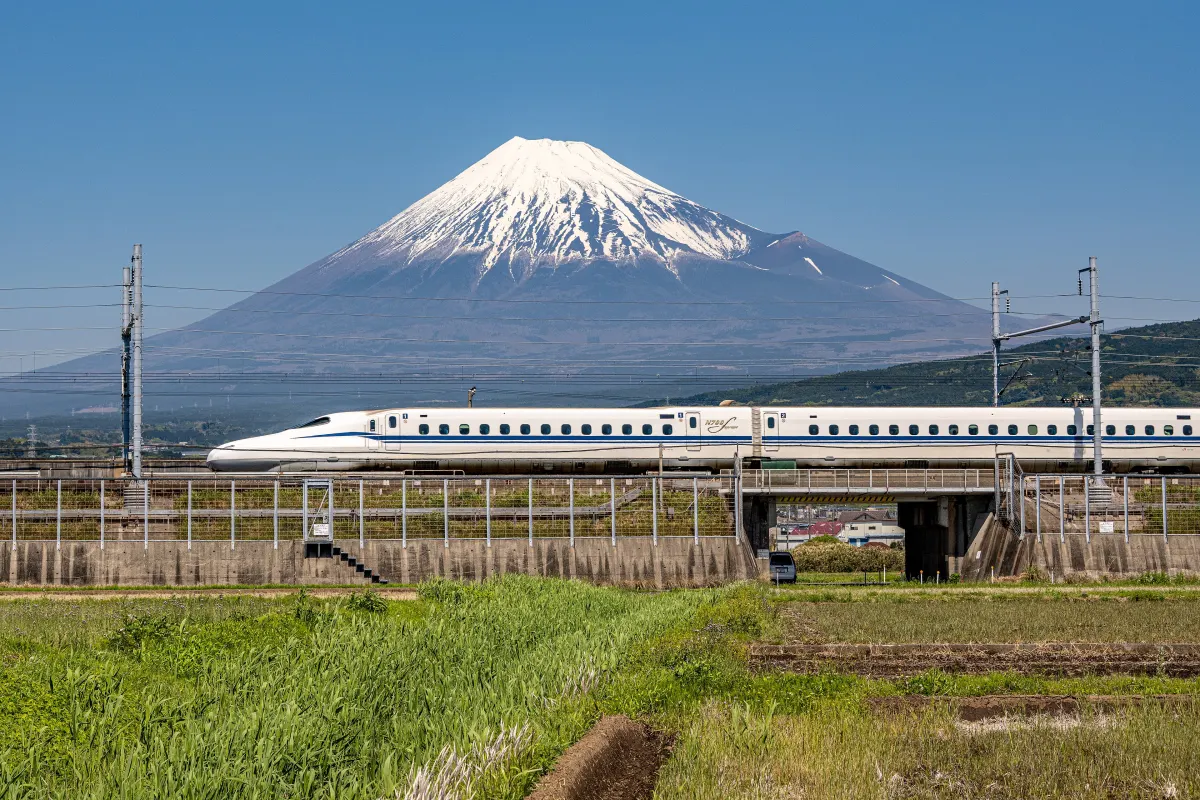
Japan's trains are fast, frequent, spotless and almost always on time, and they're the best way to travel between cities. The shinkansen (bullet train) network runs from Kagoshima in the far south to Hakodate in Hokkaido, and local and private railways reach almost everywhere else.
Who runs the trains
The national network is run by the six JR (Japan Railways) companies: JR East, JR Central, JR West, JR Hokkaido, JR Shikoku and JR Kyushu. Alongside them, private railways such as Odakyu, Tobu, Keisei, Kintetsu, Hankyu, Keihan and Nankai run many suburban and tourist lines, and the cities have their own subways. Tickets and passes for one company usually aren't valid on another's trains, though IC cards work on almost all of them (see IC cards in Japan).
Is the Japan Rail Pass worth it?
The Japan Rail Pass gives unlimited travel on JR trains, including most shinkansen, for 7, 14 or 21 days. It's for visitors on a short-term stay. In October 2023 the price went up by about 70%, so it's no longer the automatic choice it was. Bought on the official website, an ordinary pass costs ¥50,000 for 7 days, ¥80,000 for 14 days and ¥100,000 for 21 days (Green Car, first class: ¥70,000, ¥110,000 and ¥140,000). Buying it through a travel agent outside Japan costs a little more. Children aged 6 to 11 pay half.
- What it doesn't cover: the fastest trains on the Tokaido, Sanyo and Kyushu shinkansen, the Nozomi and Mizuho, need an extra "Nozomi Mizuho ticket" for each ride (for example ¥4,960 from Tokyo to Kyoto), or you can take the slightly slower Hikari and Sakura at no extra cost. Private railways and most subways aren't covered either.
- Do the sums: a return trip from Tokyo to Kyoto on the Nozomi costs about ¥28,000, so for a week of Tokyo, Kyoto and Osaka the pass costs far more than buying tickets. It pays off when you make several long trips in a short time, for example Tokyo to Hiroshima and back, or a trip that takes in Kanazawa, Hiroshima and northern Japan. Add up your fares on a route planner such as Google Maps or Japan Transit Planner first.
- Seats: pass holders can reserve shinkansen and limited express seats free, online on the pass website or at stations.
Regional passes
For a trip in one part of Japan, a regional pass is usually much better value. The JR companies sell passes to visitors such as the JR East Pass (for the Tohoku area, or Nagano and Niigata), the Hokuriku Arch Pass (Tokyo to Kanazawa and Osaka), the Kansai Area and Kansai Wide Area passes, the Takayama-Hokuriku pass, the Hokkaido Rail Pass and the JR Kyushu Rail Pass. Private railways have their own, such as the Hakone Freepass from Odakyu and passes from Kintetsu and Tobu (for Nikkō). The passes and their prices change, so check the railway's own website.
Booking shinkansen tickets
- Where: at ticket machines in stations (they have English), at JR ticket offices (midori-no-madoguchi), or online: the smart EX app for the Tokaido, Sanyo and Kyushu shinkansen (Tokyo, Kyoto, Osaka, Hiroshima, Fukuoka), and JR East's and JR West's booking websites for the other lines. Seats go on sale a month ahead.
- Reserved or non-reserved: most trains have a few non-reserved cars, a little cheaper, but you may have to stand at busy times. During Golden Week, Obon and New Year, the Nozomi is all reserved: book ahead.
- Mount Fuji: travelling from Tokyo towards Kyoto, Fuji is on the right, so ask for a seat by the window on the two-seat side (seat E). Going back to Tokyo, sit on the left.
- Eating on the shinkansen is normal: buy an ekiben (station lunch box) before you board. Keep your voice down and make calls in the space between the cars.
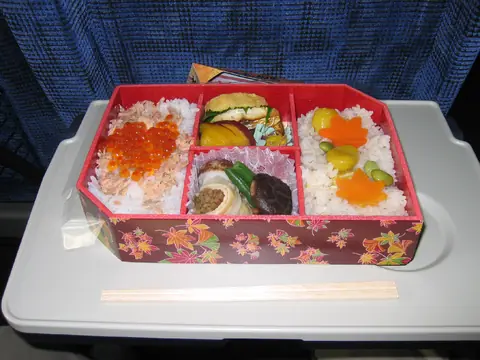
Ekiben (station lunch boxes)
Boxed lunches sold at railway stations, made to be eaten on the train, part of the fun of travelling by shinkansen.

Mount Fuji and the Fuji Five Lakes
Japan's highest and most sacred mountain, a near-perfect volcanic cone 3,776 m high, a UNESCO World Heritage Site.
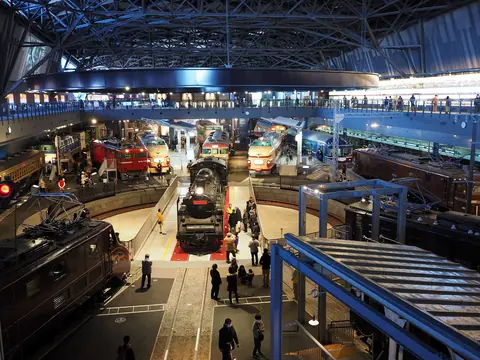
Railway Museum, Saitama
JR East's big railway museum, with dozens of real trains from the first steam locomotives of the 1870s to early shinkansen bullet trains, including t…
Big suitcases
- Tokaido, Sanyo and Kyushu shinkansen: if your bag's length, width and height add up to more than 160 cm (and up to 250 cm), you must reserve a "seat with an oversized baggage area", at no extra charge, and put it in the space behind the last row. If you board with one without a reservation, you pay a ¥1,000 fee and put it where the conductor tells you. Bags over 250 cm aren't allowed. JR Central has the details.
- JR East's shinkansen (Tohoku, Hokkaido, Joetsu, Hokuriku, Yamagata and Akita) don't need a reservation, but there's little space for big bags.
- Send it ahead: the easiest way to travel is to send big bags from one hotel to the next with a courier service (takkyubin, such as Yamato's TA-Q-BIN). Hotels, convenience stores and airports arrange it, it costs a few thousand yen a bag, and it usually arrives the next day. Pack a small bag for the night in between.
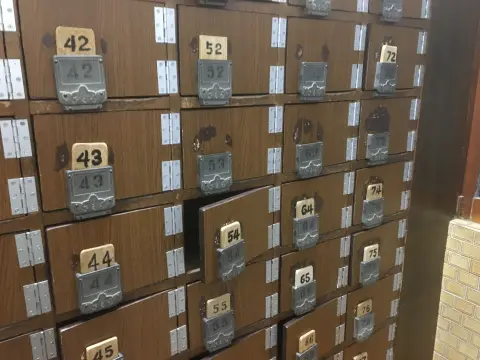
- Coin lockers at stations take small and medium bags, and many stations have luggage storage counters.
Local trains and private railways
- Local trains stop everywhere; rapid and express trains skip stations, and limited express trains need an extra ticket. Check the train type on the platform display before you get on.
- Some of the best trips are on private lines: Odakyu's Romancecar to Hakone, Tobu to Nikkō, Kintetsu to Nara and Ise, and Nankai to Kōya-san.
- At rush hour, some trains have women-only cars, marked on the platform. City trains stop running at about midnight.
- Queue at the marked places on the platform, and let people off before you get on. See Etiquette in Japan.
Comments
No comments yet.