
Scams and staying safe in Thailand
Thailand is a safe country for visitors, and violent crime against tourists is rare. Most problems are scams, motorbike accidents and arguments over money, and most of them are easy to avoid once you know the tricks.
The gem scam and "the temple is closed"
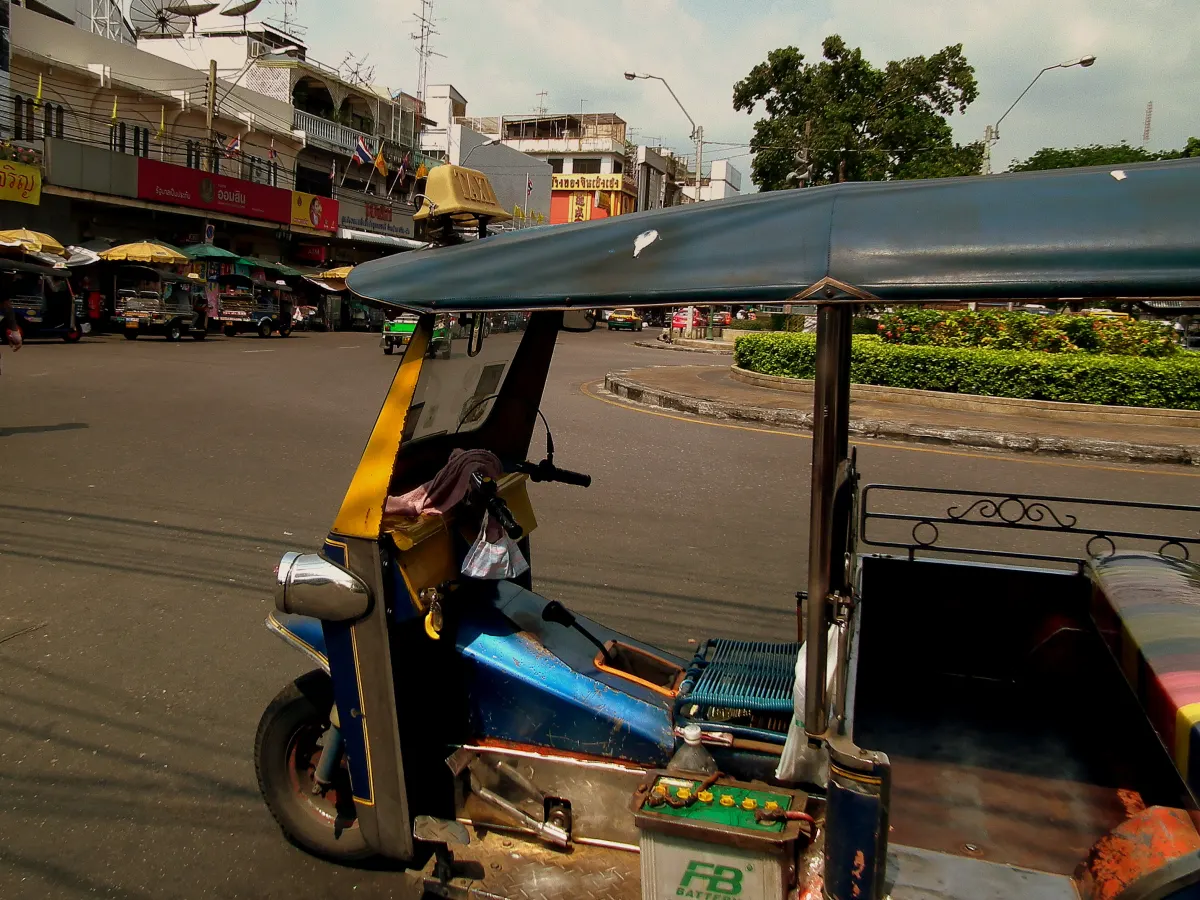
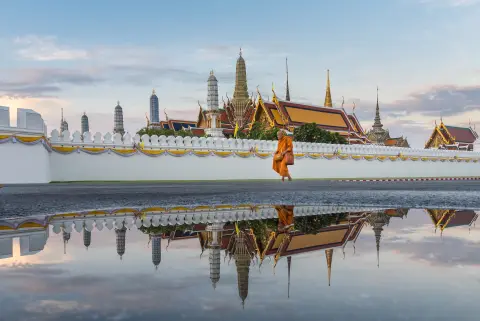
This is the classic Bangkok scam, and it still works. Near the Grand Palace, Wat Pho or Khao San Road, a friendly, well-dressed stranger (sometimes claiming to be a teacher, a student or a policeman) tells you the palace or temple is closed today, for a ceremony, a holiday or lunch. Instead, they suggest a tuk-tuk tour for a few baht to a "lucky Buddha", a "government" export centre, or a gem shop with a special sale, "only today". The tour ends at shops that pay commission, and the gems are worth a fraction of what you pay.
- The Grand Palace is open every day, except for occasional royal ceremonies: check at the main gate, not with someone in the street.
- Never buy gems or jewellery as an investment or to sell at home. There's no government gem sale.
- Don't accept very cheap tuk-tuk tours. Agree a fare to one place, and say no to stops.
- The same goes for tailors: a suit "made in a day" at a shop a tuk-tuk took you to is rarely good.
Taxis and tuk-tuks
- Taxis that won't use the meter, and tuk-tuks quoting huge prices, are common near the sights, hotels and nightlife. Walk on, or use Grab or Bolt, which show the price first. See Getting around.
- At airports, use only the official taxi rank or the trains.
Jet skis, scooters and damage claims
On beaches in Phuket, Pattaya and some islands, people who hire a jet ski are sometimes told when they bring it back that they've damaged it, and are asked for thousands of baht, sometimes with threats. The same happens with scooters.
- Better still, don't hire jet skis. If you do, photograph and film the jet ski or scooter all round, close up, with the owner watching, before you set off.
- Never leave your passport as a deposit. Offer a cash deposit or a copy of your passport instead: a passport held by a hire shop gives it all the power in an argument.
- If there's a dispute, stay calm, don't pay on the spot, and call the Tourist Police on 1155.
Riding a scooter
Hiring a scooter is cheap and easy on the islands, and it's the most dangerous thing most visitors do in Thailand. Thailand has one of the highest road death rates in the world, mostly on motorbikes.
- Licence: you need a motorcycle licence from home and an International Driving Permit that covers motorcycles. Police set up checkpoints in tourist areas and fine riders without one, and the hire shop won't check.
- Insurance: most travel insurance won't pay for injuries or damage if you weren't licensed to ride, or weren't wearing a helmet. Read your policy. Hospital bills after a motorbike crash can be huge. The hire shop's own insurance, if any, usually covers very little.
- Wear a helmet, fastened. It's the law, and it's the difference between a scraped arm and a head injury.
- Don't ride after drinking, at night on unfamiliar roads, or in the rain. Roads on the islands are steep, with sand and gravel on bends. If you've never ridden a motorbike, a Thai island isn't the place to learn.
- In an accident, even a minor one, foreigners are often expected to pay. Police may hold you until compensation is agreed.
Drinks and nightlife
- Drinks are sometimes spiked, at full moon parties, in bars and at beach parties, and with the shared "buckets" of spirits. Watch your drink, don't accept drinks from strangers, and stay with friends.
- Bootleg spirits, mixed with methanol, have killed visitors in Thailand and neighbouring countries. Buy drinks in sealed bottles from proper bars and shops.
- Be wary of bars where touts promise a free show or cheap drinks: the bill can be enormous.
- Drugs at parties are illegal and the penalties are severe: see Thai laws. Police raid parties and test people.
Other scams
- Card games and friendly strangers: a friendly invitation to someone's home to play cards ends with you losing a lot of money to cheats.
- Fake police: real police may check your passport, but don't hand over your wallet. Ask to go to the police station.
- Online accommodation scams: book through well-known sites, and never pay a private owner by bank transfer for a place you haven't seen.
- Bag snatching: thieves on motorbikes sometimes grab bags and phones from people walking by the road. Carry your bag on the side away from the traffic.
Wildlife tourism to avoid
Thailand has a lot of animal attractions, and many of them are cruel. Elephants are trained to carry riders and do tricks with painful methods, and tigers in tiger parks are bred for photos. In February 2026, 72 tigers died of disease at two tiger parks near Chiang Mai.
- Don't ride elephants, or go to elephant shows, painting or football. Choose a sanctuary where you watch the elephants and don't ride them, such as Elephant Nature Park near Chiang Mai, and check reviews from animal welfare groups first. Seeing wild elephants in Khao Yai National Park is better still.
- Avoid tiger parks and anywhere you can touch, feed or take photos with tigers, lion cubs or other big cats.
- Don't pay for photos with slow lorises, gibbons, monkeys or other wild animals on beaches and in nightlife streets: they're usually taken illegally from the wild.
- Avoid monkey and crocodile shows. Don't feed wild monkeys: they bite, and their bites need rabies treatment.
- Don't buy souvenirs made from ivory, coral, shells or turtle shell.
Areas to avoid
Several governments advise against all but essential travel to the far south, in the provinces of Pattani, Yala, Narathiwat and parts of Songkhla near the Malaysian border, where there's a long-running insurgency, and to some areas near the border with Cambodia, where there was fighting in 2025. These areas are away from the usual tourist routes, and travelling there can invalidate your insurance. Check your government's travel advice, such as the UK's Foreign Office or Australia's Smartraveller, before you go.
Who to call
- 1155: Tourist Police, in English, 24 hours. They also have offices in the main tourist areas.
- 191: police
- 1669: ambulance
- 199: fire
- Your embassy, if you lose your passport or are arrested.
See also: Thai laws visitors trip over and Health in Thailand.

Comments
No comments yet.