
Thailand's islands and ferries: which island, how to get there, and the monsoons
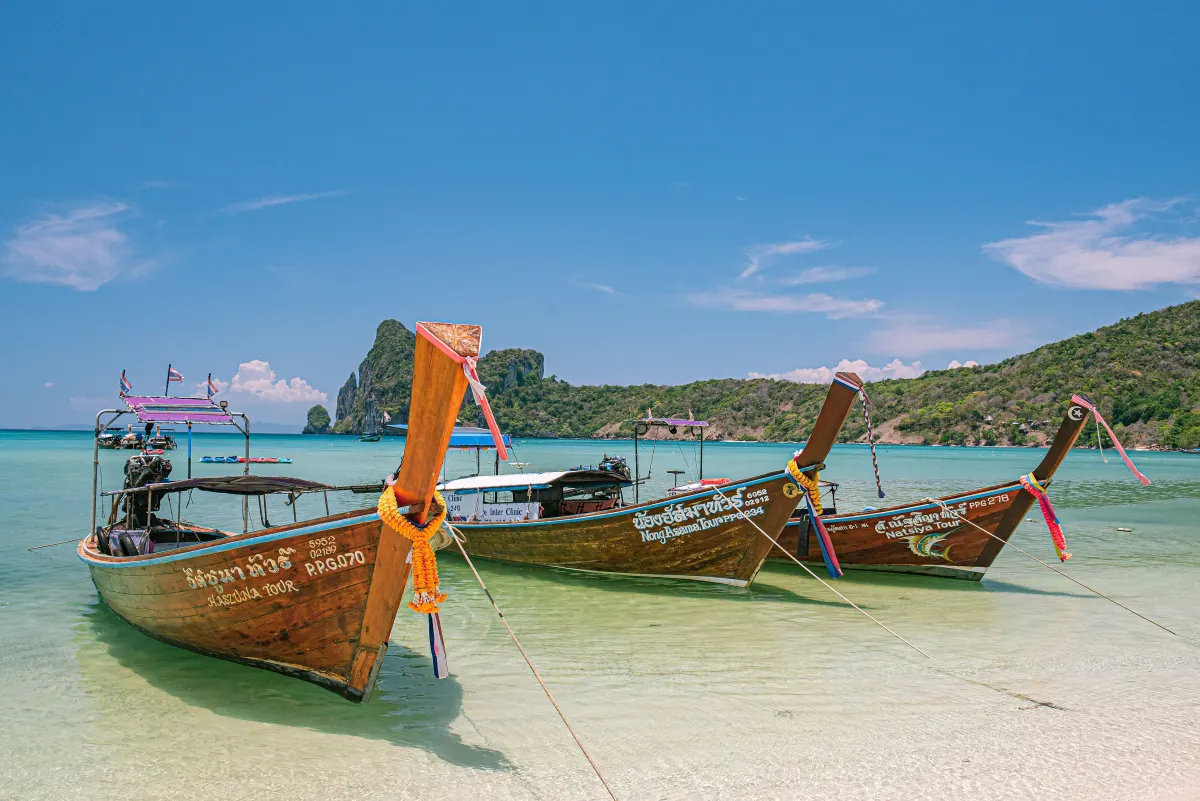
Thailand has two island coasts with different weather. The Andaman coast, on the west, has Phuket, Phi Phi, Krabi, Ko Lanta and Ko Lipe, with limestone cliffs and the best diving. The Gulf of Thailand, on the east, has Ko Samui, Ko Phangan and Ko Tao, and Ko Chang and Ko Samet near Bangkok. Their best seasons are different, so if it's raining on one, it may be fine on the other.
The Andaman coast
- Phuket: Thailand's biggest island, joined to the mainland by a bridge, with an international airport. It's busy and built up, but a good base for boat trips. Ferries leave from Rassada Pier for Phi Phi, Krabi and Ko Lanta, and from other piers for the Ko Yao islands and Phang Nga Bay.
- Ko Phi Phi: famous, beautiful and crowded, about 1½ to 2 hours by ferry from Phuket or Krabi. Maya Bay, on Phi Phi Leh, is part of a national park and closes for a couple of months each year in the monsoon; you can no longer swim there.
- Krabi: the mainland coast, with an airport, Ao Nang beach and Railay, which you reach by long-tail boat from Ao Nang or Krabi town. Day trips go to the islands, and inland to the Emerald Pool.
- Ko Lanta: long, quieter beaches, good for families. Reach it by minibus and two short car ferries from Krabi, or by boat from Krabi, Phi Phi or Phuket in the high season.
- Ko Yao Noi and Ko Yao Yai: quiet, rural islands in Phang Nga Bay, between Phuket and Krabi.
- Ko Lipe: a small island in the far south near Malaysia, in the Tarutao National Park. Speedboats run from Pak Bara, on the mainland, and in the high season from Ko Lanta, Phi Phi and Langkawi in Malaysia.
- The Similan and Surin Islands: national parks with some of the best diving and snorkelling in Thailand, reached by speedboat or liveaboard from Khao Lak. They're open only from about mid-October to mid-May, with a daily limit on visitors.
The Gulf of Thailand
- Ko Samui: the biggest Gulf island, with an airport (served mainly by Bangkok Airways, so flights cost more). Otherwise, take a train, bus or flight to Surat Thani and a ferry from Donsak Pier, about 1½ hours.
- Ko Phangan: next to Samui, famous for the Full Moon Party at Haad Rin, with quiet beaches in the north. Ferries and speedboats from Samui, Ko Tao and Donsak.
- Ko Tao: small, and one of the cheapest places in the world to learn to dive. Reach it by high-speed catamaran from Chumphon or via Samui and Phangan.
- Ang Thong National Marine Park: a day trip by boat from Samui or Phangan to 42 limestone islands.
- Near Bangkok: Ko Samet (ferry from Ban Phe, about 3 to 4 hours from Bangkok) and Ko Chang (car ferry from near Trat, about 5 to 6 hours) are the easy island escapes. There are mainland beaches near Bangkok too: Jomtien, next to Pattaya, and Hua Hin, about 3 to 4 hours south by train (see its railway station), with the Cicada Market, Khao Takiab and the seaside Mrigadayavan Palace. South of Hua Hin, Sam Roi Yot has the beautiful Phraya Nakhon Cave.
The monsoons: when to go to which coast
- The Andaman coast (Phuket, Krabi, Phi Phi, Lanta, Lipe) is at its best from about November to April. From about May to October, the southwest monsoon brings heavy rain, big waves, strong rip currents and rough crossings; some boats stop running, many resorts on the smaller islands close, and the national parks such as the Similans close.
- The Gulf islands (Samui, Phangan, Tao) have a different pattern: they're often fine in July and August, when the Andaman coast is wet, and get most of their rain from about October to December. January to August is usually the best time.
- Ko Chang and the east coast are wettest from about May to October, like the Andaman coast.
- These are patterns, not rules: there can be sunny days in the wet season and storms in the dry. See Weather and when to go.
Ferry and speedboat safety
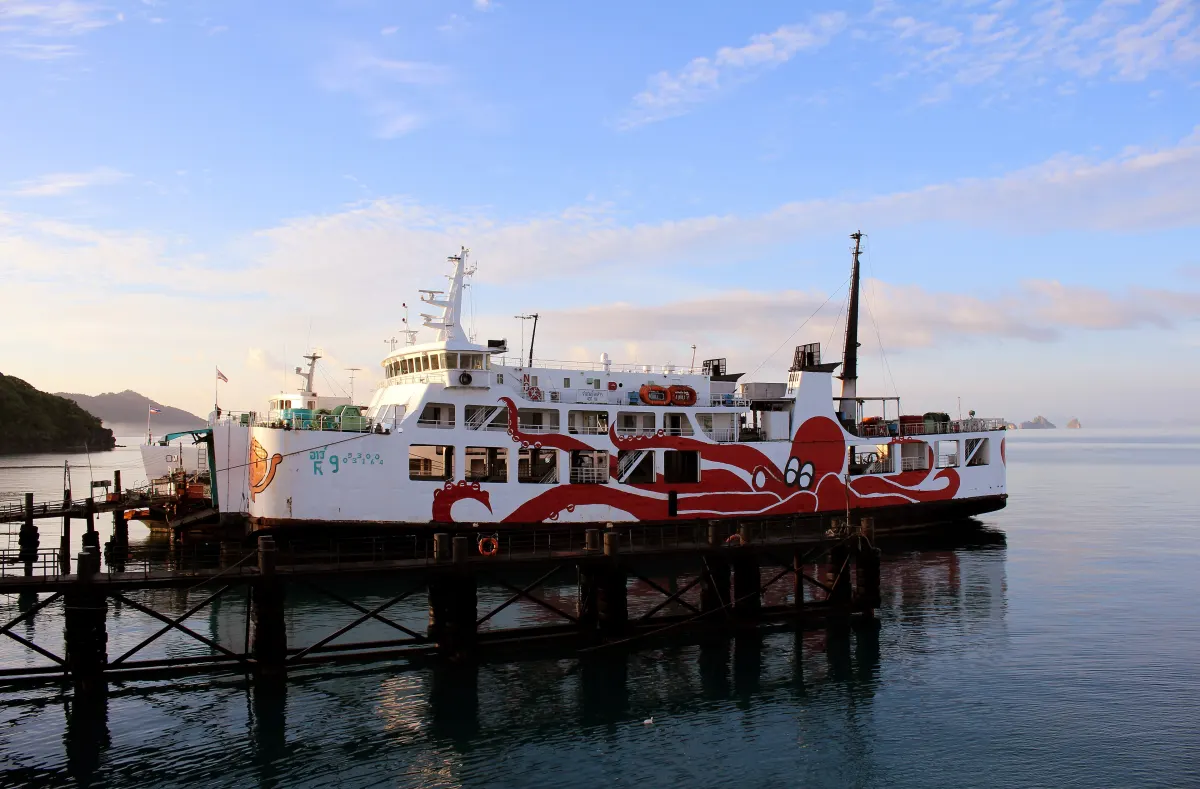
Boats are how you get between the islands, and most trips are fine, but accidents happen, especially with overloaded speedboats and in rough weather. In 2018, a tourist boat sank in a storm off Phuket and 47 people died.
- Check the forecast, and don't go if the sea is rough or storms are forecast, even if the operator is still selling tickets. The Thai Meteorological Department issues warnings.
- Prefer the bigger ferries on long crossings: they're slower but more stable and safer than speedboats. Speedboats are fast, bumpy and wet, and hard on backs.
- Find the life jackets when you board, and wear one on small boats and speedboats. If there aren't enough for everyone, don't go.
- Don't board an overloaded boat. If it feels unsafe, wait for the next.
- Keep your passport, phone and money in a dry bag with you, not in the luggage pile.
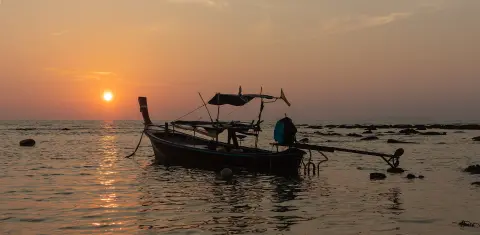
- On long-tail boats, keep your hands and feet clear of the propeller at the back.
- Buy tickets from the ferry company, at the pier, or through your hotel. Combined bus and boat tickets from Bangkok are convenient, but allow for delays.
On the islands
- Swimming: few beaches have lifeguards. Red flags mean don't swim. Rip currents are strong in the monsoon, and drown swimmers every year on Phuket's west-coast beaches.
- Jellyfish: dangerous box jellyfish are sometimes found in the Gulf and the Andaman Sea, especially after storms. Some beaches have vinegar stations: pour vinegar on a sting and get help.
- Snorkelling and diving: don't stand on or touch coral, and don't feed fish. Choose a dive school that's a member of a recognised training agency, and check that your insurance covers diving.
- Jet skis and scooters are the usual source of disputes on the islands: see Scams and staying safe.
- The smaller islands have few ATMs and limited medical care. Bring enough cash, and see Health.
See also: island hopping in the south, a route for two weeks.
Comments
No comments yet.