
Getting around Thailand: Grab, the Skytrain, tuk-tuks, trains, buses and flights
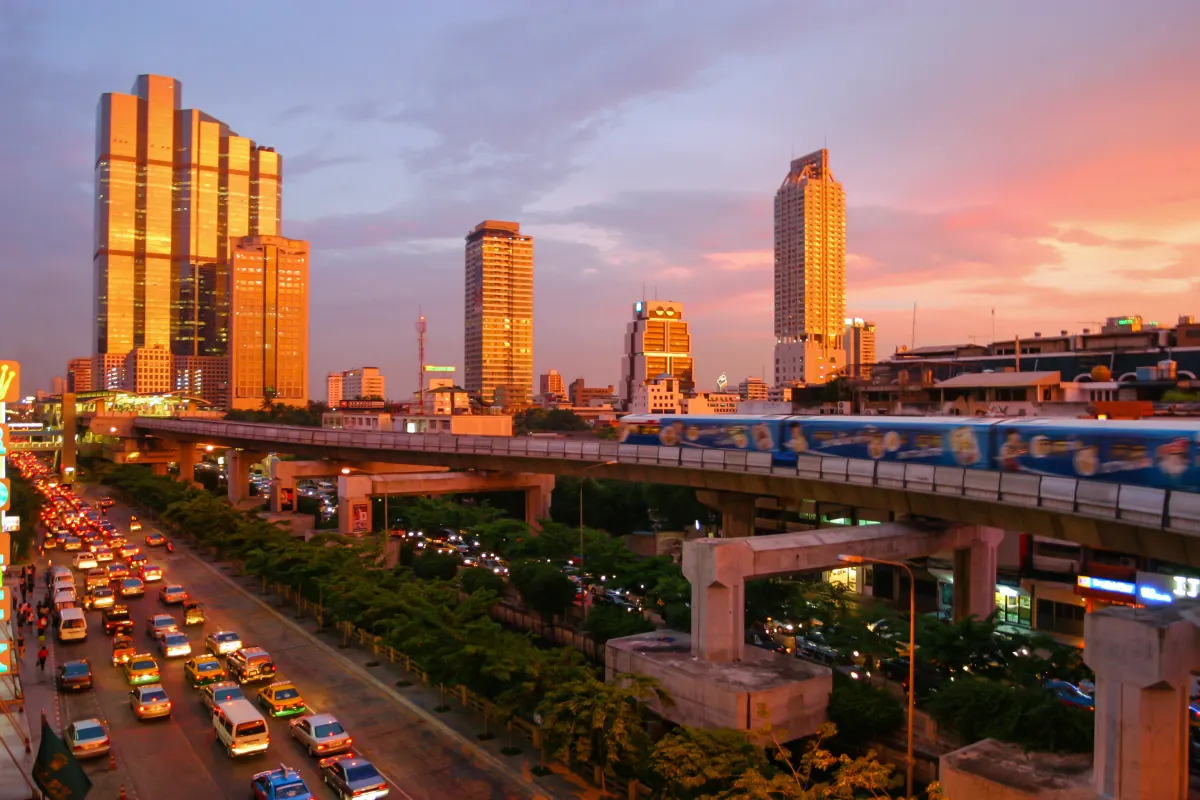
Thailand is easy to travel around: Bangkok has good trains and boats, ride-hailing apps work in all the main cities, and long distances are covered by cheap domestic flights, comfortable buses and overnight sleeper trains. The trick is agreeing the price before you get into anything without a meter.
Grab and Bolt
- Grab and Bolt are the ride-hailing apps that work in Bangkok, Chiang Mai, Phuket, Pattaya, Krabi, Ko Samui and most other cities and tourist areas. You see the price before you book, which takes away the haggling, and the driver can't get lost or take the long way round.
- You can book a car or, in the cities, a motorbike taxi. Grab also delivers food.
- Add a card to the app, or pay the driver in cash. Install them and sign up before you arrive, with your home phone number: see Phones and apps.
- In some places, such as Phuket and the islands, local taxi groups are strong and apps have fewer drivers, or pick-ups aren't allowed at some piers and beaches.
Bangkok: the Skytrain, the MRT and the river
- The BTS Skytrain (Sukhumvit and Silom lines) runs above the main roads through central Bangkok and is the fastest way to get about. Pay with a single-journey ticket from the machines, or buy a Rabbit card at a station ticket office and top it up. Bank cards don't work at BTS gates.
- The MRT (the Blue, Purple, Yellow and Pink lines) runs mostly underground. Since June 2026 you just tap a contactless Visa or Mastercard, or a phone with one in it, at the gate: credit cards work most reliably. The Airport Rail Link from Suvarnabhumi Airport takes contactless cards too.
- The BTS and MRT are run by different companies, so changing between them means leaving one and paying again for the other.
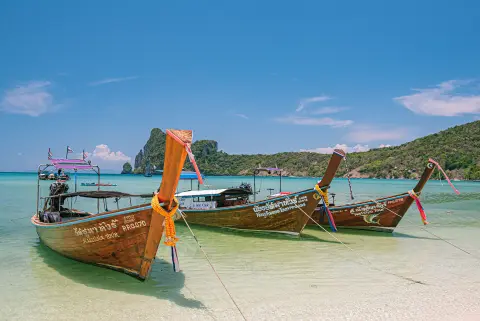
- The Chao Phraya Express Boat runs up and down the river past the Grand Palace, Wat Pho and Wat Arun: it's cheap, quick and the best way to reach the old city, which has no Skytrain. The orange-flag boats stop at most piers. Small cross-river ferries link the two banks, and you can hire a long-tail boat to explore the Thonburi canals.
- Traffic in Bangkok is very bad at rush hour, so use the trains and boats if you can.
Taxis
- Bangkok's taxis are cheap if they use the meter. Before you get in, say the place and "meter": if the driver won't use it, or quotes a fixed price, wave down the next one. Many drivers don't speak English, so have your destination written in Thai or on a map.
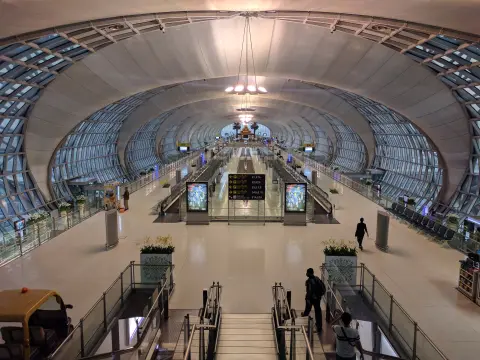
- At Suvarnabhumi and Don Mueang airports, use the official public taxi rank: you take a queue ticket, and pay the meter plus a small airport surcharge and the expressway tolls.
- Outside Bangkok, taxis usually don't use meters, so agree the fare first, or use Grab or Bolt.
Tuk-tuks and motorbike taxis
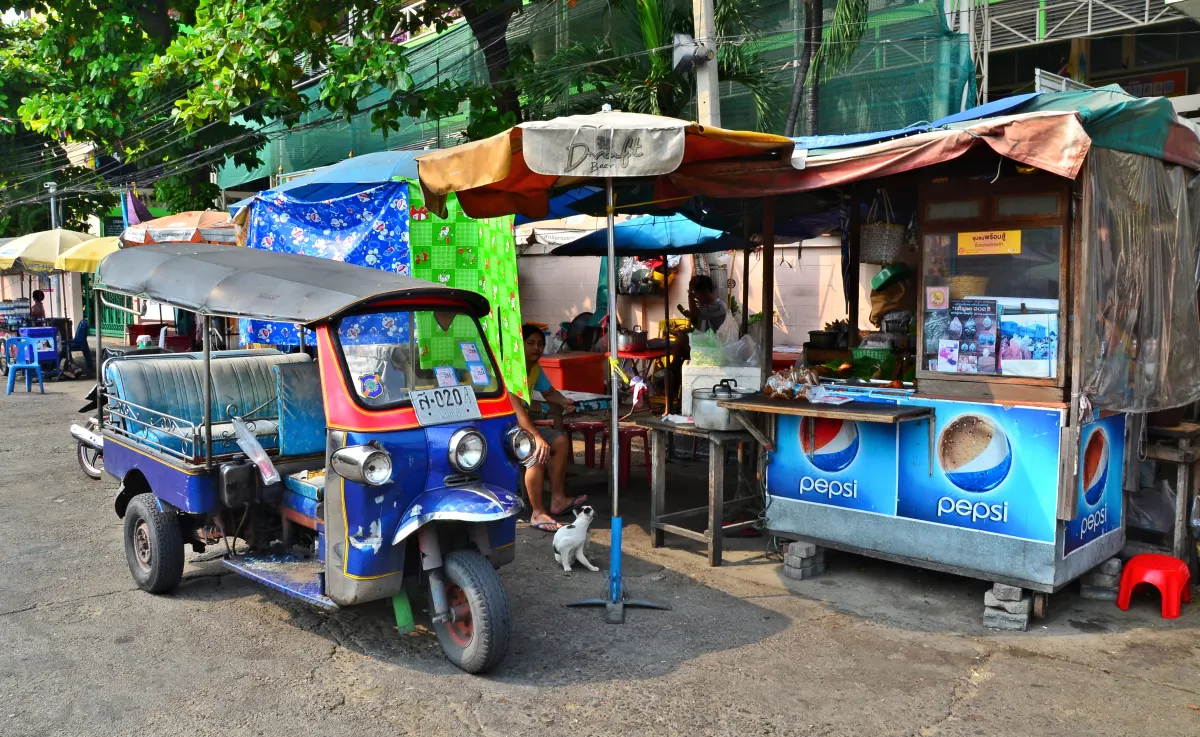
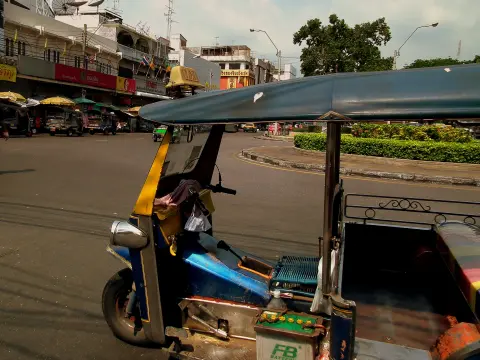
- Tuk-tuks, the noisy three-wheelers, are fun for short rides, but they're open to the fumes and usually cost more than a metered taxi. Always agree the price before you get in, and be clear whether it's per person or for the tuk-tuk. Bargain politely and walk away if it's too high: there will be another.
- Never accept a cheap tour by tuk-tuk. A driver offering to take you round the sights for 20 or 50 baht will stop at gem and tailor shops that pay him commission. See Scams and staying safe.
- Motorbike taxis, with drivers in numbered orange vests, wait at the ends of side streets and are the quickest way through traffic for short trips. Ask for a helmet.
Songthaews
Songthaews ("two rows") are pick-up trucks with two benches in the back, and they're the local buses and shared taxis in many towns. In Chiang Mai, the red ones go wherever you want: tell the driver where you're going and agree the price, and he may pick up other people going the same way. Elsewhere, they run fixed routes and you pay a flat fare when you get off, or they're hired as a taxi. Press the buzzer to stop.
Trains
- The State Railway of Thailand runs trains from Bangkok north to Ayutthaya, Phitsanulok (for Sukhothai) and Chiang Mai, northeast to Nong Khai (for Laos) and Ubon Ratchathani, and south to Hua Hin, Chumphon, Surat Thani (for Ko Samui and the Gulf islands) and Hat Yai.
- Overnight sleeper trains are a good way to cover long distances and save a night's hotel. In second-class sleepers, seats turn into curtained bunks at night; the lower bunk is bigger and costs a little more. First class has two-berth compartments. Bangkok to Chiang Mai takes about 11 to 13 hours.
- Long-distance trains from Bangkok leave from Krung Thep Aphiwat Central Terminal (Bang Sue), not the old Hua Lamphong station, which still has some local trains. Check which station is on your ticket.
- Book sleepers ahead, especially at weekends, around holidays and from December to February. Use the State Railway's own D-Ticket website or app, or a station. Foreign cards sometimes fail on the website; agencies sell tickets too, for a fee.
- Trains are often late, so don't plan a tight connection with a flight. Day trains in third class are very cheap and slow, and fun for short trips, such as to Ayutthaya or along the Death Railway in Kanchanaburi.
Buses
- Long-distance buses go almost everywhere, and the best are comfortable, air-conditioned and cheap. Government buses (the Transport Company, Baw Khaw Saw) and the big private companies leave from Bangkok's bus terminals: Mo Chit for the north and northeast, Ekkamai for the east coast, and the Southern Bus Terminal for the south. Book online or at the terminal.
- Be wary of cheap "VIP" tourist buses and minibuses sold on Khao San Road and in tourist areas: things go missing from bags in the luggage hold, and the trips often involve long waits and changes. Keep valuables with you.
- Minibuses (vans) are quick but often driven fast. If one feels unsafe, say so, or get off.
- Combined bus and ferry tickets take you to the islands. See Islands and ferries.
Domestic flights
Flying saves a lot of time on long trips, such as Bangkok to Chiang Mai, Phuket, Krabi or Ko Samui, and fares on the low-cost airlines are often cheap if you book ahead. Thai AirAsia, Nok Air, Thai Lion Air and Thai Vietjet fly mostly from Don Mueang; Thai Airways and Bangkok Airways (the main airline to Ko Samui) use Suvarnabhumi. Check the baggage allowance: low-cost fares often include only hand luggage.
Driving and scooters
Thailand's roads are among the most dangerous in the world, and most foreigners hurt in Thailand are hurt on a motorbike. Thais drive on the left. If you hire a car or a scooter, you need an International Driving Permit for that kind of vehicle as well as your licence, and your travel insurance may not cover you without one. See Scams and staying safe and Health.
See also: islands and ferries, and the itineraries: 7 days from Bangkok to Chiang Mai and two weeks in Thailand.

Comments
No comments yet.