
Arriving in Thailand: the 30-day visa exemption, the digital arrival card and customs
Most visitors can arrive in Thailand without a visa, but the rules changed in September 2026, when the 60-day visa-free stay was cut back to 30 days. You also need to fill in the free Thailand Digital Arrival Card online before you arrive. Check both before you book.
Do you need a visa?
- The 30-day visa exemption: since 15 September 2026, holders of passports from 60 countries and territories can visit Thailand for tourism without a visa for up to 30 days. They include the UK, Ireland, the USA, Canada, Australia, New Zealand, most of the European Union, Switzerland, Norway, Japan, Singapore, Malaysia, India and South Africa. This replaced the 60-day visa exemption that Thailand brought in during 2024, and many websites and guidebooks still give the old figure.
- Other agreements: some countries have their own agreements with Thailand that give a different stay (90, 30 or 14 days). Passport holders from Seychelles and Mauritius get 15 days, and only a few nationalities can now get a visa on arrival.
- Everyone else, and anyone who wants a longer stay from the start, needs a visa before they travel. Most are applied for online through the official Thai e-Visa website.
- Staying longer: you can usually ask for one extension of up to 30 days at an immigration office in Thailand, for a fee (1,900 baht at the time of writing). It isn't automatic.
- Don't overstay. Overstaying is fined for each day, and longer overstays can lead to detention and a ban on coming back.
- Crossing by land: if you arrive overland, for example from Malaysia, Laos or Cambodia, you can generally use the visa exemption no more than twice a calendar year.
- Check the official list: the Tourism Authority of Thailand lists the 60 countries, and your nearest Thai embassy has the details for your passport.
Your passport and proof of onward travel
- Your passport should be valid for at least six months after you arrive, and have a blank page for the stamp.
- Immigration officers can ask to see a ticket out of Thailand within your permitted stay, an address where you're staying, and that you have enough money for your trip. Most visitors are never asked, but airlines sometimes check for an onward ticket before you board, especially with a one-way ticket. Keep a copy of your return or onward booking on your phone.
- Foreigners are expected to carry their passport, or at least a copy of it, in Thailand. Hotels ask for it when you check in, and so do phone shops for a SIM card and banks for changing money.
The Thailand Digital Arrival Card (TDAC)
Since May 2025, every foreign visitor has to fill in the Thailand Digital Arrival Card online before they arrive, whether by air, land or sea. It replaced the old paper arrival card (the TM6).
- Fill it in on the official site, tdac.immigration.go.th, in the three days before you arrive. It asks for your passport details, flight, where you're staying, and recent travel.
- It's free. Other websites charge for the same form: use only the official one.
- You need a new one every time you enter Thailand, including after a side trip to a neighbouring country.
- Keep the confirmation (a QR code) on your phone, or print it. If you forget, there are kiosks at the main airports, but expect a queue.
The proposed tourist entry fee
Thailand has talked for several years about charging foreign visitors an entry fee of 300 baht when they arrive by air (and less by land or sea), partly to pay for accident insurance for tourists. At the time of writing it still hadn't started, and no start date had been announced. If it does start, it's expected to be added to air fares or paid online: check the Tourism Authority of Thailand's news before you travel.
At the airport
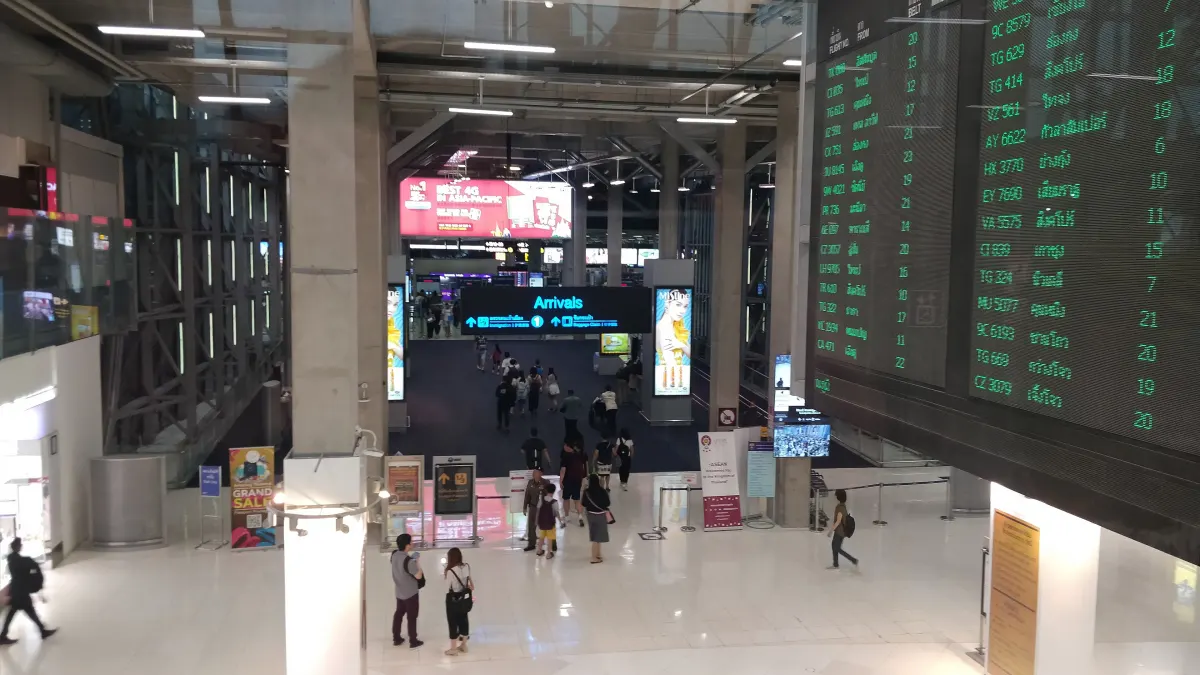
- Bangkok has two airports: Suvarnabhumi (BKK), the main international airport, and Don Mueang (DMK), used mostly by low-cost airlines. They're about an hour apart, so check which one your ticket is for. Phuket, Chiang Mai, Krabi, Ko Samui and a few others also have international flights.
- Immigration queues at Suvarnabhumi can be long at busy times, especially late at night. Foreigners are photographed and fingerprinted.
- After immigration, use the official taxi rank or the Airport Rail Link into the city (see Getting around Thailand), and ignore anyone who approaches you inside the terminal offering a taxi.
Customs
- Duty-free: one litre of alcohol and a small amount of tobacco (200 cigarettes or 250 grams of tobacco) per adult. Thai customs check, and the fines for bringing in more cigarettes than allowed are heavy.
- E-cigarettes and vapes are illegal in Thailand: don't bring them, or their liquids and refills. See Thai laws visitors trip over.
- Cash: declare foreign currency worth more than US$20,000 when you arrive or leave. The rules for baht and mixed currencies are different: check with Thai Customs if you carry a lot of cash.
- Medicines: bring them in their original packaging with a copy of your prescription. Some medicines, including strong painkillers, ADHD medicines and some sleeping pills, are controlled in Thailand: check with the Thai embassy before you travel if you take one. Cannabis is only legal on a Thai doctor's prescription, and bringing it in, even with a foreign medical card, counts as smuggling.
- Drones must be registered before you fly them: see Thai laws.
Leaving: VAT refunds
Prices in Thailand include 7% VAT. In shops showing the "VAT Refund for Tourists" sign, ask for a VAT refund form when you spend over the minimum, and claim the tax back at the airport when you leave, by showing the goods, the forms and your passport at the customs desk before you check in your bags. See Money in Thailand.
Next: getting around, phones and apps to install, and when to go.


Comments
No comments yet.