
Temple and cultural etiquette in Thailand
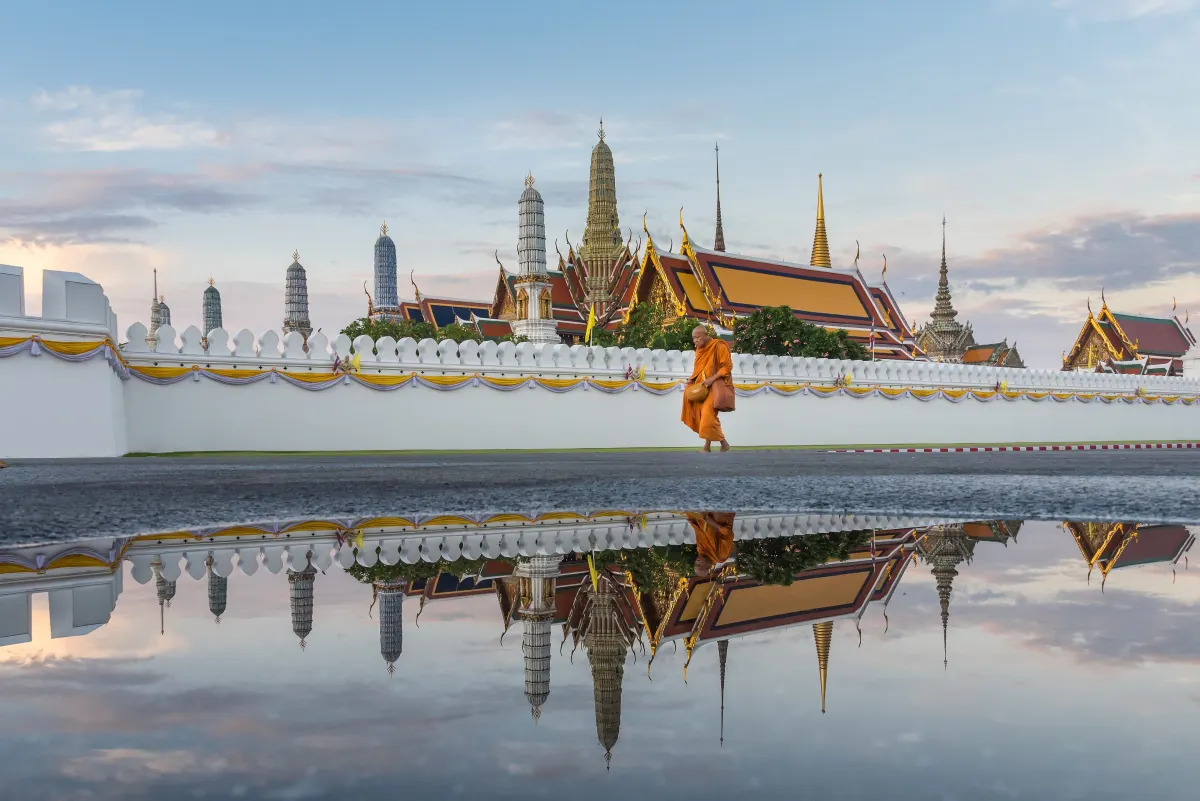
Thais are famously easy-going, and don't expect visitors to know all their customs. A few things matter a lot, though: respect for Buddhism and the monarchy, modest dress in temples, and the idea that the head is high and sacred and the feet are low and dirty. Get these right, keep your temper, and you'll be welcome everywhere.
What to wear in temples
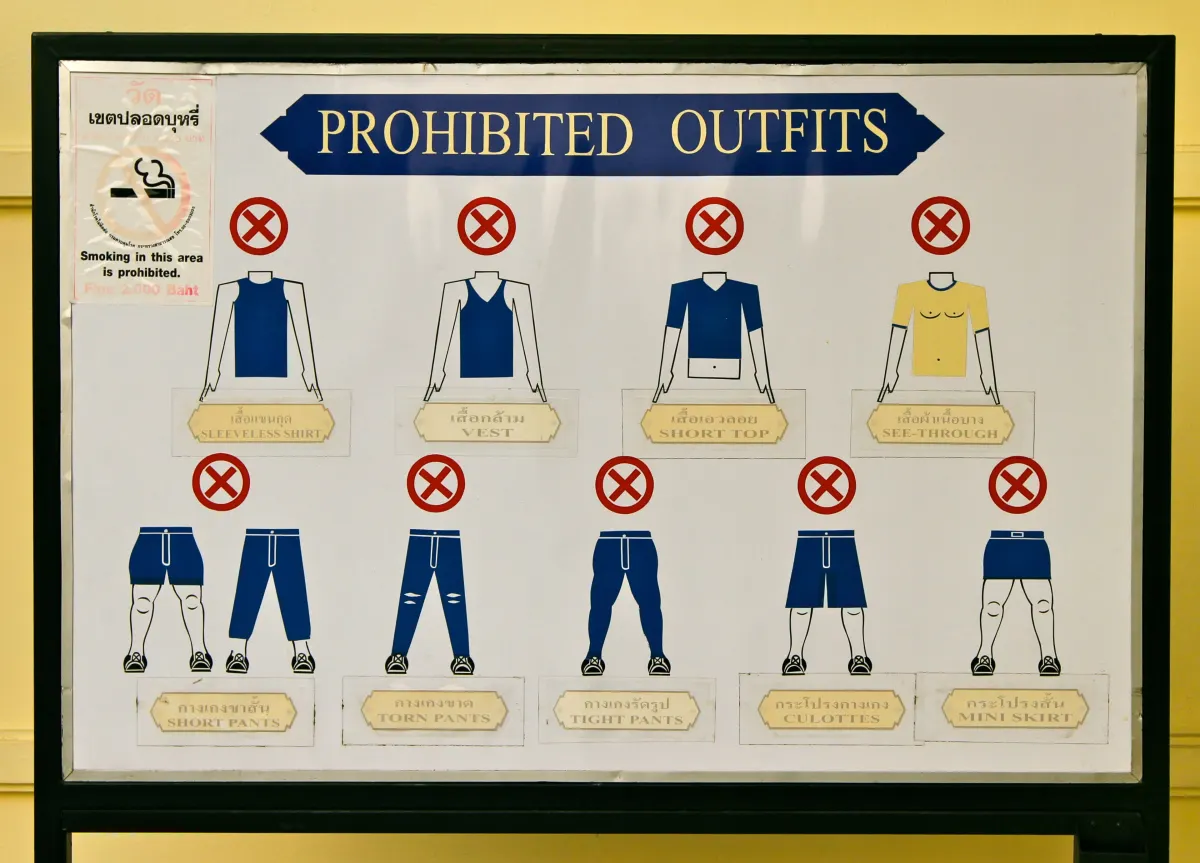
- Cover your shoulders and knees. No vests or tank tops, no shorts or short skirts, nothing see-through. Loose trousers or a long skirt, and a shirt or T-shirt with sleeves, are fine for both men and women.
- The Grand Palace and Wat Phra Kaew are the strictest: tight trousers, leggings and ripped jeans may be refused, and staff check at the gate. Wat Pho, Wat Arun, Doi Suthep and the White Temple check too.
- Many temples lend or sell sarongs and wraps at the entrance, but it's easier to carry a scarf or light trousers.
- Take off your shoes before going into a temple building (the ubosot or wihan), and in many homes, some shops and some guesthouses. Look for the shoes left outside the door.
Inside a temple
- Feet: when you sit in front of a Buddha image, tuck your feet behind you or to the side, never pointing at the Buddha or at people.
- Don't climb on Buddha images or ruins, or pose with your back to a Buddha for a selfie, or put your hand on its head. That includes the ruined images at Ayutthaya and Sukhothai.
- Step over the raised threshold of a temple door, not on it.
- Speak quietly, and switch your phone to silent. If people are praying, don't take photos of them; some temples don't allow photos inside at all.
- Leave a donation in the box if you like. Many temples are free, but the big ones in Bangkok, Chiang Mai and Chiang Rai charge foreigners an entry fee.
Monks
- Women mustn't touch a monk, or hand anything directly to him. Put it down on a cloth or a table near him, or give it to a man to pass on.
- Give monks space: on buses and trains, some seats are reserved for them, and you should let them sit, not sit right next to them.
- Monks walk the streets at dawn collecting food (tak bat). If you'd like to give, buy food from a local shop, take off your shoes, kneel or stand below the monk's level, and don't talk to him or touch him. Otherwise, watch quietly from a distance, without flash. Don't turn it into a photo show.
- Monks don't eat after midday, and many monks are happy to talk, especially at the "monk chat" sessions at some temples in Chiang Mai.
Heads and feet
- Don't touch anyone's head, even a child's: it's the highest and most respected part of the body.
- Don't point your feet at people or at Buddha images, put them on a table or chair, or use them to point at or move things. Don't step over people, or over food.
- Pointing at people with your finger is rude; gesture with your whole hand, palm down.
The King and the royal anthem
- The King, Rama X, and the royal family are very highly respected, and criticising them is a serious crime: see Thai laws. Pictures of the King are everywhere, and you should treat them with respect.
- The royal anthem is played before films in cinemas: everyone stands, and you should too.
- The national anthem is played at 08:00 and 18:00 every day, over loudspeakers in public places, parks and stations. People stop and stand still until it ends: do the same.
- Money carries the King's picture, so don't step on it, scrunch it up or throw it.
Everyday manners
- The wai: Thais greet each other by pressing their palms together and bowing slightly. Return a wai when someone gives you one, but you don't need to wai shop staff, waiters or children; a smile and a nod is fine. A handshake is fine in business.
- Keep your cool. Raising your voice or showing anger is seen as losing face, and makes problems worse. Smile, stay polite, and you're much more likely to get what you want.
- Dress: away from the beach, put a shirt on. Topless sunbathing is frowned on, and nudity on beaches is illegal.
- Public affection beyond holding hands is frowned on, especially in rural areas.
- Saying "khrap" and "kha": men add khrap and women add kha to the end of a sentence to be polite. Sawasdee khrap / kha is hello, and khop khun khrap / kha is thank you.
- Eating: Thais eat with a spoon in the right hand and a fork in the left, using the fork to push food onto the spoon. Chopsticks are for noodles. Dishes are shared. See Thai food and drink.
See also: the temples of Chiang Mai's Old City and Museum Siam, a good introduction to Thai culture.



Comments
No comments yet.