
Thai food and drink: what to try, street food, water, ice and spice
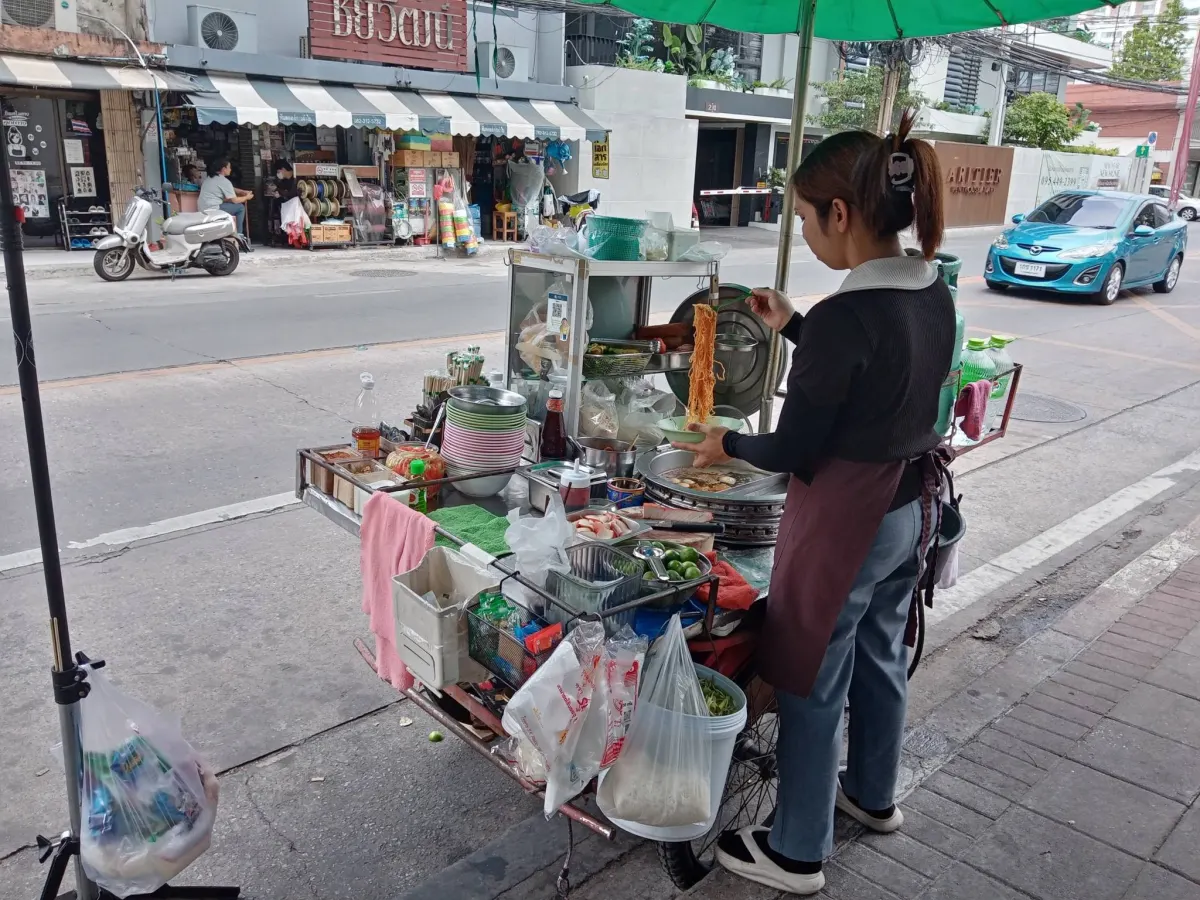
Food is one of the best reasons to go to Thailand, and some of the best of it is cooked on the street, for a dollar or two. Thai food balances sweet, sour, salty and spicy in every dish, and it's very regional: the north, the northeast (Isan) and the south each have their own dishes.
Dishes to try
- Pad thai: stir-fried rice noodles with egg, tofu, shrimp, peanuts and tamarind. Every visitor's first dish.
- Tom yum goong: the hot and sour prawn soup, with lemongrass, galangal and lime leaves.
- Green curry and massaman curry, a mild, rich curry with potatoes and peanuts, from the south.
- Som tam: green papaya salad from Isan, pounded with chilli, lime, fish sauce and peanuts. Eat it with sticky rice and grilled chicken (gai yang).
- Pad kra pao: minced pork or chicken stir-fried with holy basil and chilli, with a fried egg on top. Thailand's favourite quick lunch.
- Khao soi: the curry noodle soup of the north, best in Chiang Mai.
- Boat noodles: small, rich bowls of noodle soup in Bangkok. People eat a stack of them.
- Mango sticky rice: the dessert, best from March to May, when mangoes are in season.
- Also look for khao man gai (Hainanese chicken rice), larb (spicy minced meat salad), moo ping (grilled pork skewers) and khao pad (fried rice).
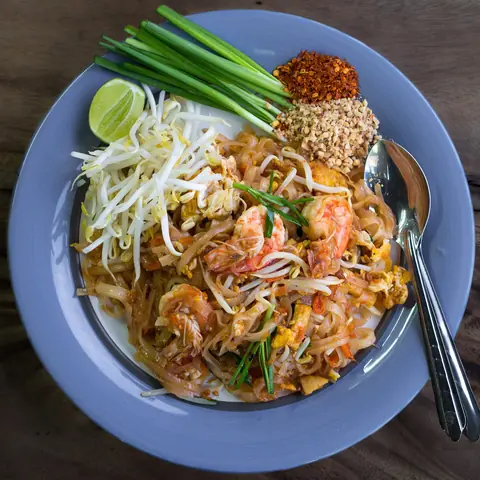
Pad thai
Thailand's best-known noodle dish: rice noodles stir-fried in a hot wok with tamarind, fish sauce and palm sugar, egg, tofu, dried shrimp and bean sp…
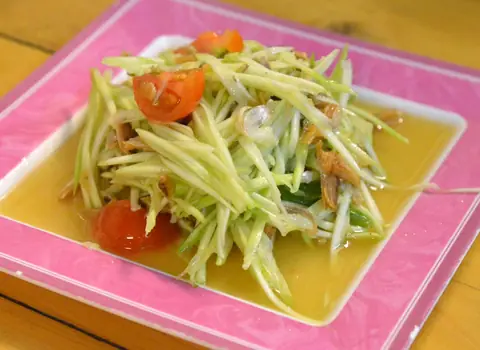
Som tam (green papaya salad)
The great dish of Isan, north-east Thailand: shredded green papaya pounded in a mortar with chillies, garlic, lime, fish sauce, palm sugar, tomatoes …
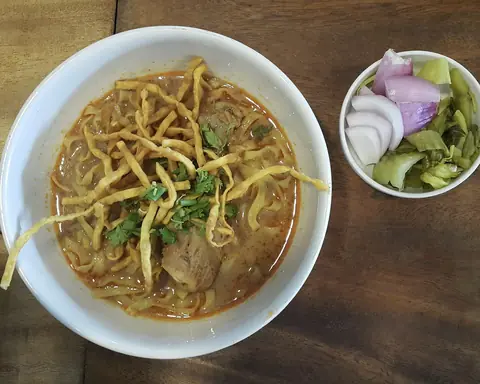
Khao soi, Chiang Mai
Northern Thailand's signature dish: egg noodles in a rich, mildly spicy coconut curry broth, usually with a chicken drumstick or beef, topped with cr…
Street food
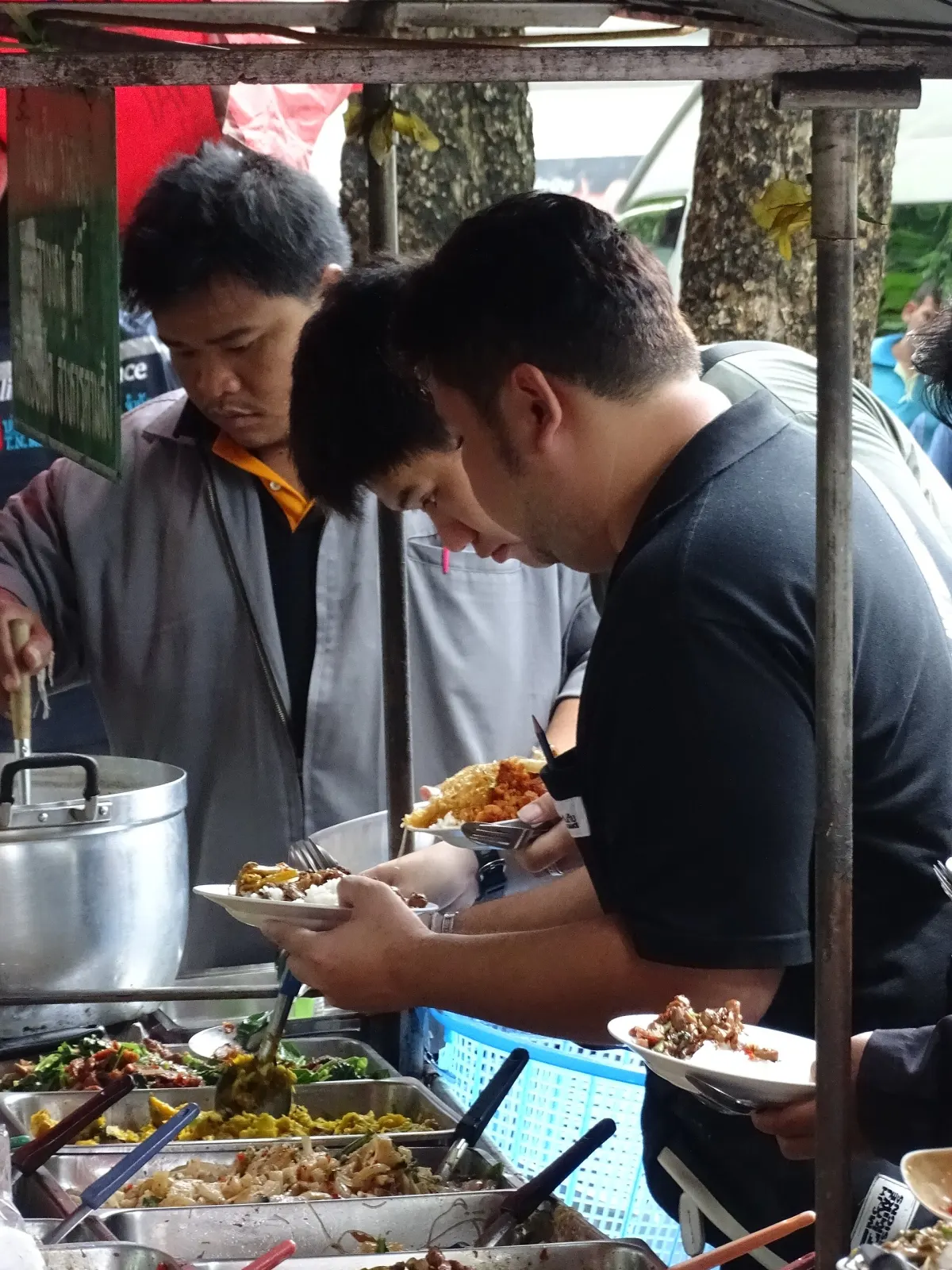
- Bangkok's Yaowarat (Chinatown) at night is the most famous street food area, and every town has a night market. Office districts have food stalls at lunchtime, and malls have cheap food courts.
- Choose busy stalls where food is cooked in front of you and the locals queue. Hot, freshly cooked food is safest; be more careful with food that's been sitting out, salads and seafood in the heat.
- Many stalls make one dish and do it well. Point, smile and pay when you've finished, or when you order at busy places.
- Bangkok has been moving stalls off some main streets, so the stalls in guidebooks may have moved: ask locally.
Spice
- Thai food can be very hot, and "a little spicy" to a Thai cook may be a lot to you. Say mai phet (not spicy) or phet nit noi (a little spicy). Som tam, larb and jungle curries are usually the hottest.
- Each table has a set of condiments to adjust your food: chilli flakes, sugar, fish sauce with chillies (phrik nam pla) and vinegar.
- Rice, cucumber and sweet drinks cool your mouth better than water.
Water and ice
- Don't drink the tap water. Bottled water is cheap everywhere, and many streets have coin-operated water machines where you refill a bottle for a few baht, which cuts down on plastic. Hotels often provide free bottles.
- Ice in restaurants, cafés and drinks stalls is usually made in factories from purified water, and is generally fine: it's the tubes with a hole through the middle. Be more careful with crushed ice from a block in very basic places.
- Brush your teeth with tap water if you like, but don't swallow it.
Drinks
- Thai iced tea (cha yen), orange and sweet with condensed milk, and iced coffee are sold everywhere. Fresh fruit shakes and coconuts are cheap and good.
- Beer: Singha, Chang and Leo are the local lagers, often drunk with ice. Thai rum and whisky, such as SangSom, are drunk with soda in "buckets" in party areas: be careful with them.
- Alcohol is sold from 11:00 to midnight, and not on Buddhist holy days: see Thai laws.
Eating customs
- Dishes are ordered for the table and shared, with a plate of rice each. Take a little at a time.
- Thais eat with a spoon and fork: the fork pushes food onto the spoon, and the spoon goes in your mouth. Chopsticks are for noodle soups. In the north and northeast, sticky rice is eaten with the fingers of the right hand, rolled into a ball.
- The person who invited everyone usually pays. Splitting the bill is fine among friends.
Vegetarians and allergies
- Fish sauce, shrimp paste and oyster sauce are in almost everything. Ask for jay food: vegan Chinese-Thai food, sold at stalls and restaurants with yellow flags, especially during the Vegetarian Festival, in September or October. Mangsawirat means vegetarian.
- Peanuts, shellfish, fish and soy are common. If you have a serious allergy, carry a card in Thai explaining it, and your medicine.
Fruit
Try mangosteen, rambutan, longan, mango, pomelo, dragon fruit and the famous durian, which is banned from hotels and public transport because of its smell. Fruit sellers will peel and cut it for you.
See also: Health in Thailand, for avoiding upset stomachs.



Comments
No comments yet.