
Money in Thailand: baht, ATMs, cards, bargaining and tipping
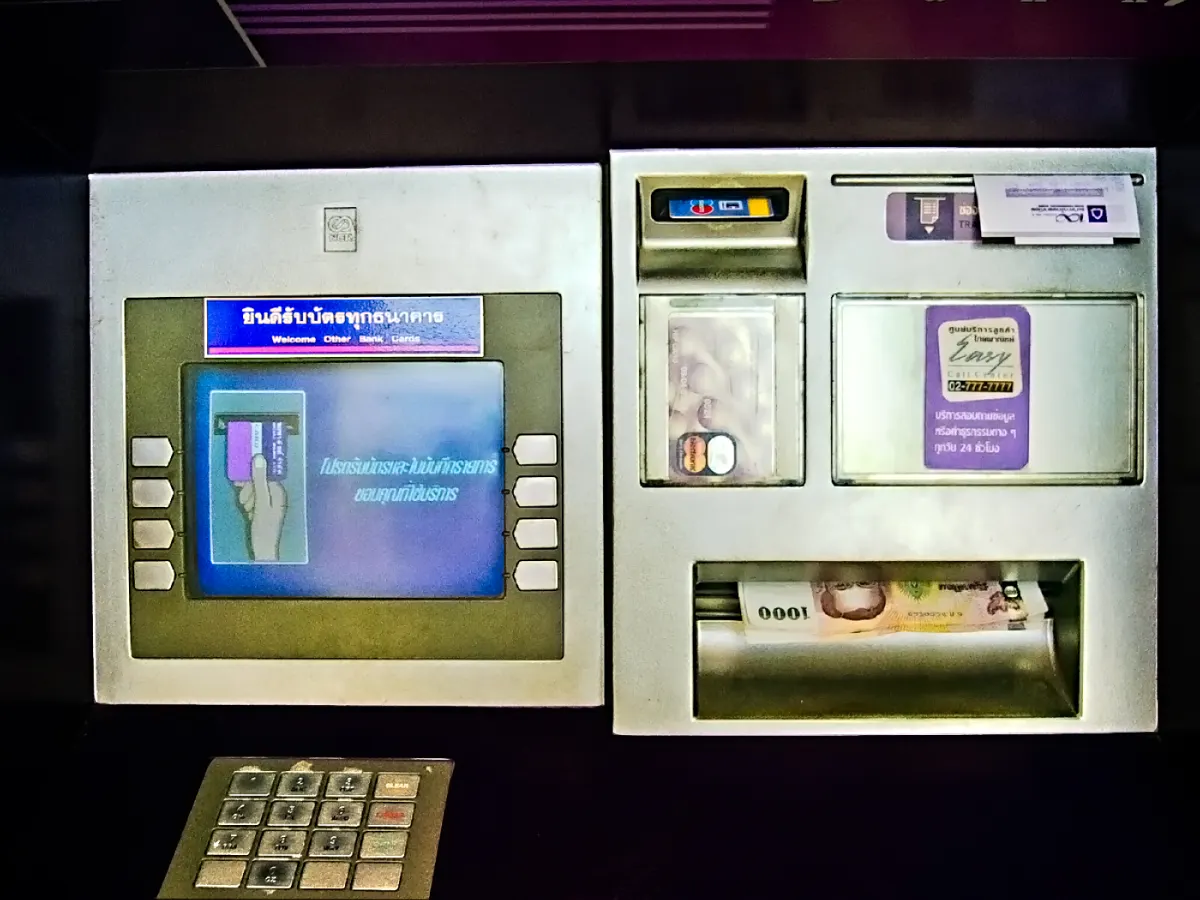
Thailand is still good value, especially for food and transport, but it's no longer the bargain it was, and Bangkok's malls and smart restaurants cost as much as in Europe. You'll use cash more than in many countries, and the biggest hidden cost is the fee Thai ATMs charge for foreign cards.
The baht
- The Thai baht (THB, ฿) is divided into 100 satang. Notes are 20 (green), 50 (blue), 100 (red), 500 (purple) and 1,000 (brown) baht; coins are 1, 2, 5 and 10 baht, and small satang coins.
- Try to keep some small notes and coins: taxis, street stalls and tuk-tuk drivers often can't change a 1,000 baht note. Break big notes in 7-Eleven, supermarkets and restaurants.
- Every note and coin carries the King's picture: treat it with respect, and never step on money.
ATMs
- ATMs are everywhere, but Thai banks charge a fee on every withdrawal with a foreign card, usually around 250 to 350 baht, on top of anything your own bank charges. The screen shows it before you go ahead.
- Because the fee is per withdrawal, take out larger amounts less often. Most machines let you take out 20,000 to 30,000 baht at a time.
- When the machine asks whether to charge you in your home currency or in baht, choose baht, without conversion. The ATM's conversion rate is worse.
- Use ATMs inside banks and shopping centres where you can, and cover the keypad. Some machines give the card back after the cash, so don't walk off without it.
- A travel debit card that refunds ATM fees, or a card with no foreign transaction fee, saves money.
Changing money
Exchange booths in Bangkok and the tourist areas give good rates for cash, especially the independent ones such as SuperRich, and often better than an ATM once you count the fee. You need your passport. Bring clean, undamaged notes: euros, US dollars, pounds and other main currencies are easy to change. Airport rates are worse, so change only what you need there.
Cards and phones
- Visa and Mastercard are accepted in hotels, malls, supermarkets, chain restaurants, 7-Eleven and for most bookings, and contactless works widely in the cities. Some places add a 2 to 3% surcharge for cards.
- You'll need cash for street food, markets, small restaurants and guesthouses, songthaews, tuk-tuks, motorbike taxis and most things on the smaller islands.
- If a card machine offers to charge you in your home currency, say no and pay in baht.
- Thais pay for almost everything by scanning QR codes (PromptPay) with a Thai banking app. You need a Thai bank account to use it, although some international payment apps can now pay Thai QR codes: check if yours can.
- You can pay for Bangkok's MRT and Airport Rail Link by tapping a contactless card: see Getting around.
Bargaining
- Bargain at markets such as Chatuchak, at night markets and stalls selling clothes and souvenirs, with tuk-tuks and taxis without meters, and for longer hotel stays in the low season.
- Don't bargain in shops with price labels, malls, 7-Eleven, restaurants and food stalls, or for things with a fixed price, like a bowl of noodles.
- Bargain with a smile and a joke, not hard. Ask the price, offer less, and meet in the middle. If you don't want it at the price, smile and walk away. Don't haggle over a few baht: it's a lot less to you than to the seller.
- Prices for foreigners are often higher, including at many national parks and some temples, which officially charge foreigners more than Thais.
Tipping
- Tipping isn't a Thai custom, but it's become normal in tourist areas and is appreciated, as wages are low.
- Restaurants: check the bill. Many restaurants and hotels add a 10% service charge and 7% VAT, shown on menus as "++", and you don't need to add more. Otherwise, leave the coins from the change, or round up, or about 10% in smarter places. At street stalls, no tip is expected.
- Massages: a tip of 50 to 100 baht for an hour's massage is usual.
- Taxis: round up to the nearest 10 or 20 baht.
- Hotels: 20 to 50 baht for porters, and something for the cleaners if you stay several nights. Guides and drivers on day tours are usually tipped.
VAT refunds
Prices include 7% VAT. Shops displaying the "VAT Refund for Tourists" sign can give you a VAT refund form (the P.P.10) if you spend over a minimum in one shop on one day, with your passport. At the airport, show the goods, the forms and your passport at the VAT refund customs desk before you check in your bags, then collect the refund after passport control. Small refunds are paid in cash, minus a fee.
See also: Phones and apps and Scams and staying safe.
Comments
No comments yet.