
Weather and when to go to Thailand: seasons, festivals and the burning season
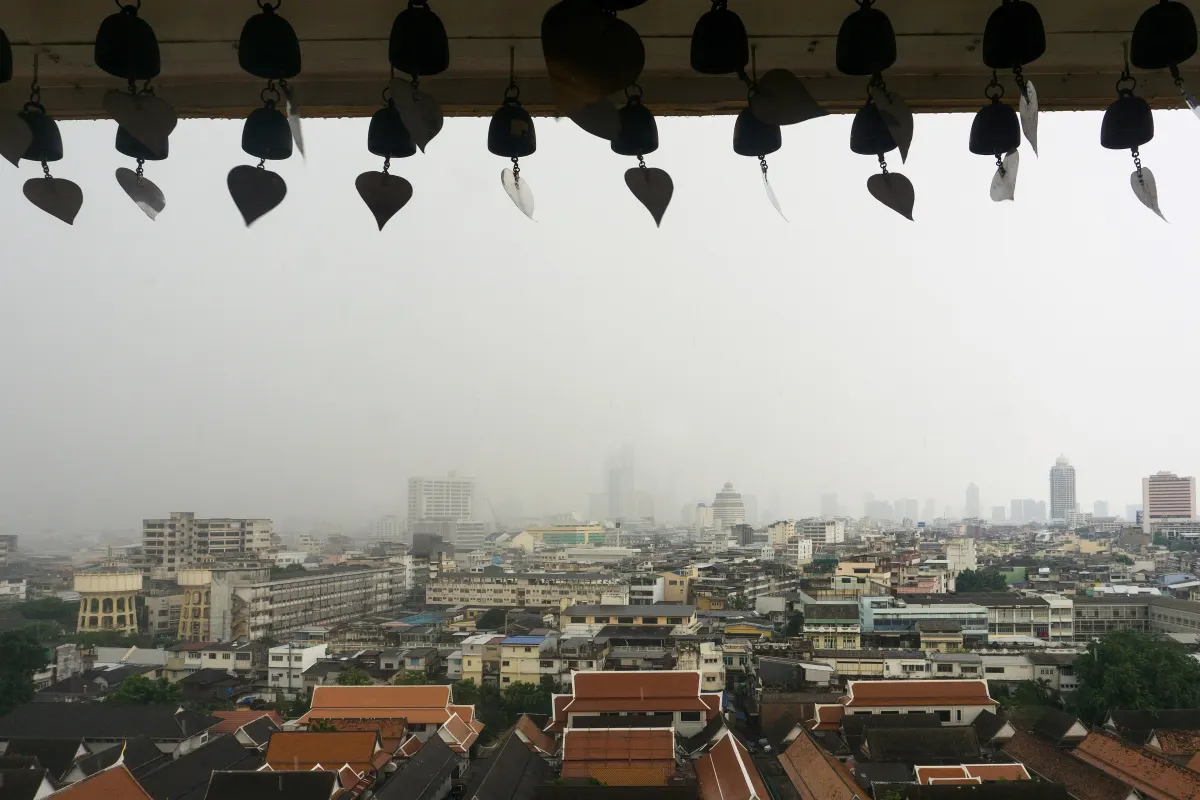
Thailand is hot all year, but it has three seasons: cool and dry from about November to February, hot from March to May, and rainy from about June to October. The cool season is the most popular time to go, and the busiest and dearest. The rainy season is quieter and greener, and rarely rains all day, except on the islands that face the monsoon.
The seasons
- Cool season (November to February): the best weather for most of the country, with sunny days and lower humidity. Bangkok is around 30°C by day, the north is pleasant by day and can be cold at night, especially in the mountains around Doi Inthanon and Pai. The Andaman coast is at its best. It's peak season: book flights, sleeper trains and island hotels ahead, especially from Christmas to New Year and around Chinese New Year.
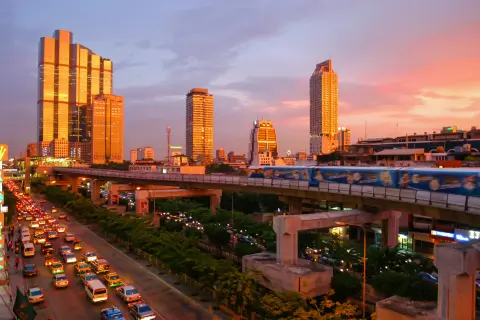
- Hot season (March to May): very hot and humid, with temperatures often around 35 to 40°C, and the hottest time in Bangkok and the central plains. It's good for the beaches and for mangoes, but plan sightseeing for early morning and late afternoon. See Health for heat.
- Rainy season (about June to October): usually a heavy downpour in the afternoon or evening, with sun in between. September is often the wettest month in Bangkok and the north, and streets can flood. Prices are lower, there are fewer visitors, and the countryside, rice fields and waterfalls such as Erawan are at their best. Some national parks and trails close, and some boat trips stop.
The islands
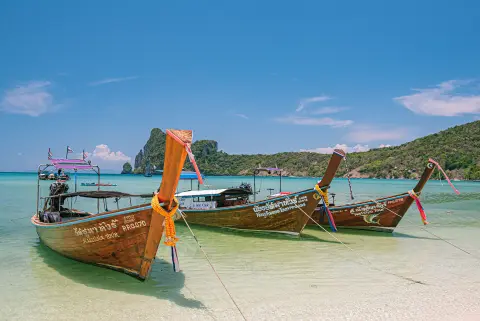
The two coasts have different rainy seasons. The Andaman coast (Phuket, Krabi, Phi Phi, Lanta) gets the southwest monsoon from about May to October, with rough seas. The Gulf islands (Ko Samui, Ko Phangan, Ko Tao) get most of their rain from about October to December, and are often good in July and August. See Islands and ferries.

Festivals
- Songkran (13 to 15 April): Thai New Year, and the biggest water fight in the world. In Bangkok (on Si Lom Road and Khao San Road), Chiang Mai and the tourist towns, everyone in the street gets soaked with water pistols, buckets and hoses, for several days. It's huge fun, but keep your phone and passport in a waterproof bag, and expect to get wet anywhere outdoors. Many Thais travel home, so transport is full and some businesses close. Songkran is also the most dangerous week of the year on the roads, so don't ride a scooter.
- Loy Krathong (on the full moon of the twelfth Thai lunar month, usually in November): people float small baskets of flowers and candles (krathong) on rivers, lakes and canals. Sukhothai has a big festival, and Bangkok's riverside is busy.
- Yi Peng, in Chiang Mai, at the same time as Loy Krathong: thousands of paper lanterns are released into the sky. Releasing lanterns is now controlled, because of the fire risk and the airport, so it's allowed only at set times and organised events, some of which charge a lot for tickets. Book well ahead.
- Chinese New Year (January or February): celebrated in Yaowarat, Bangkok's Chinatown.
- The Vegetarian Festival (September or October): best known in Phuket, with processions and vegan food stalls everywhere.
- Buddhist holidays: on days such as Makha Bucha and Visakha Bucha, alcohol isn't sold and some bars close. See Thai laws.
The burning season in the north
From about February to April, farmers burn their fields and forest fires burn in northern Thailand and the neighbouring countries. The smoke settles over the valleys, and Chiang Mai, Chiang Rai and Pai often have some of the worst air pollution in the world, with fine particles (PM2.5) many times the safe level and the mountains hidden in haze. Flights are sometimes delayed.
- If you can, visit the north from November to January instead.
- Check the air quality each day on an app or the government's Air4Thai site, and on bad days stay indoors with air conditioning or a purifier, and avoid exercise outdoors.
- If you have asthma or heart or lung problems, or you're pregnant, avoid the north in March and early April. A well-fitting N95 or similar mask helps; a cloth mask doesn't.
- Bangkok also has smoggy days in the cool season, from about December to February.
What to pack
- Light, loose clothes that dry quickly, and something that covers your shoulders and knees for temples (see Temple etiquette).
- A light jumper or jacket for air-conditioned buses, trains and malls, which are cold, and for the north in the cool season.
- Sandals that are easy to take off, as you'll take your shoes off a lot.
- A small umbrella or rain jacket in the rainy season, and a dry bag for boats and Songkran.
- Sunscreen, a hat and insect repellent: sunscreen costs more in Thailand, and is hard to find without whitening ingredients.
The Thai Meteorological Department has the forecasts and storm warnings.
Comments
No comments yet.