
Visiting Iguazú Falls: the Argentine and Brazilian sides, tickets, the border, coatis and yellow fever
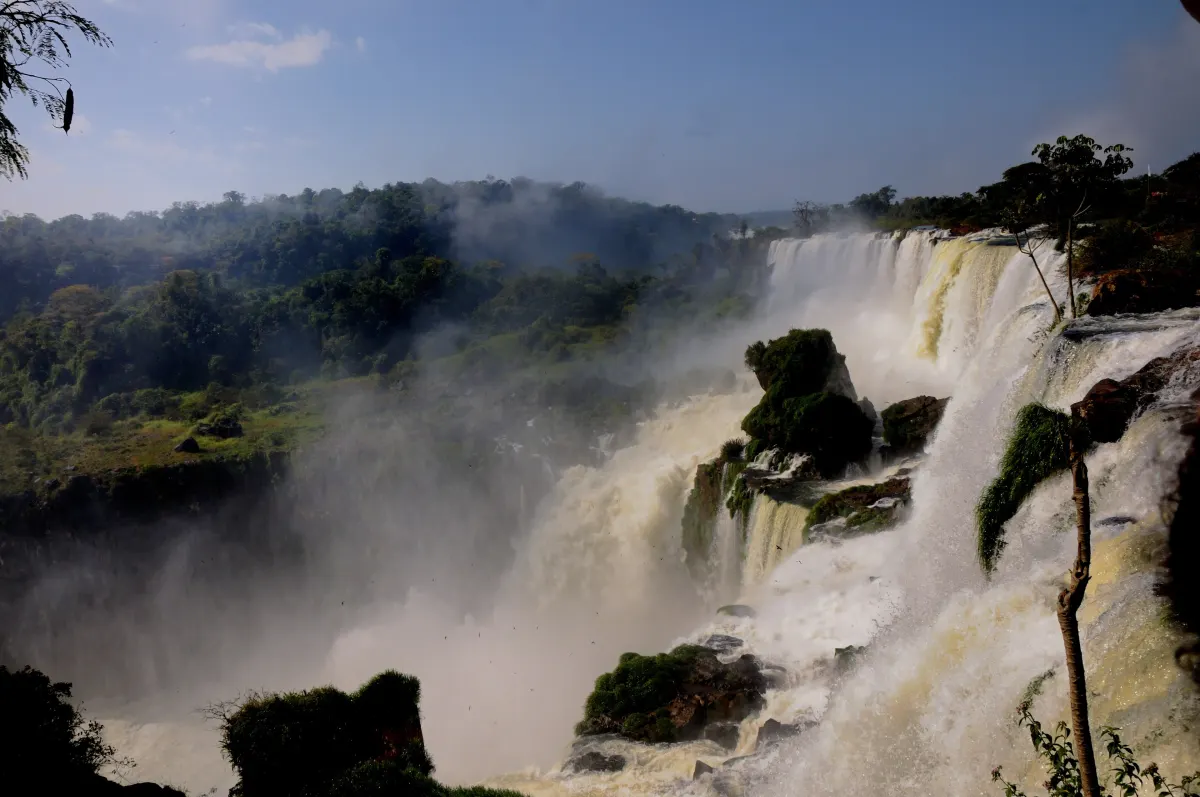
The Iguazú Falls are about 275 waterfalls, nearly 3 km across, on the border between Argentina and Brazil. Argentina has most of the falls and the walkways that take you in among them. Brazil has the grand view. If you can, see both: allow a full day for Argentina and half a day for Brazil.
Check first: the Devil's Throat is closed on the Argentine side
- The Garganta del Diablo (Devil's Throat) walkway in Argentina was taken apart in August 2026 to protect it from floods, and it was still closed on 23 November 2026, with no confirmed date for reopening. The other Argentine circuits weren't listed as closed.
- In late October 2026 the river reached more than ten times its usual flow. The Brazilian walkway below the Devil's Throat closed for 20 days and reopened on 31 October.
- Until the Argentine walkway is back, the Brazilian side is the place to see the Devil's Throat up close, so a visit to both sides is worth it more than ever. Check the parks' websites or local news a few days before you go: after heavy rain, walkways can close at short notice.
The Argentine side
- Tickets: 60,000 pesos for a foreign adult, from 1 June 2026. A second day within 72 hours is half price. Children aged 6 and under are free. Buy online to save queuing, and bring your passport.
- Hours: daily from 8 am to 6 pm, with the last entry at 4 pm, at the time of writing. Be there when it opens.
- The walks: the Upper Circuit, along the tops of the falls, and the Lower Circuit, which goes down among them and is the prettier of the two. The free ecological train goes to the start of the circuits; you can also walk.
- San Martín Island is reached by a small boat from the Lower Circuit, only when the water is low enough, and isn't always open.
- Boat trips under the falls are sold separately and soak you. Take a dry bag and a change of clothes.
- Full-moon walks run on the few nights around each full moon when the walkways are open. Places are limited, so book.
- The park is about 18 km from Puerto Iguazú. Buses run every 20 to 30 minutes from the bus station, or take a taxi or a remis.

Natural features
Iguazú Falls (Argentine side)
Puerto Iguazú, Misiones
The Argentine side has about 80% of the falls, with walkways over and under them.
The Brazilian side
- Tickets: about 134 reais for a foreign adult in 2026, sold online with a day and time on the official site, tickets.cataratasdoiguacu.com.br. They aren't valid in Argentina, or the other way round.
- Hours: entry from about 9 am (a little earlier at weekends) to 4 pm.
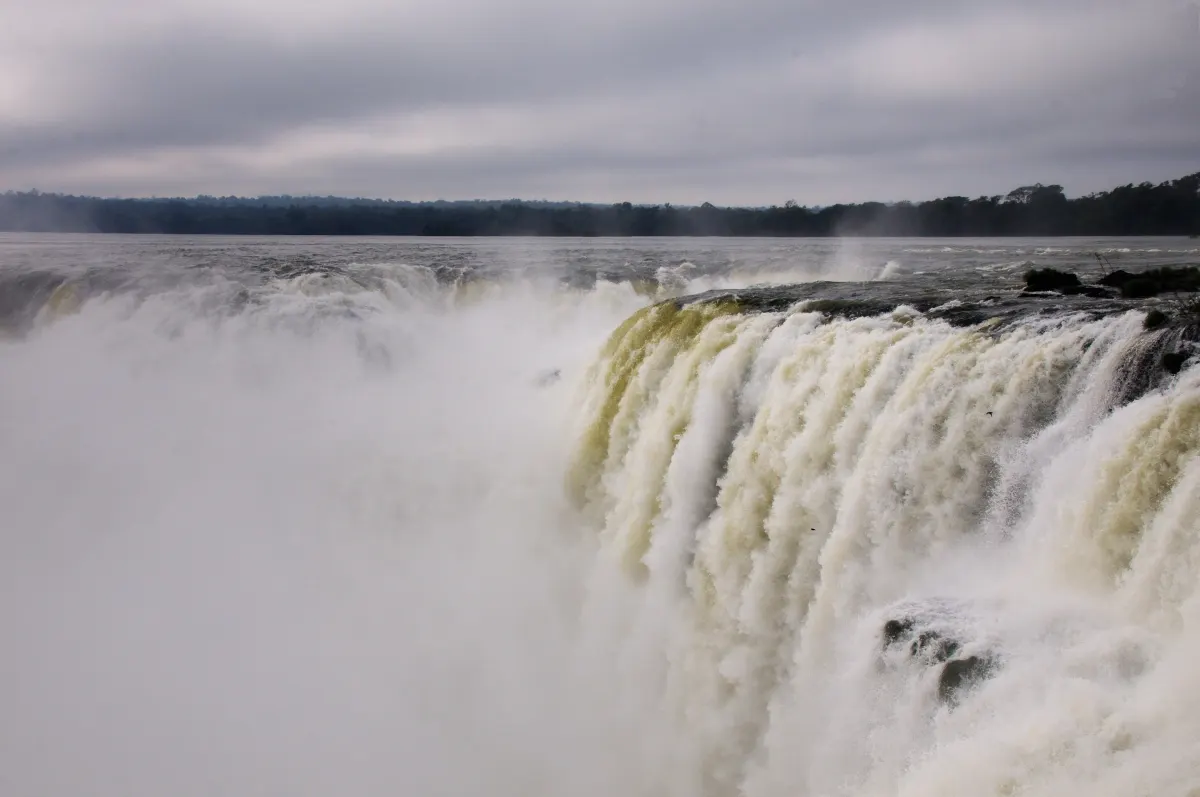
- Park buses take you from the entrance to a single 1.2 km path with views of the whole sweep of the falls, ending at the walkway into the spray. Two to three hours is enough. The Parque das Aves bird park is across the road.

Natural features
Iguaçu Falls (Brazilian side)
Foz do Iguaçu, Paraná
One of the world's great waterfalls, about 275 drops along nearly 3 km on the Brazil-Argentina border, a UNESCO site.
Crossing the border
- It's about half an hour by road from Puerto Iguazú to the Brazilian park when the border is quiet, and much longer on holidays. Public buses go from Puerto Iguazú's bus station to Foz do Iguaçu, where you change; taxis and remises will take you, wait and bring you back, and tours do the same.
- Get your exit and entry recorded on both sides, every time. If the bus doesn't wait, take the next one.
- Check whether you need a visa for Brazil, even for a few hours. US, Canadian and Australian citizens have needed an e-visa since April 2025. See Crossing to Chile, Uruguay and Brazil.
- If you hire a car, ask if it's allowed into Brazil. Cross in daylight and allow plenty of time.
- You may also want to see the Hito Tres Fronteras in Puerto Iguazú, the viewpoint over the meeting of the Iguazú and Paraná rivers, where Argentina, Brazil and Paraguay meet.
Coatis and other animals
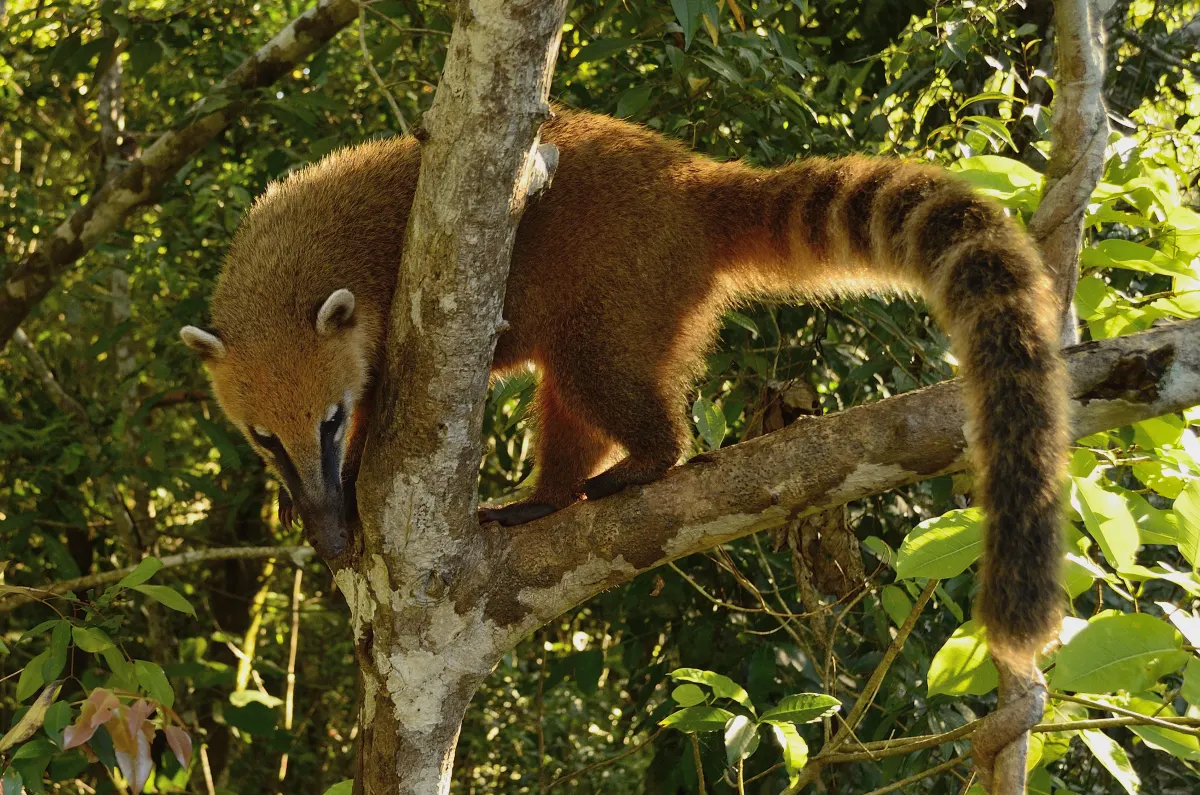
- Coatis, long-nosed relatives of the raccoon, live round the cafés and are after your lunch. Don't feed or touch them: they bite and scratch, and bites need medical attention, with rabies in mind. Keep food out of sight and zip up your bag.
- Monkeys steal food too. Watch for toucans, caimans and hundreds of kinds of butterfly.
- Stay on the paths: the forest has snakes.
Yellow fever, mosquitoes and the heat
- Yellow fever vaccination is recommended for visitors to Misiones, the province Iguazú is in, and for the Brazilian side. Argentina doesn't ask for a certificate on arrival. You need the vaccine at least 10 days before, and other countries may ask for a certificate when you travel on from Argentina or Brazil.
- Use insect repellent all day: there's dengue too, especially from November to May. See Health and insurance.
- From November to March it's hot (well over 30 °C), humid and often wet, with the fullest rivers. April to June and August to October are usually more comfortable. Take water, a hat, shoes with a grip, and a waterproof cover for your phone.
See also 7 days in Buenos Aires and Iguazú.




Comments
No comments yet.