
Visiting Patagonia's parks: fees and tickets, El Chaltén's trails, Perito Moreno, the wind and booking Torres del Paine
Patagonia's parks used to be free, or a matter of turning up and paying. Now El Chaltén has an entrance fee, its main campsites must be booked, and Torres del Paine in Chile won't let you walk in to sleep in the park without a reservation for every night. In December, January and February, plan months ahead.
Argentina's national park fees
These are the official prices for foreign adults, in force since 1 June 2026. They go up from time to time, so check the national parks' page.
- Los Glaciares (both Perito Moreno and El Chaltén): 50,000 pesos a day.
- Tierra del Fuego: 40,000.
- Nahuel Huapi (Bariloche), Los Arrayanes, Los Alerces, Lanín and Lago Puelo: 35,000.
- Elsewhere, Iguazú costs 60,000, and Talampaya and some others 25,000.
- A second day is half price in the same park if you come back within 72 hours (in Tierra del Fuego, only with tickets bought online).
- The Flexipass gives three days for the price of two, or seven days for three and a half: in Los Glaciares, 100,000 and 175,500 pesos. There's an annual pass for all the parks for 300,000.
- Children aged 6 and under are free.
Buy tickets online at ventaweb.apn.gob.ar, the parks' own site, and bring your passport. At El Chaltén you can only pay by card or QR code, not in cash. Provincial parks and reserves, such as Península Valdés, Ischigualasto and Aconcagua, have their own fees.

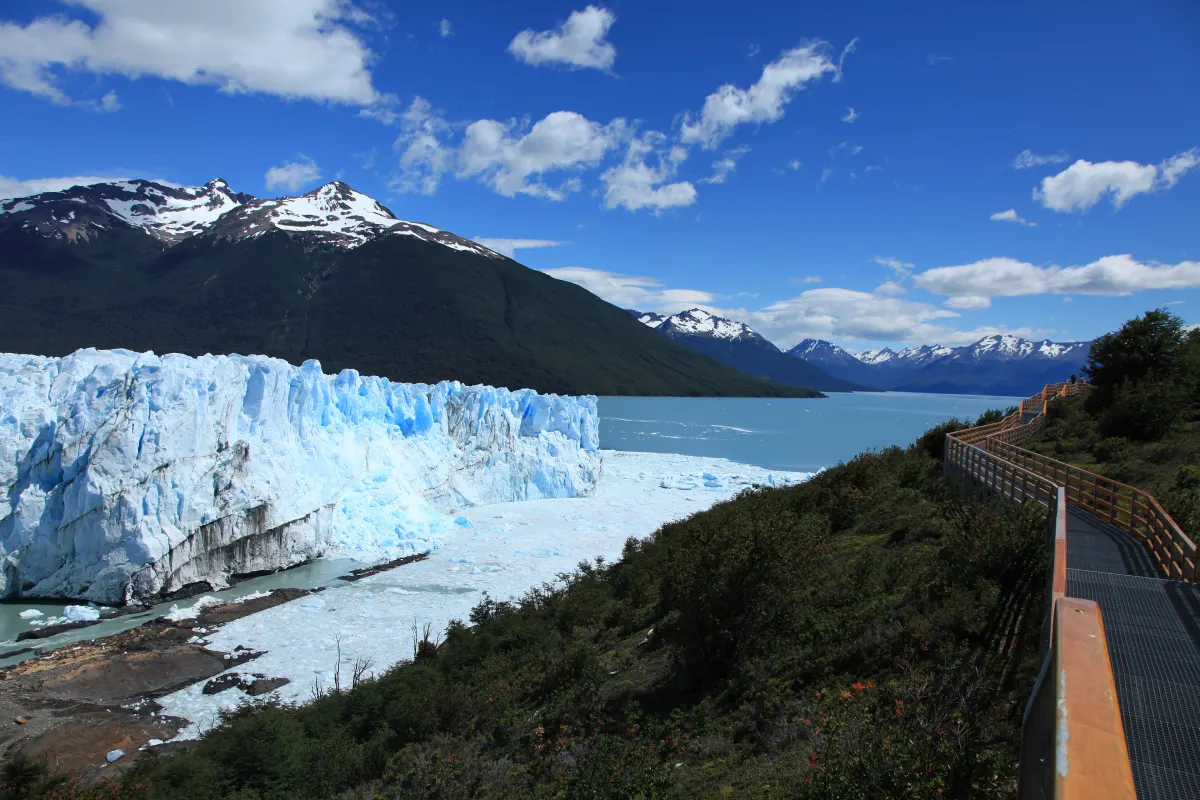
Perito Moreno Glacier
A huge glacier, 5 km wide and 60 m high, in Los Glaciares National Park, which advances across Lake Argentino and calves icebergs with a roar.

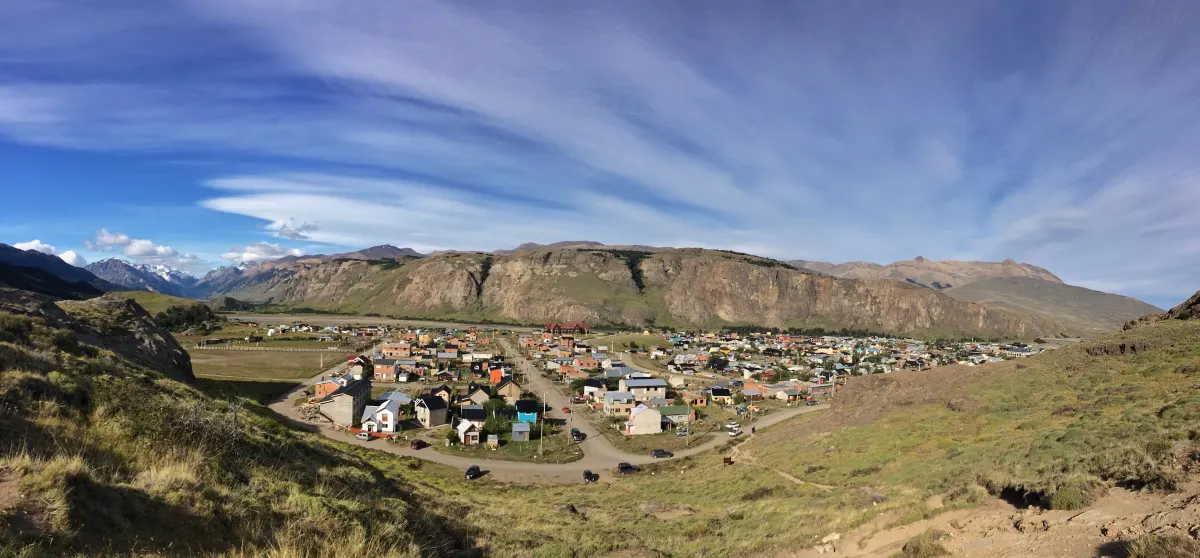
El Chaltén and Fitz Roy
Argentina's 'trekking capital', a small village beneath the granite spires of Mount Fitz Roy and Cerro Torre.
El Chaltén: gates, trails and campsites
- Tickets are checked at the entrances to the trails: Base Fitz Roy, at the end of Avenida San Martín, Río Eléctrico and Los Cóndores, by the visitor centre.
- Laguna de los Tres, below Fitz Roy, is the classic walk: 20 to 25 km and 8 to 10 hours there and back, with a steep last hour. Start early. Laguna Torre is about 20 km and 7 to 8 hours, and much flatter. Laguna Capri and the Mirador Fitz Roy make a half-day walk, and the Cóndores viewpoint takes less than an hour each way.
- You don't need a guide for the day walks. From May to September you must register at the visitor centre first, as you must all year for Laguna Toro and the Huemul circuit, which is only for experienced walkers.
- The campsites at Poincenot, Laguna Capri and De Agostini now have to be booked and paid for in advance with the Amigos del Parque Nacional Los Glaciares. One guide gave 30,000 pesos a person a night in November 2026, on top of the park entrance. There are only dry toilets.
- No fires, dogs, drones or bikes on the trails, and no camping anywhere else. Carry a stove.
- Most people drink from the streams. Filter or boil the water if you want to be sure, and stay upstream of the campsites.
- Bring cash and food from El Calafate: shops are small, and the cash machines can run out.
Perito Moreno Glacier
- The glacier is 80 km west of El Calafate, 1½ hours by bus, hire car, taxi or tour. (Perito Moreno the town, and the national park of that name, are hundreds of kilometres to the north. Don't book the wrong one.)
- The walkways opposite the ice are the main event, with several marked routes. Give them at least two or three hours: the longer you wait, the more likely you'll see ice fall.
- Go early or stay late to miss the tour buses. From September to April the gate opens at about 8 am, with the last entry in the afternoon or early evening. Hours are shorter in winter.
- Boat trips of about an hour go near the ice walls, and ice treks with crampons need booking ahead in summer and have age limits.
- It's always cold near the ice, even in January. Take a windproof jacket, and lunch.
The wind and the weather
- Patagonia's wind blows hardest from October to February, and gusts of over 100 km/h aren't rare. It can knock you over on a ridge. Turn back if you're struggling to stand.
- You can get four seasons in a day. Take a waterproof, a warm layer, a hat that stays on, gloves, sun cream and glasses, even on a sunny morning.
- Leave spare days: at El Chaltén, two or three extra ones for a clear view of Fitz Roy.
- Fires have destroyed huge areas of forest in recent summers. Follow closures, and never light a fire in a park.
- Tents need to be strong and well pegged. Refuges are noisy on a windy night: take earplugs.
Torres del Paine: entrance tickets
- Torres del Paine is in Chile. See Crossing to Chile.
- Buy your ticket on pasesparques.cl, the official site, at least 24 hours before. Tickets are in your name, and they aren't sold at the ranger posts.
- Since 1 May 2026 there are two kinds for foreign adults: one day, 32,400 Chilean pesos, or more than one day (up to 10 in a row), 48,500. Children up to 12 are free, and teenagers pay less.
- The gates are open from about 7 am to 9 pm from October to April, with shorter hours in winter.

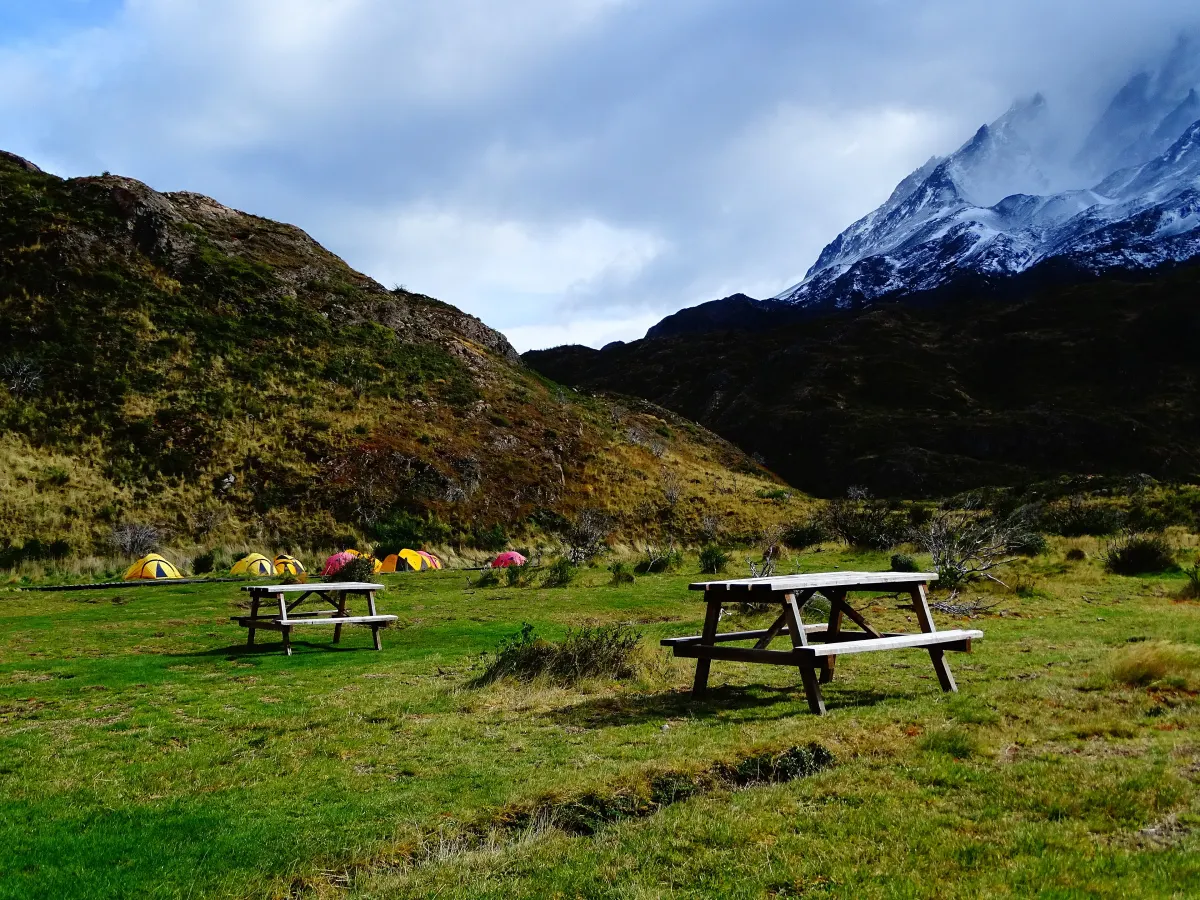
Torres del Paine National Park
Granite towers, glaciers and turquoise lakes in Chilean Patagonia.
Torres del Paine: refuges and campsites
- Anyone sleeping in the park must have a confirmed booking for every night. Wild camping is banned and rangers check.
- Two companies run the sites, with separate websites: Vértice (Paine Grande, Grey, Dickson and Los Perros) and Las Torres (Central, Chileno, Cuernos, Francés and Serón). For the W walk you'll usually need both. The old free campsites are closed.
- Bookings for the summer usually open between April and June. The sites near the towers and the Cuernos sell out first, then everything in January and February. Check again for cancellations.
- Book in the order of the hardest site to get, and only then the park ticket, the catamaran across Lake Pehoé and the buses.
- The W takes 4 or 5 days and the O, the full circuit, 7 to 9. The O can only be walked anticlockwise. Its back section over the John Gardner Pass was closed until at least 31 October 2026, and reopens only when the park says it's safe: check before you book. Five hikers died there in a storm in November 2025.
- In winter you need an accredited guide for the Base of the Towers and the W: in 2026 that was from 27 April to mid-September. Microspikes and poles are compulsory when there's snow or ice.
- Fires are a crime, with heavy fines and possible prison. Stoves are allowed only in the marked places at campsites.
See also When to go to Argentina, Getting around and Two weeks in Patagonia.

Comments
No comments yet.