
A week on the Rhine and Mosel: Cologne, the Rhine Gorge, Burg Eltz, Cochem, Bernkastel and Trier
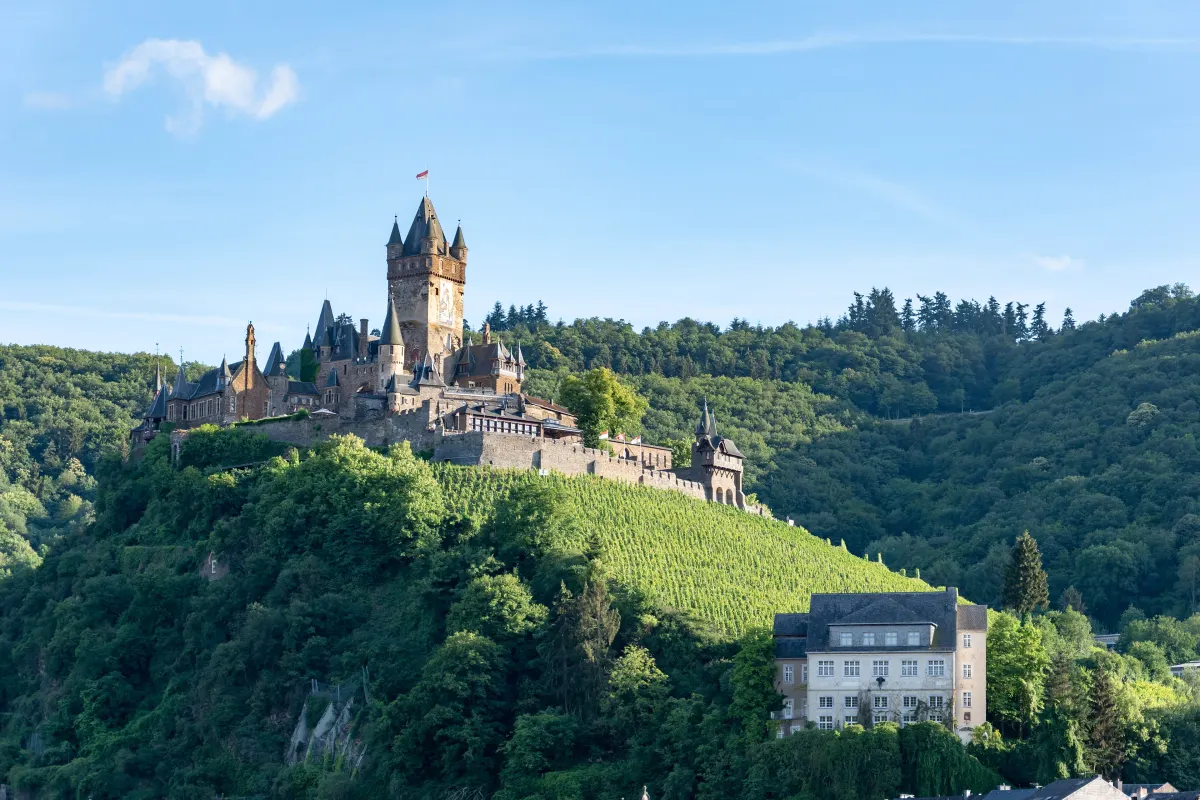
Castles on every crag, steep vineyards, half-timbered villages, one great cathedral and the best Roman ruins north of the Alps. Trains run along both rivers, boats run in season, and a car isn't needed.
Map of the route
Train from Cologne to Aachen (day trip), about 70 km
Train from Cologne to Bacharach by Koblenz, about 137 km
Boat from Bacharach to Koblenz by the Lorelei and Boppard, about 42 km
Train from Koblenz to Moselkern and Cochem, about 48 km
On foot from Moselkern to Burg Eltz, about 3 km
Train from Cochem to Traben-Trarbach by Bullay, about 25 km
Bus from Traben-Trarbach to Bernkastel-Kues and Wittlich, about 33 km
Train from Wittlich to Trier, about 36 km
Click a dot for the place. Labels show where you spend each night. The dashed lines are the boat and the walk to Burg Eltz. Distances are approximate. Route from OpenStreetMap (© OpenStreetMap contributors, ODbL).
Before you go
- When: late April to mid-October, when the boats and Burg Eltz are open (from 21 March to 1 November in 2027). September and October are the grape harvest and wine festivals. In December, go for the Christmas markets, by train.
- Tickets: the Rheinland-Pfalz-Ticket is a good-value day ticket for regional trains and buses, and Trier, Koblenz and Bacharach are all in its area. Boats have their own tickets: look at KD, whose full timetable runs from about Easter to October.
- Works: from 15 May to 9 July 2027, fast trains from Cologne to Frankfurt are diverted along the Rhine, so expect delays.
- Both rivers can flood, mostly in winter: see Safety.
Day 1: Cologne
Step out of the station to Cologne Cathedral (€12 for visitors since July 2026, or free to pray). Cross the Hohenzollern Bridge, hung with thousands of padlocks, for the view back. See the Romano-Germanic or Ludwig museum, and end in a brewery with Kölsch.

Cologne Cathedral
One of the greatest Gothic cathedrals in the world, begun in 1248 and finished only in 1880.
Day 2: Aachen
Take the train (about an hour) to Aachen Cathedral, where Charlemagne is buried, under golden mosaics. Try Printen, and the thermal water, which smells of eggs. Back to Cologne.

Aachen Cathedral
The first German site on the UNESCO World Heritage list.
Day 3: The Rhine Gorge
Take a train to Bacharach (about 1¾ hours, changing at Koblenz or Mainz), a village of half-timbered inns under a castle that's a youth hostel. Stay here, or in St Goar. In the afternoon, climb through the vineyards to the walls and the Postenturm tower.
Day 4: By boat to Koblenz
Take the boat down the Middle Rhine, past the toll castle of Pfalzgrafenstein in midstream and under the Lorelei rock, to St Goar. See Rheinfels, the gorge's biggest ruined castle. Carry on by boat or train to Boppard and Koblenz, where the Mosel meets the Rhine. A cable car goes over the river to the Ehrenbreitstein fortress.
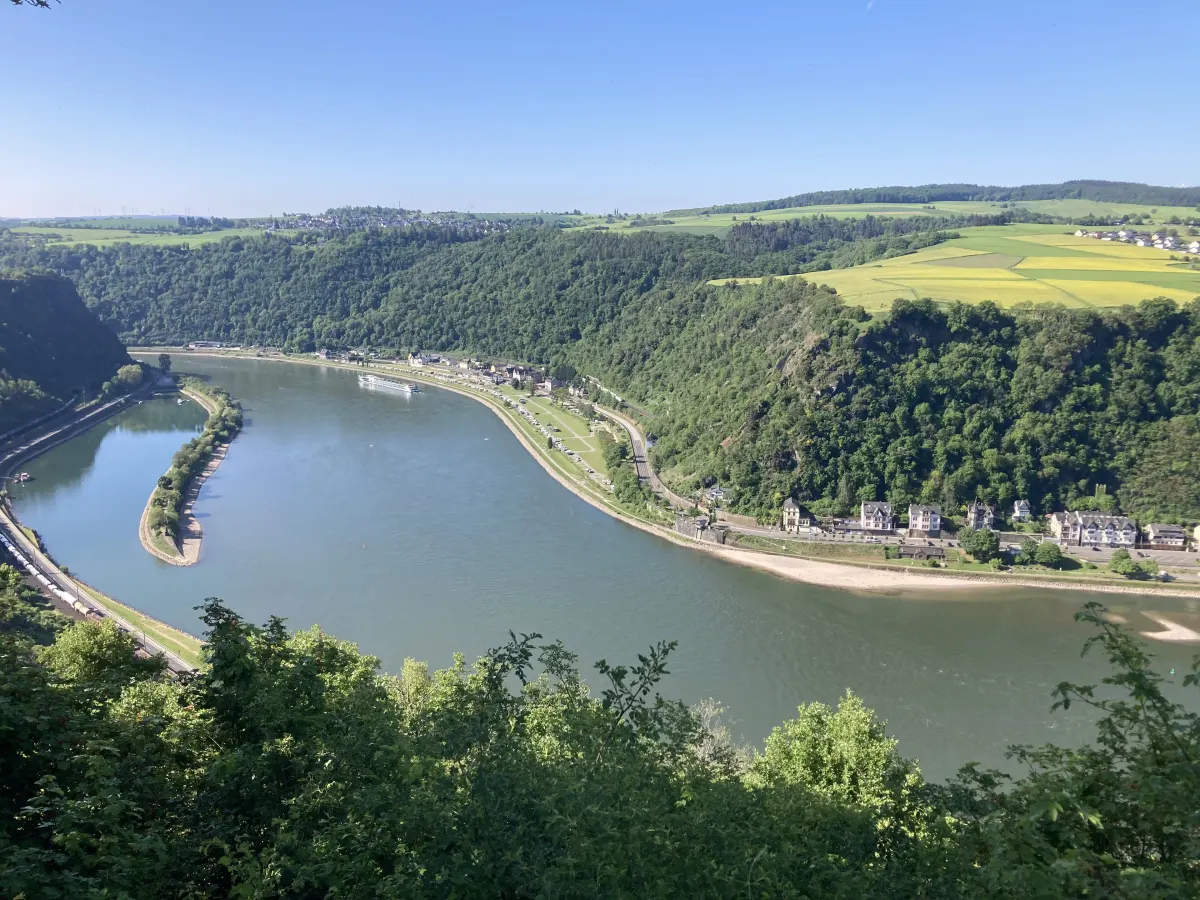

Middle Rhine Valley and the Lorelei
The stretch of the Rhine between Bingen and Koblenz is lined with steep vineyards, medieval castles on almost every hilltop, and pretty wine villages…
Day 5: Burg Eltz and Cochem
Burg Eltz has never been destroyed, and is still in the same family. Take the train from Koblenz to Moselkern (about half an hour) and walk up the wooded valley (about 1½ hours), or on some days in season take a bus from Hatzenport. Go on by train to Cochem, with its castle above the river, for the night.
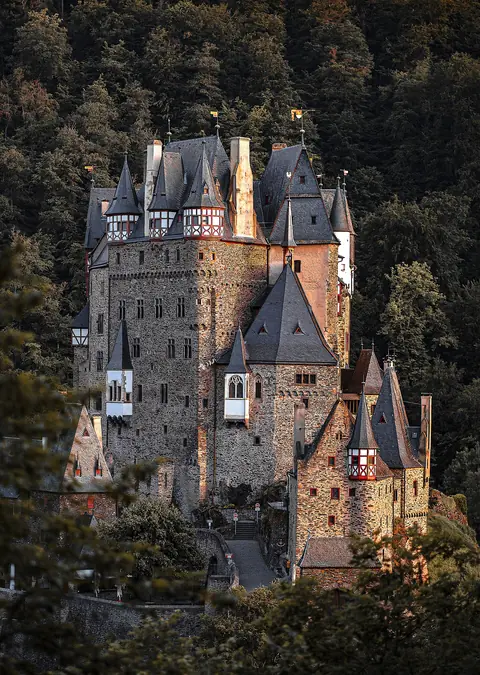
Burg Eltz
A storybook castle hidden in a wooded valley above the Moselle, owned by the same family for more than 850 years and never destroyed.
Day 6: Bernkastel-Kues
Take the train to Bullay, and the branch line to Traben-Trarbach, then the bus along the river to Bernkastel-Kues: a crooked market square, cellars of Riesling, and a walk up to Burg Landshut. Boats run in season between Traben-Trarbach and Bernkastel. Stay, and try a glass of everything.
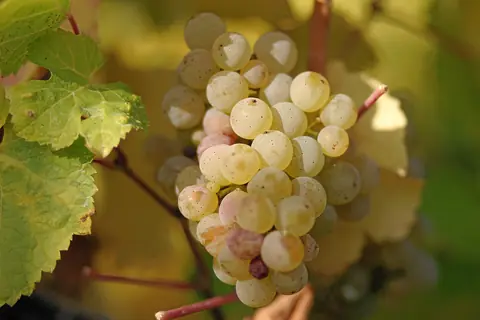
Riesling and the Mosel valley
Germany's great white wine, grown on steep slate slopes along the Mosel.
Day 7: Trier
Take a bus to Wittlich station and a train to Trier (about 1½ hours in all), Germany's oldest city. See the Porta Nigra, the Imperial Baths, the amphitheatre, Constantine's great brick basilica and the cathedral. Trains go on to Luxembourg (under an hour) or back to Koblenz and Cologne.
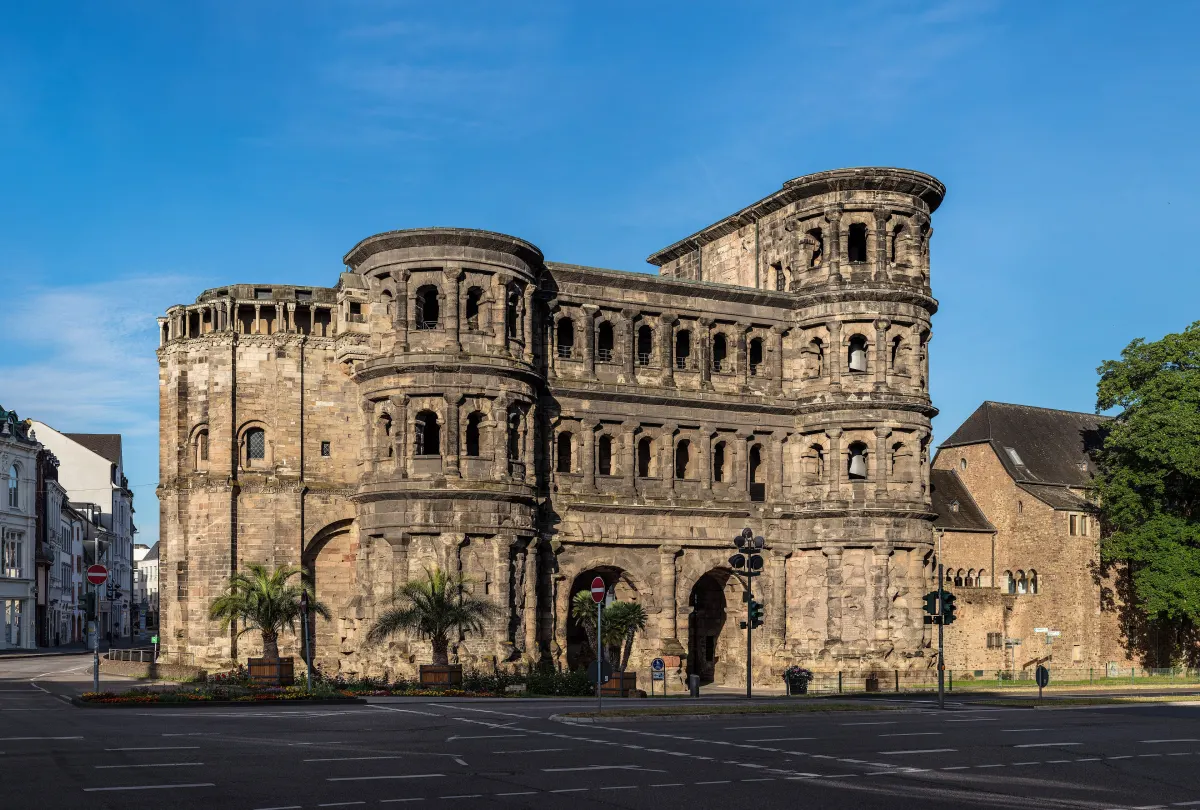

Porta Nigra, Trier
The largest Roman city gate north of the Alps, built around 170 AD from huge sandstone blocks without mortar, and darkened over the centuries, hence …
With more time
- Heidelberg: from Bacharach by Mainz in about two hours, for its ruined castle and old bridge.
- Rüdesheim, the cable car and the Rheingau vineyards, across the river from Bingen.
- Düsseldorf, and the Zollverein coal mine in Essen, an hour from Cologne.
- The Ahr valley's red wine, recovering after the flood of 2021, and the Eifel's crater lakes.
- Cycle it: the Mosel path is flat for its whole length, and trains take bikes.

Comments