
Phones and the internet in Germany: eSIMs, SIM cards, roaming, plugs, warning alerts and useful apps
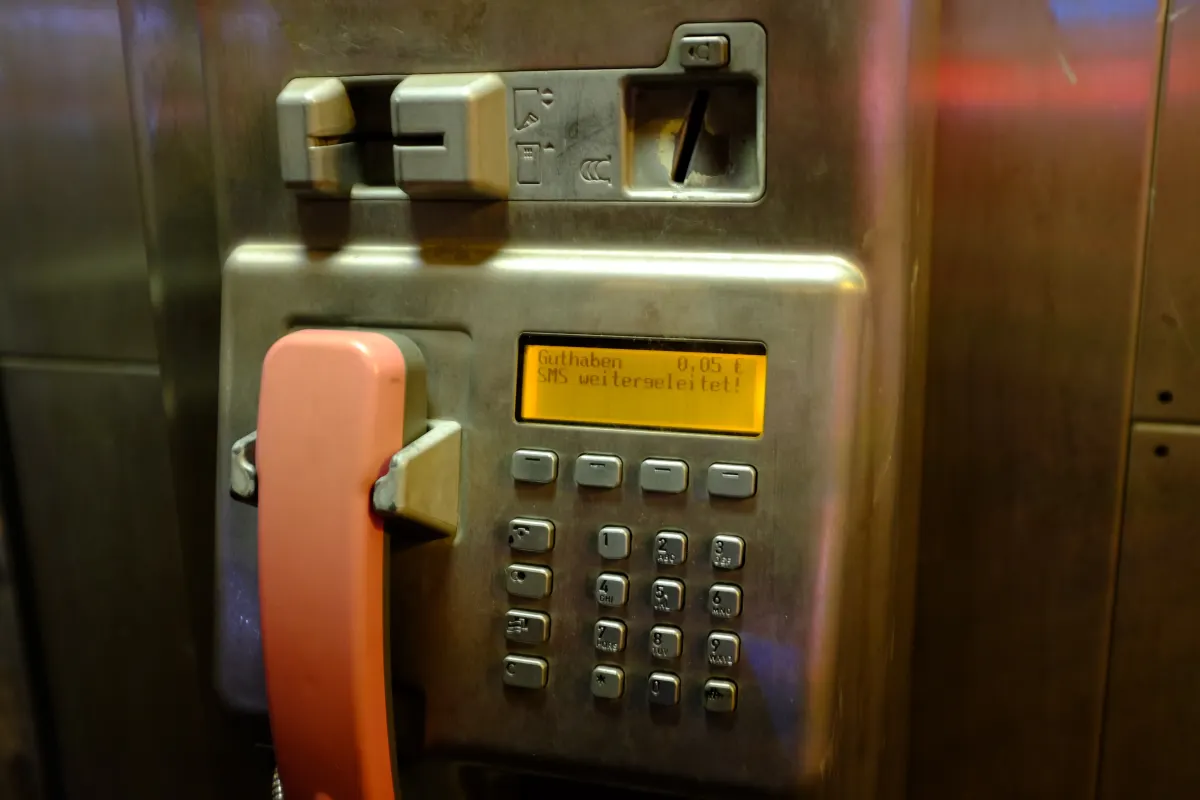
You'll have 4G or 5G in every town and on most main roads. Expect gaps in the mountains, in forests, along the Mosel and Rhine gorges, and on trains between cities.
Roaming
- With a phone plan from the EU (or Iceland, Liechtenstein, Norway, Moldova or Ukraine) you pay the same as at home, within a fair use limit.
- With a UK, Swiss, US, Canadian, Australian or New Zealand plan, it depends on your operator. Check before you leave: daily charges add up.
- Near Switzerland, around Lake Constance and Basel, a phone can jump to a Swiss network, where EU roaming prices don't apply. Choose the network by hand or turn data off.
eSIMs and SIM cards
- A travel eSIM, bought online before you come, is easiest for a short trip if your phone supports it. One for all of Europe is useful if you're going on.
- For a local prepaid SIM, the networks are Telekom (best coverage), Vodafone and O2, with 1 und 1 as a smaller fourth. Supermarkets such as Aldi and Lidl sell cheap prepaid cards that use them.
- By law the seller must check your identity before a SIM works. In a shop, show your passport. Cards from a supermarket shelf need an online video check, which doesn't accept every country's passport, so a phone shop is safer.
- Prepaid plans usually run for four weeks and renew until you stop topping up.
Dialling
Wifi
- Hotels, cafés, ICE trains, most big stations, libraries and shopping centres have free wifi. ICE wifi is slow when the train is full.
- Many towns have Freifunk, a free community network. Don't bank or shop on open networks without a VPN.
- Don't download pirated films or music, or use a file-sharing app, on someone else's wifi. Law firms here send bills of hundreds of euros.
Plugs
The power is 230 V, 50 Hz, with round two-pin type F (Schuko) sockets, which also take the slim type C plug. Visitors from the UK, Ireland, the Americas, Australia and New Zealand need an adaptor. Check that hair dryers from 110 V countries can take 230 V.
Warning alerts
- Germany sends cell broadcast alerts to every phone in an area in danger from floods, storms, fire or a bomb found from the war. They make a loud noise even on silent, need no app, and reach foreign phones.
- The official NINA app (free, in English too) explains what to do, and the German Weather Service's WarnWetter app gives weather warnings.
- There's a nationwide test every September, at 11 am on the second Thursday: the next is 9 September 2027.
Apps worth having
- DB Navigator for trains and local transport in most of the country. BVG (Berlin), MVG or MVV (Munich), hvv (Hamburg) and KVB (Cologne) for city tickets.
- FREE NOW, Uber or Bolt for taxis, and EasyPark for parking.
- Komoot for walking and cycling routes, and Too Good To Go for cheap leftovers from bakeries.
- WhatsApp: everybody has it. DeepL is a good German translator, and download German offline for menus.
See also Getting around Germany and Money.


Comments