
Driving in Germany: autobahn rules, low-emission stickers, winter tyres, licences and parking
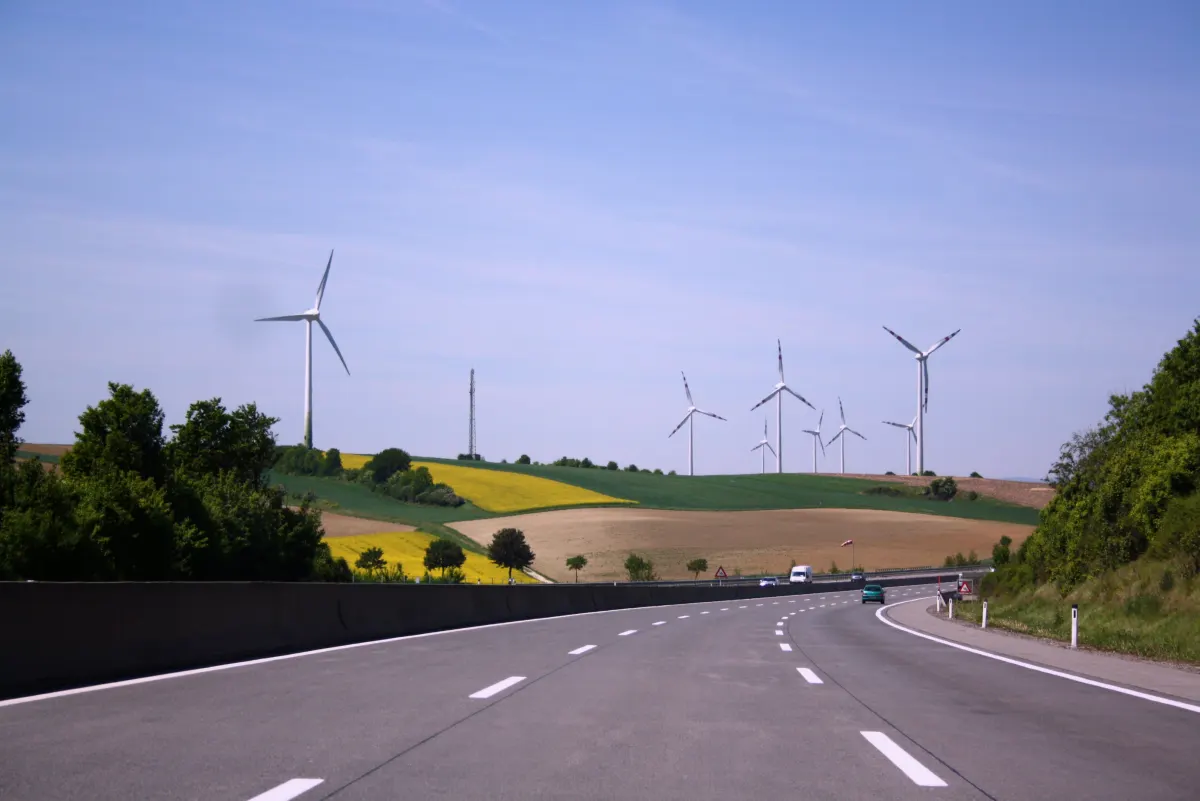
Roads are good, drivers are fast and orderly, and motorways are free for cars. Hire one for the Black Forest, the Alps, the Mosel and the country between. In the cities, use the trains.
The autobahn
- There's no general speed limit, but much of the network has posted limits, on fixed or electronic signs. A white sign with grey diagonal lines ends them. The recommended speed is 130 km/h. If you go faster and crash, you can be held partly liable even if it wasn't your fault.
- Keep right. Use the left lane only to overtake, look twice in the mirror, and move back. Cars come up behind at over 200 km/h.
- Never overtake on the right, except in slow queues. Tailgating, and hogging the middle lane, can be fined.
- It's illegal to run out of fuel or stop without an emergency. You can't turn round or reverse, even at a missed exit.
- Emergency corridor (Rettungsgasse): as soon as traffic slows to walking pace, left-lane cars pull left and everyone else pulls right, to leave a gap. Failing to do so costs €200 to €320 and a driving ban.
- Petrol at motorway stations is much dearer than a few kilometres away. Since April 2026, stations may raise prices only once a day, at noon, so it's cheapest to fill up in the morning.
Other limits
- Towns: 50 km/h from the yellow name sign, and 30 on many streets. Country roads: 100. Cameras are common and not always visible. Fines reach you at home through the hire company, which adds a fee.
- Alcohol: 0.5 g per litre, and zero for drivers under 21 or in their first two years. At 0.3 you can be punished if you drive badly or crash.
- Phones in the hand are banned, even at a red light with the engine running.
- Everyone must wear a seat belt. Children up to 12 who are shorter than 150 cm need a child seat.
Priority and other surprises
- Right before left (rechts vor links): where there are no signs or lights, give way to traffic from the right, even from a small side street. A yellow diamond means you're on the priority road.
- Trams usually have priority, and you must stop for people getting on and off at a stop in the road.
- When you turn right, look for cyclists going straight on beside you. They go first.
- Overtake cyclists with 1.5 m to spare in town and 2 m outside.
- A green arrow plate beside a red light lets you turn right after a full stop.
- Rude gestures at other drivers are an offence, and people do report them.
Licence and papers
- EU and EEA licences are accepted. So are UK photocard licences, for a stay of up to six months.
- With another licence, the German rule is that one not in German needs an international driving permit or an official translation as well. That includes the USA, Canada and Australia. No translation is needed for licences from New Zealand, Switzerland, Hong Kong, Andorra, Monaco, San Marino and Senegal. Get the permit at home: hire desks don't always ask, but the police may.
- You must be 18. Hire firms usually want 21, a year or more of experience and a credit card.
- Carry the car's papers, a warning triangle, a first aid kit and a reflective vest. They should be in a hire car: check.
- Tell the hire company if you'll cross a border, especially east.
Low-emission zones
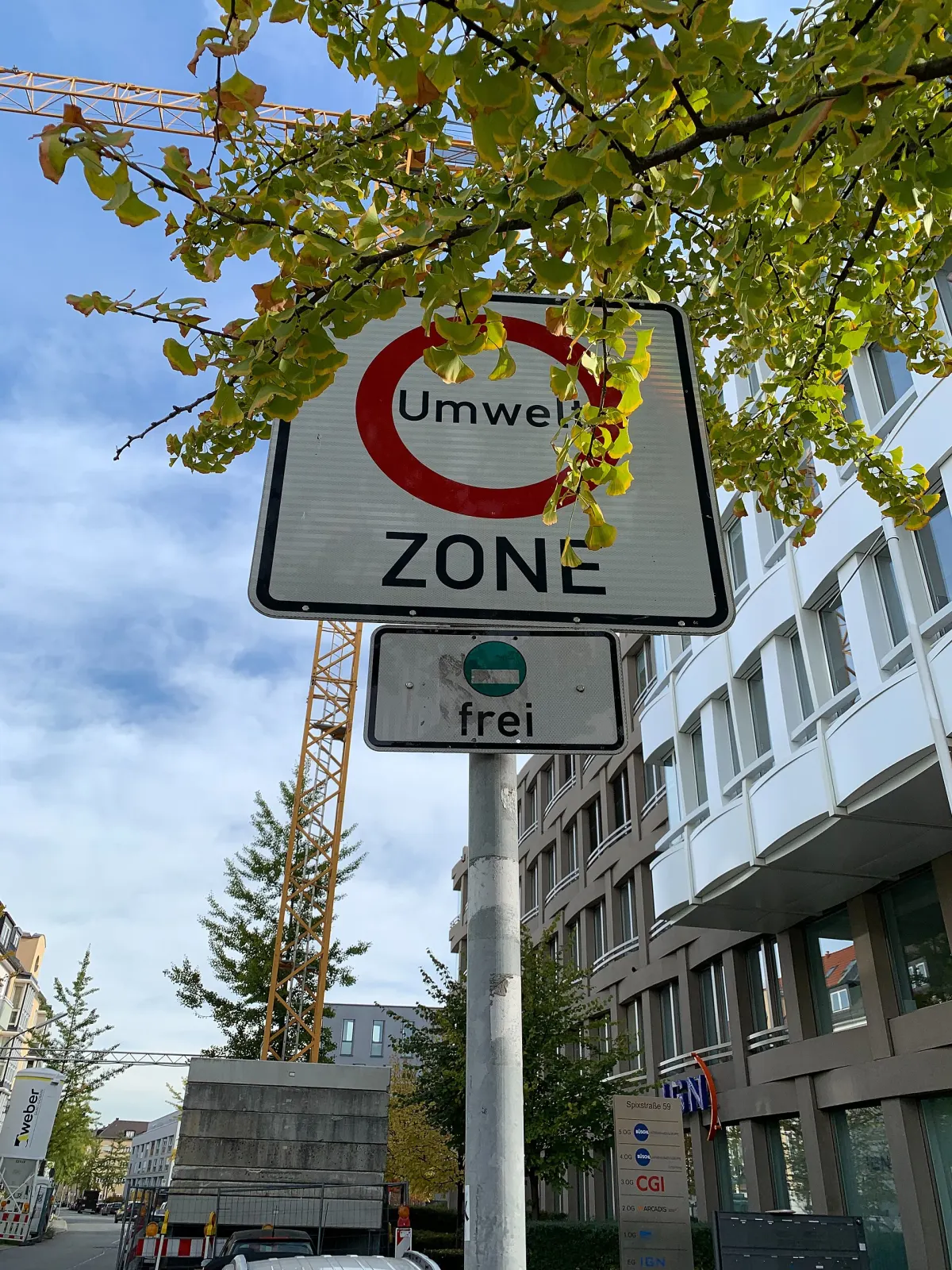
- An Umweltzone sign with a green badge means only vehicles with a green sticker may enter. The same sticker is good in every city, and never expires for that car. Going in without one costs €100, and foreign cars aren't exempt.
- Many cities have abolished theirs as the air got cleaner. There were 35 left in October 2026, including Berlin, Munich and Cologne. The list is on the Federal Environment Agency's site.
- German hire cars have the sticker. For your own, buy it from an official testing station (TÜV, DEKRA) or a city's website: plenty of unofficial sellers charge several times more. Cars with a German electric (E) plate no longer need it.
- Munich and a few others also ban older diesels from some streets.
Winter
- There are no fixed dates: whenever roads are icy, snowy or slushy, you must have tyres with the mountain and snowflake symbol. Tyres with only M+S no longer count. The fine is €60 or more, and your insurance can suffer. The rule of thumb is October to Easter.
- Hire cars aren't always fitted with them, and they can cost extra. Ask when you book.
- A round blue sign with a wheel means snow chains are compulsory.
Parking
- A P sign with a blue disc means you need a parking disc (Parkscheibe): set it to the next half hour after you arrive. Elsewhere, pay at a machine or by app (EasyPark, PayByPhone).
- Don't park within 5 m of a junction, on pavements, or facing the wrong way. Anwohner or Bewohner means residents only.
- P+R at the edge of cities is cheap, with a train into town.
Tolls and charging
- There's no toll for cars on motorways. A few tunnels charge, such as the Herrentunnel in Lübeck and the Warnowtunnel in Rostock, and the Rhine, Mosel and Elbe have paid car ferries.
- Electric car chargers are common. Check prices first, as paying by card without a contract can be expensive.
Good drives
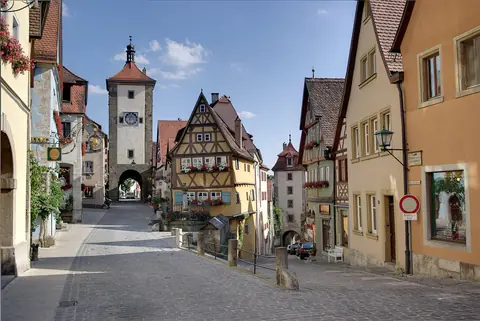
- The Romantic Road from Würzburg to Füssen, by Rothenburg to Neuschwanstein.
- The Black Forest High Road (B500) from Baden-Baden, to the Triberg Waterfalls and on to Mainau on Lake Constance.
- The Swabian Alb, with Hohenzollern Castle, and Stuttgart's Mercedes-Benz and Porsche museums.
- The Mosel, the Harz (the Brocken and Quedlinburg), the Eifel and the Bavarian Forest.
Tours and activities
Romantic Road
Bavaria
A 400 km scenic route through Bavaria and Baden-Württemberg, past Würzburg's palace, medieval Rothenburg, Dinkelsbühl and Nördlingen, ending at Neusc…

Natural features
Triberg Waterfalls, Black Forest
Triberg, Baden-Württemberg
Some of Germany's highest waterfalls, cascading 163 m in seven steps through the fir forest of the Black Forest.

Historic sites
Hohenzollern Castle
Bisingen, Baden-Württemberg
A spectacular 19th-century castle on the summit of Mount Hohenzollern, the ancestral seat of the Prussian kings and German emperors.
See also Getting around and When to go.

Comments