
Food and drink in Germany: bread, beer gardens, sausages, asparagus, markets and eating out
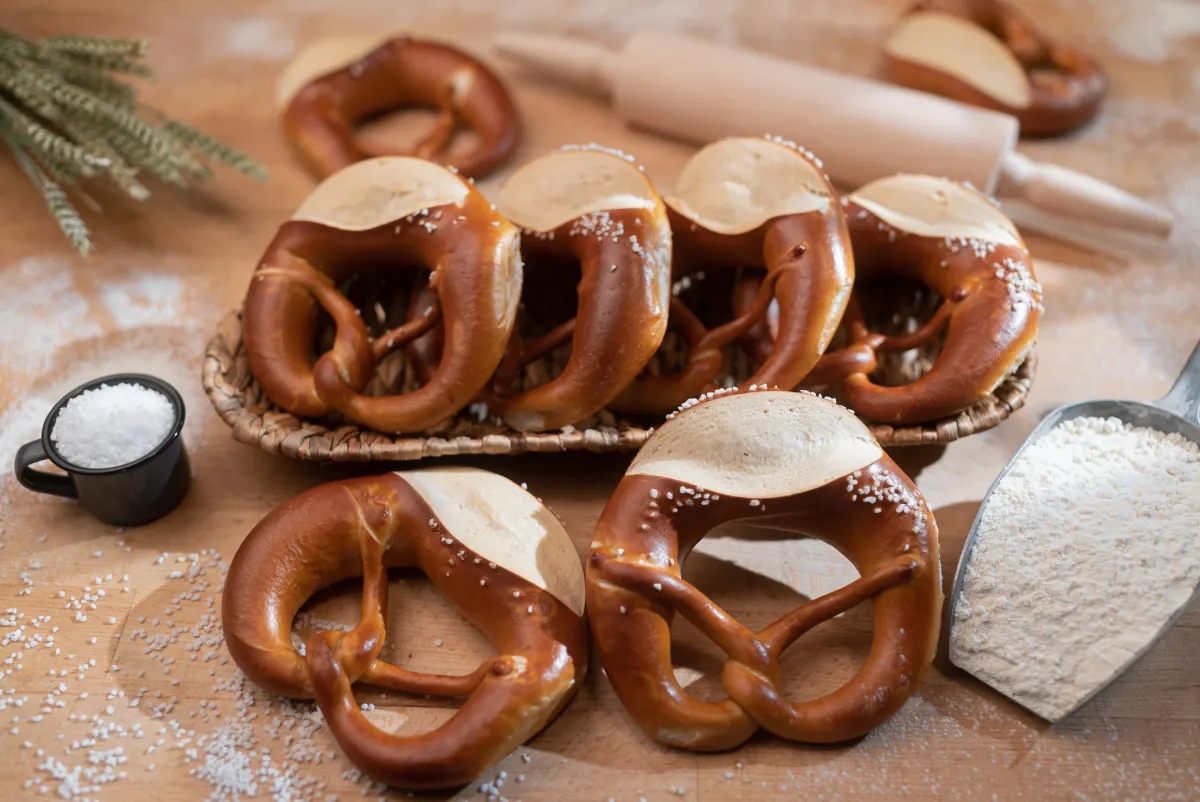
Germany has more than three thousand kinds of bread, a beer for every town, and a lot more than sausages. It's a country of regions, and most of the best food never leaves its own.
Meals and places to eat
- Breakfast is bread rolls (Brötchen, Semmel in Bavaria, Schrippe in Berlin) with cheese, ham, jam and an egg. Lunch, from 12 to 2 pm, was the main meal, and many places have a cheap Mittagstisch. Dinner is early, from 6 pm. In small towns kitchens close at 9 pm or before.
- Many restaurants have a rest day (Ruhetag), often Monday or Tuesday.
- In a Gasthaus, Wirtshaus or Brauhaus, find your own table, or share one: ask Ist hier noch frei? Leave the Stammtisch, the regulars' table, alone.
- Cheap and good: an Imbiss (snack stand), a butcher (Metzgerei) at lunch, market halls, and Turkish, Vietnamese and Syrian places.
- Wish people Guten Appetit before you start. See Money for tipping.
Bread and cake
- Go to a real Bäckerei, early. Try rye (Roggenbrot), Vollkornbrot, a warm pretzel, or a Butterbrezel. On Sundays most open for only a few hours.
- Kaffee und Kuchen, coffee and cake, is at about 3 or 4 pm, in a Konditorei. Order Black Forest cake, cheesecake (Käsekuchen), plum cake or Bienenstich.
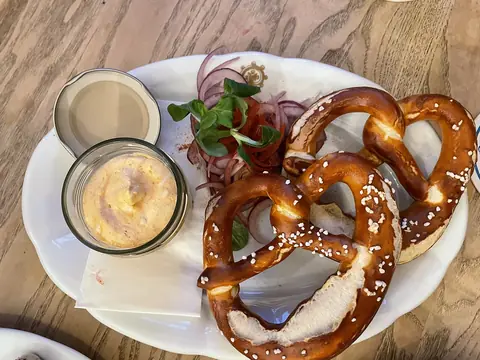
Bavarian pretzels (Brezn)
Soft pretzels with a crisp brown crust and coarse salt, eaten with butter, or with Weisswurst (white sausage) and sweet mustard for a Bavarian breakf…
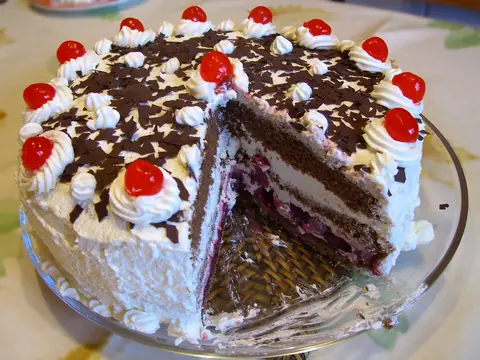
Black Forest cake
Chocolate sponge layered with cherries, cream and kirsch (cherry brandy), topped with chocolate shavings.
What to eat where
- Bavaria: white sausage (Weißwurst), eaten before noon, peeled, with sweet mustard; roast pork knuckle (Schweinshaxe); Obatzda, a cheese spread. Nuremberg: small bratwurst, three in a roll, and gingerbread.
- Baden-Württemberg: Maultaschen (big stuffed pasta), Käsespätzle, and Flammkuchen near France.
- Berlin: currywurst and the döner kebab, which was made popular here.
- Thuringia: grilled bratwurst and dumplings. Saxony: Sauerbraten, Eierschecke and, at Christmas, Dresden Stollen.
- Frankfurt: Grüne Soße, a cold herb sauce, and apple wine. Rhineland: Rheinischer Sauerbraten, Reibekuchen (potato cakes), and Halve Hahn, which is a cheese roll, not half a chicken.
- Hamburg and the coast: fish rolls (Fischbrötchen), Labskaus, brown shrimps, and Franzbrötchen, a cinnamon pastry.
- Everywhere: schnitzel. A Wiener Schnitzel must be veal. Schnitzel Wiener Art is pork.
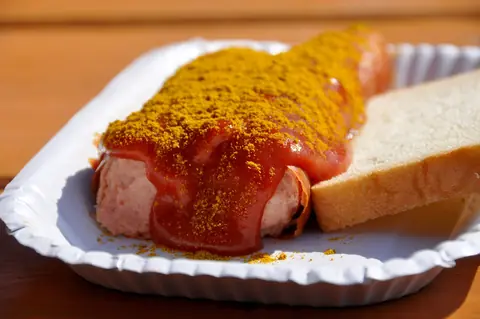
Currywurst, Berlin
Sliced sausage with curry ketchup and curry powder, with chips, invented in Berlin in 1949.
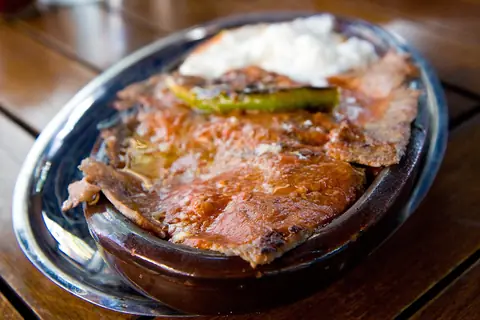
Döner kebab, Berlin
Berlin's favourite fast food, developed by Turkish immigrants: meat from a rotating spit in toasted flatbread with salad and sauces.
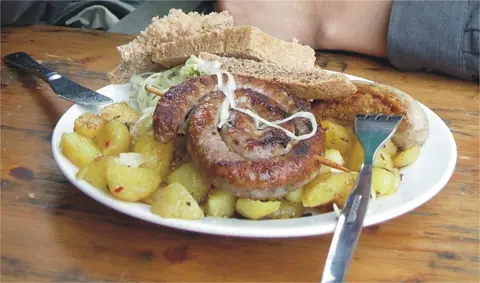
Bratwurst
Grilled sausages served in a roll with mustard.
What's in season
- White asparagus (Spargel), from about mid-April to 24 June, is a national event: eat it with potatoes, ham and hollandaise.
- Strawberries in May and June, chanterelles (Pfifferlinge) in summer, pumpkin, new wine (Federweißer) with onion tart in September and October, goose for St Martin's Day (11 November), and kale with sausage (Grünkohl) in the north in winter.
Beer
- Order by place: Helles and wheat beer (Weißbier) in Bavaria, Kölsch in Cologne, Altbier in Düsseldorf, Pils in the north, smoked beer in Bamberg. A shandy is a Radler, or Alster in the north.
- In a Cologne brewery the waiter (Köbes) keeps bringing small glasses until you put the beer mat on top of yours. Marks on the mat are your bill.
- A Maß is a litre. When you say Prost, look people in the eye. Clink the bottom of a wheat beer glass, not the rim.
- Good alcohol-free beer is sold everywhere.
- Beer and wine are legal to buy from 16, and spirits from 18. Drinking in the street is generally allowed, but some cities ban it at stations and in certain squares.
Beer gardens
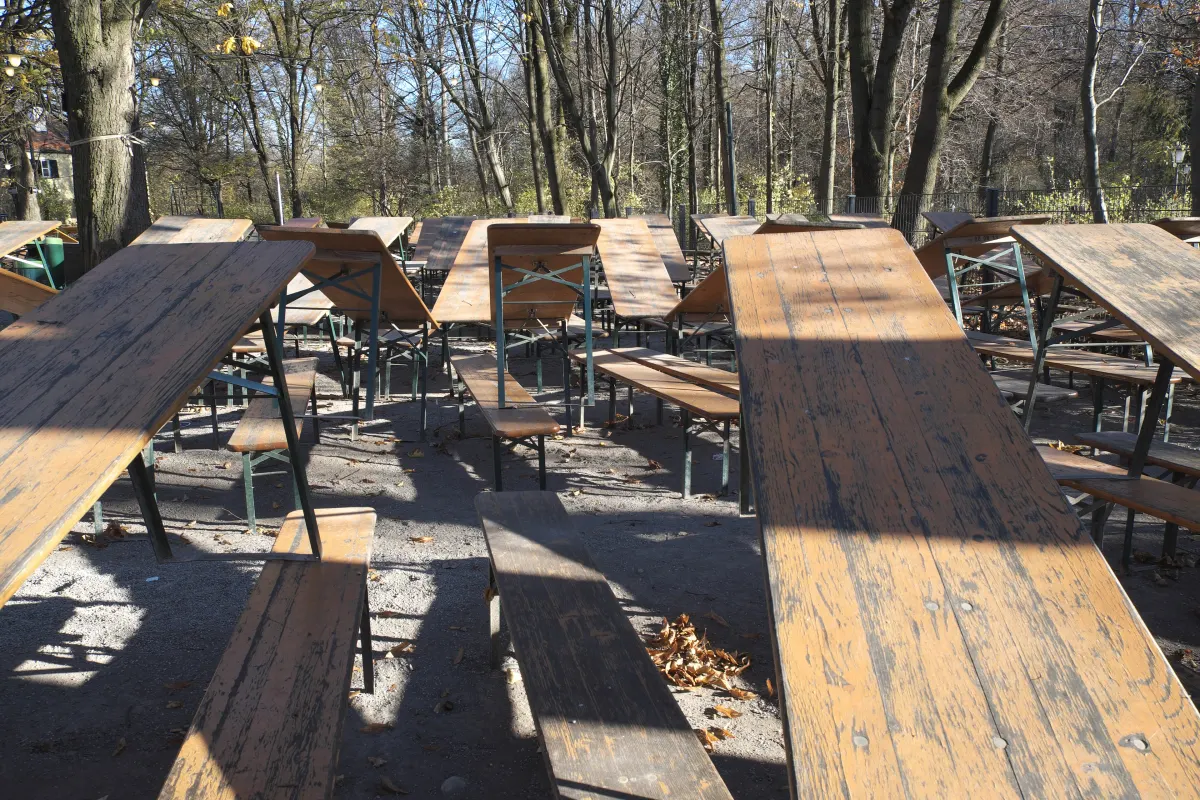
- In a traditional Bavarian beer garden you may bring your own food, but must buy the drinks. Sit at a table without a cloth. Tables with cloths are for waiter service.
- Take a tray, collect your beer and food at the counters, pay, and bring your glass back for the deposit. Many take only cash. They open when the weather's good, and close by about 11 pm.
- Munich's Hofbräuhaus is fun and full of visitors. The big garden at the Chinese Tower, or the Augustiner-Keller, has more locals.
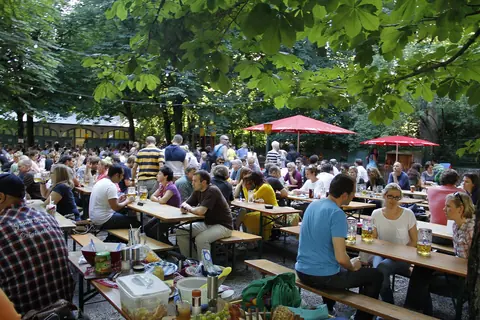
Munich beer gardens
Long tables under chestnut trees, with litre mugs of local beer.

Hofbräuhaus, Munich
The world's most famous beer hall, brewing beer for the Bavarian royal court since 1589 and on this site since 1607.
Wine
- Germany's great white is Riesling, from the Mosel, Rheingau and Pfalz. Trocken is dry, halbtrocken or feinherb a little sweet. Reds (Spätburgunder, pinot noir) come from the Ahr and Baden.
- From spring to autumn, winegrowers open their own simple taverns for a few weeks: a Straußwirtschaft, or Besen, shown by a broom or wreath.
Water and coffee
- Ask for water and you'll get sparkling, in a bottle you pay for. Still or ohne Kohlensäure is still. Tap water (Leitungswasser) is excellent, but not always served.
- Apple juice with fizzy water, Apfelschorle, is the best thing on a hot day.
Special diets
- Vegetarian and vegan food is easy in the cities, and Berlin is one of the best places in Europe for it. In country inns, check: bacon bits (Speck) hide in potatoes, salad and cabbage.
- Allergens must be given, often as small letters or numbers on the menu. Say Ich bin allergisch gegen…
- Glutenfrei is gluten-free. Organic is Bio.
- Mett is raw minced pork, on a roll. It's popular, and meant to be raw.
See also Christmas markets and Culture and etiquette.

Comments