
Christmas markets in Germany: when they open, which to choose, what to eat and drink, and how to go
Almost every German town has a Christmas market in Advent: wooden stalls, lights, sausages and hot wine in the square, with carols and a nativity. Some are world famous and packed. Dozens of smaller ones are just as pretty. This page helps you choose, and plan.
When
- Most open in the last full week of November, after Totensonntag (the Sunday of the dead), and close on 23 or 24 December, at about 2 pm on the 24th. A few start earlier.
- If you arrive after Christmas, go to Berlin, where several carry on to New Year or a little later.
- Typical hours are 10 or 11 am to 9 pm, later on Fridays and Saturdays. They're best after dark, from about 4.30 pm, and emptiest on Monday to Wednesday. Village markets may open only on one or two weekends.
The great city markets
- Nuremberg (Christkindlesmarkt): 27 November to 24 December 2026, and 26 November to 24 December 2027, 10 am to 9 pm. It's opened by the Christkind, a young woman in gold, from the church balcony. Try the three small bratwursts and Lebkuchen. The castle is above.
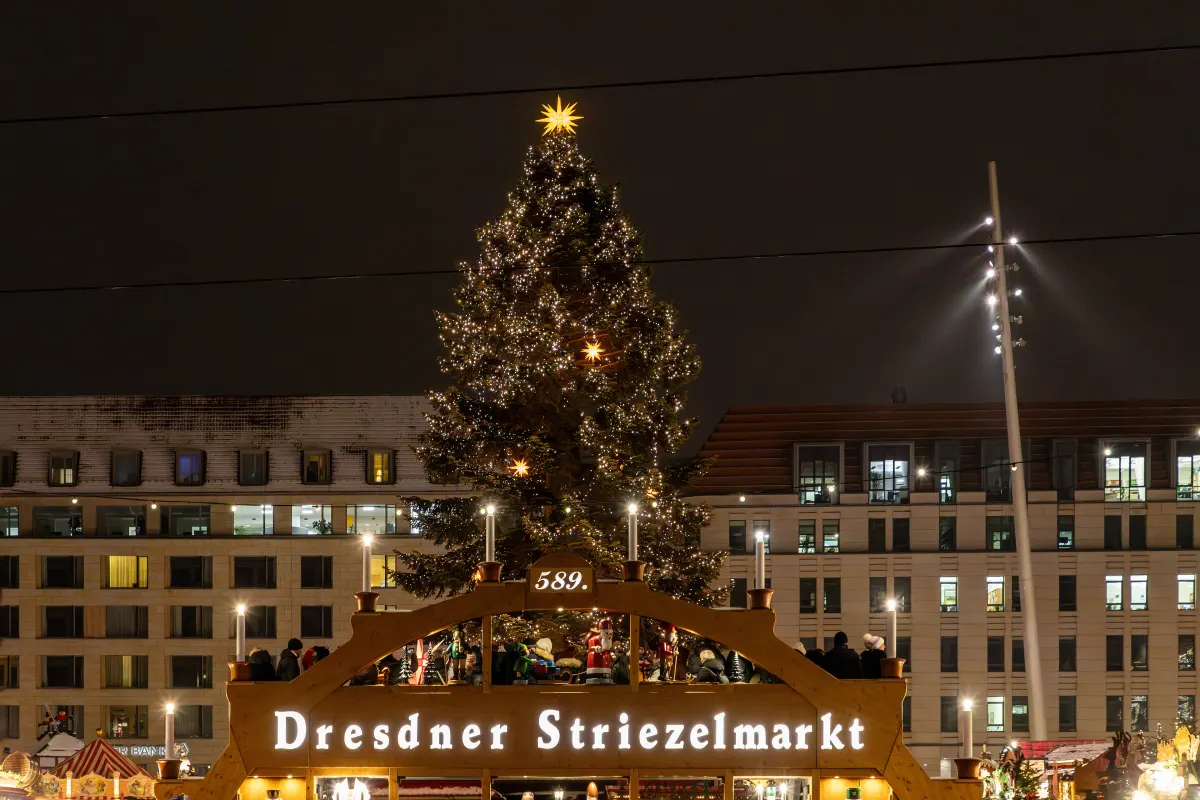
- Dresden (Striezelmarkt): 25 November to 24 December 2026. It's the 592nd. See a giant pyramid, and eat Stollen, which has its own festival on 5 December. There's another market by the Frauenkirche.
- Cologne: by the cathedral, 16 November to 23 December 2026 (closed 22 November), and half a dozen more, including the old town's, with gnomes and an ice rink.
- Munich: Marienplatz, 20 November to 24 December 2026, the medieval market on Wittelsbacherplatz, and Tollwood on the Oktoberfest meadow, 24 November to 23 December.
- Berlin: more than 60. Gendarmenmarkt, 23 November to 31 December 2026, has charged a small entry fee at busy times. The one at the Memorial Church (Breitscheidplatz) is listed to 3 January 2027.
- Stuttgart: 25 November to 23 December 2026, with decorated stall roofs. Esslingen, ten minutes away by train, has a medieval one.
- Hamburg: the town hall square, and a rude one on the Reeperbahn. Frankfurt, Leipzig and Aachen, beside its cathedral, with Printen gingerbread, are fine too.
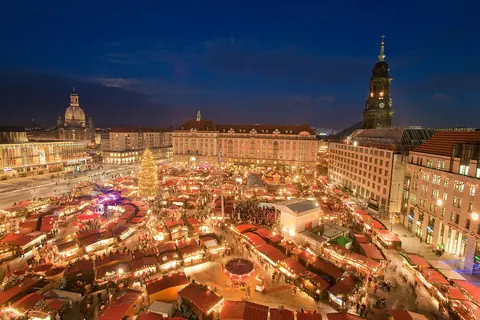
German Christmas markets
From late November to Christmas, town squares fill with wooden stalls selling mulled wine (Glühwein), gingerbread, roasted almonds and crafts.

Nuremberg Imperial Castle and Old Town
The Kaiserburg, the castle of the Holy Roman Emperors, stands on a sandstone rock above Nuremberg's old town, with views over the red roofs from its …
Smaller, and lovely
- Rothenburg ob der Tauber (Reiterlesmarkt): the most storybook setting, so stay overnight for when the coaches have gone.
- Quedlinburg: on Advent weekends, dozens of old courtyards open their gates.
- Erfurt, below the cathedral steps, and the Wartburg at Eisenach, a castle market at weekends with an entry fee.
- Lübeck, home of marzipan, and Bremen, with a pirate-style market on the river.
- Ravenna Gorge in the Black Forest, under a railway viaduct: on weekends only, and you must book a ticket.
- Seiffen and Annaberg in the Ore Mountains, where nutcrackers, smoking men and candle pyramids come from, and the miners' parades.
- Trier, Bernkastel-Kues and Traben-Trarbach, whose wine market is in old cellars, on the Mosel.

Rothenburg ob der Tauber
One of the best-preserved medieval towns in Europe, on the Romantic Road in Franconia.
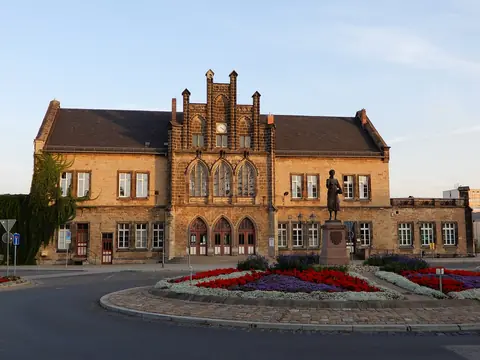
Quedlinburg
A small town at the edge of the Harz mountains with more than 1,300 half-timbered houses spanning six centuries, one of the largest collections in Ge…
What to eat and drink
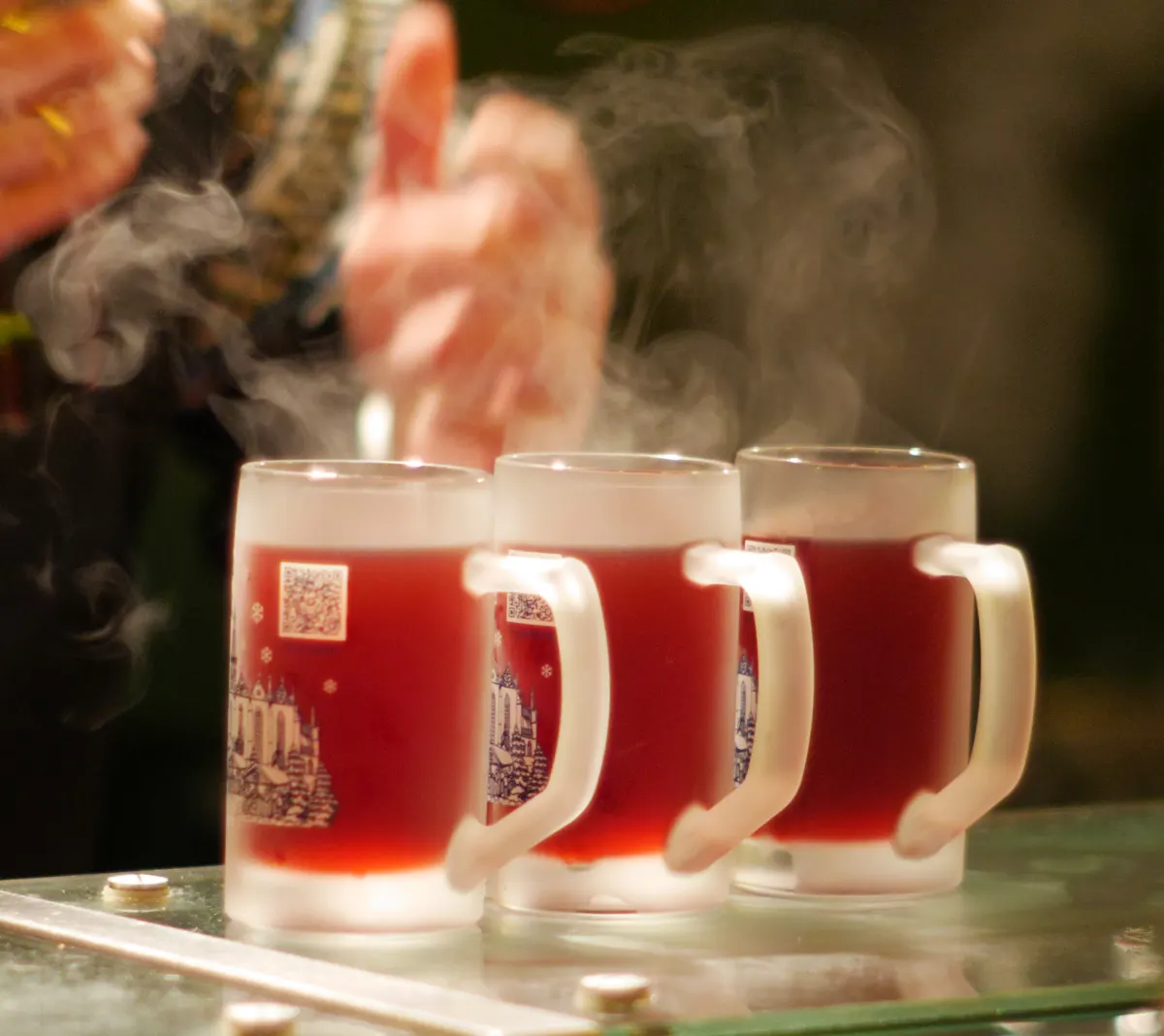
- Glühwein: hot spiced red wine, or white. Mit Schuss has a shot of rum or amaretto. Eierpunsch is like eggnog, and Kinderpunsch has no alcohol. A Feuerzangenbowle has a flaming sugar cone.
- You pay a deposit of a few euros on the mug. Return it to any stall of the same market, or keep it: the design changes each year.
- Bratwurst, Reibekuchen (potato cakes with apple sauce), roast chestnuts and almonds, Flammkuchen, Schupfnudeln, Lebkuchen, Dampfnudeln and crêpes.
- Prices are high. Bring cash in small notes, though many stalls now take cards.
What to buy
Glass balls (from Lauscha in Thuringia), paper stars (from Herrnhut), carved wooden figures, beeswax candles, felt slippers and tins of gingerbread. Look for Handarbeit and the maker's name, as a lot is imported. Your plane's liquids rule applies to mustard and honey.
Crowds and safety
- The big markets are shoulder to shoulder from 5 to 8 pm and on Advent weekends. Pickpockets love them.
- After attacks in Berlin in 2016 and Magdeburg in 2024, expect concrete barriers, bag checks and police. Knives are banned, big rucksacks are unwelcome, and cannabis isn't allowed at many. See Safety.
Planning a trip
- Book rooms for Advent weekends in Nuremberg, Dresden, Rothenburg and Cologne by late summer. Look at a town 30 minutes away by train, or go midweek at half the price.
- By train, link Cologne, Aachen and the Mosel; or Nuremberg, Rothenburg and Munich; or Berlin, Dresden, Leipzig, Erfurt and Quedlinburg. See Getting around.
- Two a day is plenty. Wear warm boots: the cold comes up from the cobbles.
Dates are from organisers, cities and published listings in November 2026. They change every year, so check before you book. See also When to go.
Comments