
Arriving in Germany: Schengen rules, EES and ETIAS, border checks, customs and getting in from the airport
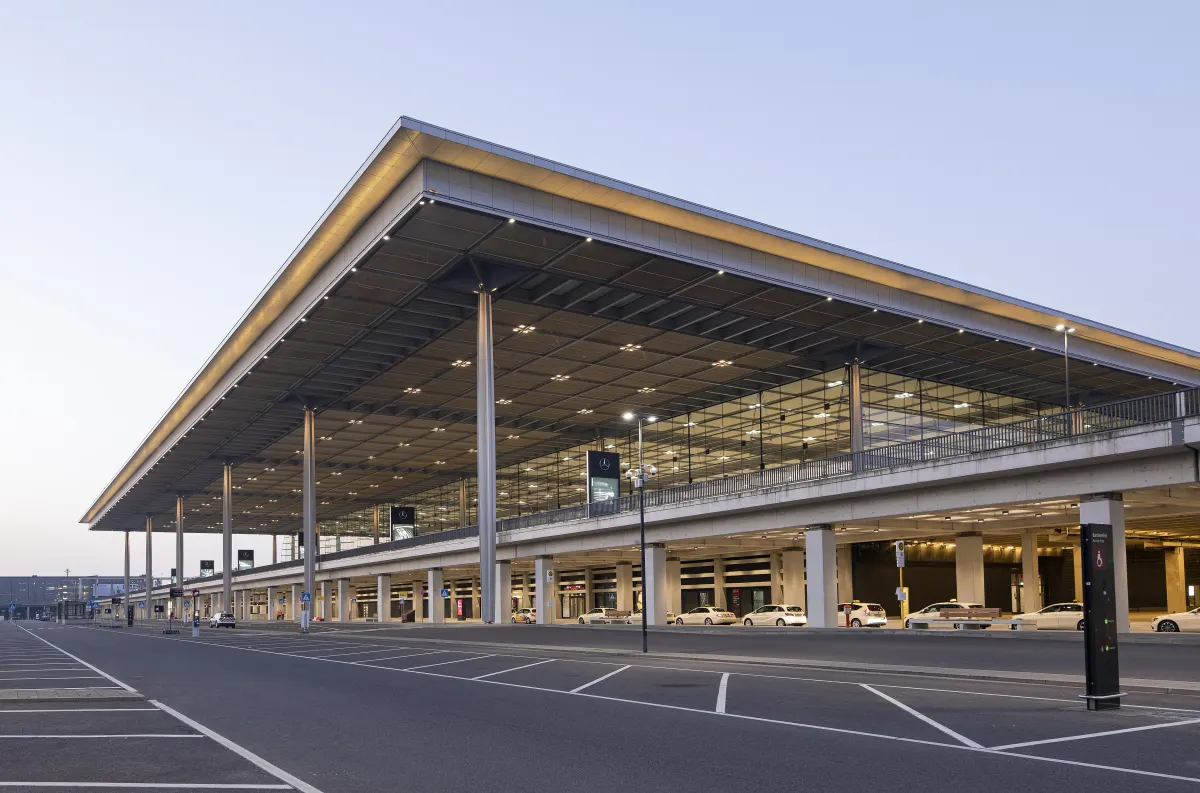
Germany is in the Schengen area, the group of European countries with no routine passport checks between them. Most visitors from outside the EU can come for up to 90 days without a visa. Two new systems matter: EES, which is running, and ETIAS, which isn't yet. Germany also has temporary checks at its land borders, so carry your passport even if you come from next door.
The 90-day rule
- Citizens of the UK, USA, Canada, Australia, New Zealand, Japan, South Korea, Brazil and many other countries can stay without a visa for up to 90 days in any 180-day period. The days count for the whole Schengen area together, so time in France or Italy uses them up too.
- Overstaying can mean a fine and a ban of up to three years.
- EU, EEA and Swiss citizens need only a passport or national identity card. Other nationalities, including Indian, Chinese and South African citizens, normally need a Schengen visa, applied for in advance.
- Germany has old agreements with a few countries that allow longer stays. Don't rely on one without asking a German embassy in writing first.
Your passport
- For visitors from outside the EU, it must have been issued less than 10 years before you arrive, and be valid for at least three months after you leave the Schengen area.
- Border officers can ask for a return or onward ticket and proof of enough money for your stay.
EES: fingerprints and a photo
- The Entry/Exit System replaces passport stamps for visitors from outside the EU and Schengen. It became fully operational on 10 April 2026.
- The first time you cross the border, your fingerprints and photo are taken. It's free, there's nothing to apply for before you travel, and children aged 11 or younger don't give fingerprints. The record lasts three years.
- Frankfurt and Munich were among the airports with much longer queues in summer 2026. Allow extra time in both directions, and more for a connection from a flight outside Schengen to one inside it.
- You register where you first enter Schengen. If you change planes in Amsterdam or Paris, that's there, not in Germany.
ETIAS: not yet
- ETIAS is an online travel authorisation that visa-free visitors will need. In November 2026 the EU's official site said it isn't in operation and that no applications are being accepted. It had been planned for late 2026, but there is no start date now. The EU says it will announce one several months ahead.
- When it starts, it will cost €20 and be applied for online.
- Any website that offers to take your application now is not genuine. The only official address is travel-europe.europa.eu. Look there before you book.
Checks at the land borders
- Germany has had temporary border checks on all nine land borders since September 2024. The government has told the European Commission that they'll go on until 15 March 2027, and they've been extended every six months so far.
- They're spot checks, on trains, coaches and main roads. Most people are waved through, but trains from Austria, Switzerland, Denmark, Poland and Czechia can be held up for a few minutes, and motorways near Salzburg and Kufstein back up at weekends.
- Everybody needs a passport or identity card with them. A driving licence isn't enough, and a photo on your phone doesn't count.
- Poland and Denmark have had checks of their own on the German border.
Registering at your hotel
Guests who aren't German must fill in and sign a short registration form (Meldeschein) on arrival, and show a passport or identity card. Tourists don't have to register with the town hall.
Customs
- From outside the EU you can bring up to €430 of goods by air or sea (€300 by land, €175 for under-15s), plus, for those aged 17 and over, 200 cigarettes, 1 litre of spirits or 2 litres of drinks up to 22%, 4 litres of wine and 16 litres of beer. If one item is worth more than the limit, you pay on its whole value.
- Meat, milk and anything made with them are banned from most countries outside the EU, including the UK, with small exceptions such as baby milk.
- Declare cash of €10,000 or more, in or out.
- Don't bring cannabis across the border, whatever the rules inside Germany: see Safety.
- Coming from Switzerland, you pass a customs border, though not a passport one.
From the airport
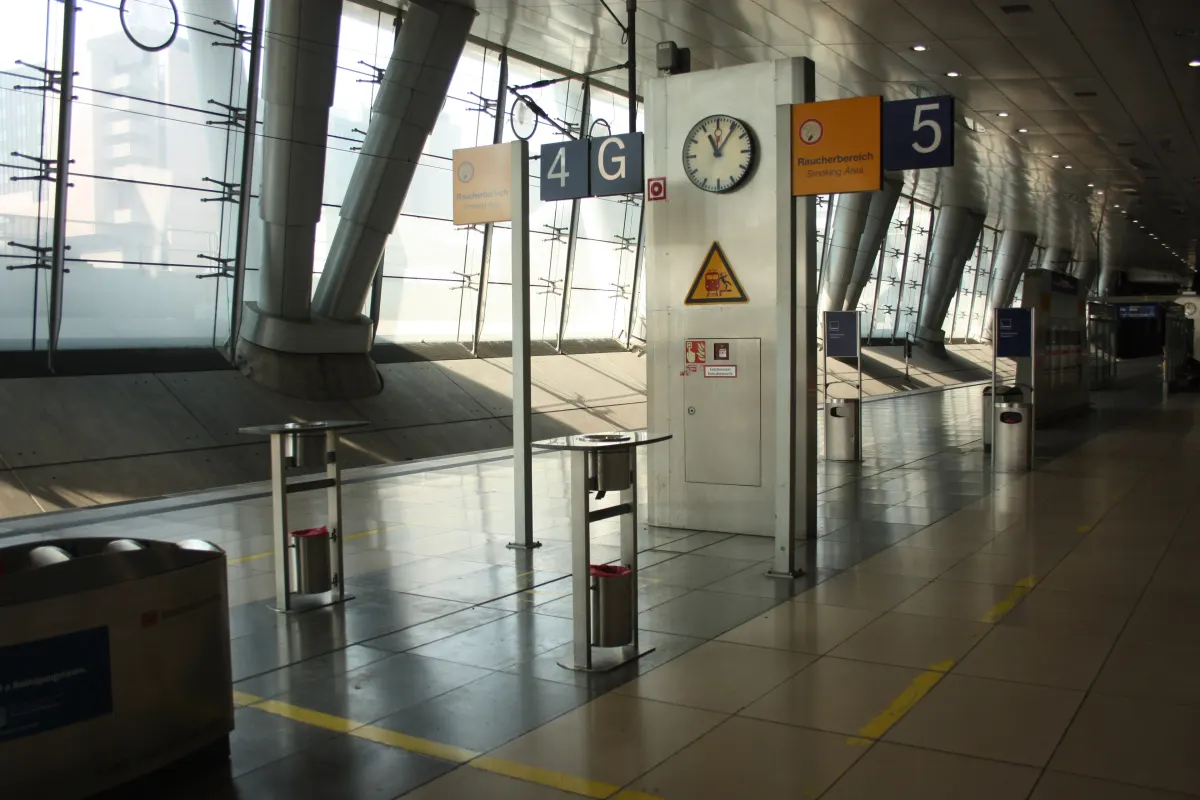
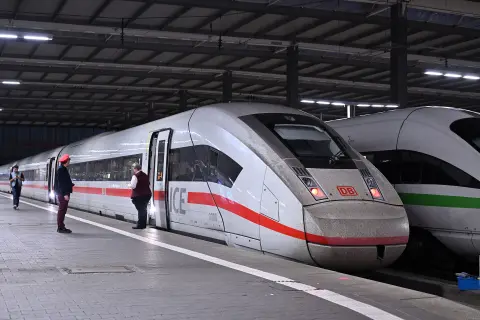
- Frankfurt: the biggest. S-Bahn S8 and S9 from the Regionalbahnhof reach the main station in about 15 minutes. ICE trains leave from the Fernbahnhof for Cologne, Stuttgart, Munich and beyond, so you needn't go into town at all. Terminal 3 opened in April 2026, and all the airlines from Terminal 2 have moved there. It's reached from the stations by the free SkyLine train: allow 20 minutes more. Hahn, used by budget airlines, is about 120 km away by bus.
- Munich: S1 and S8 to the centre in about 40 minutes, or the Lufthansa Express Bus.
- Berlin Brandenburg (BER): the Airport Express (FEX) and regional trains reach the main station in about half an hour or less. The S-Bahn is slower. You need an ABC ticket: €5 (€5.20 from January 2027).
- Hamburg: S1, about 25 minutes. Düsseldorf: S11, or the SkyTrain to the airport's main line station. Cologne Bonn: S19 or a regional train, about 15 minutes. Stuttgart: S2 and S3, about 30 minutes. Leipzig/Halle, Dresden, Hanover and Nuremberg have trains or a metro too.
- Buy and stamp a ticket before you board, unless it says otherwise: see Getting around. A long-distance DB ticket can be bought from the airport itself, at no great extra cost.
- Licensed taxis are usually cream, with a yellow roof sign and a meter.
Arriving by land or sea
- Trains run direct from Paris, Brussels, Amsterdam, Copenhagen, Prague, Vienna, Zurich, Milan and Warsaw. From London, take the Eurostar and change in Brussels.
- Ferries cross from Sweden, Denmark, Finland, Lithuania and Latvia to Rostock, Kiel, Travemünde and Sassnitz.
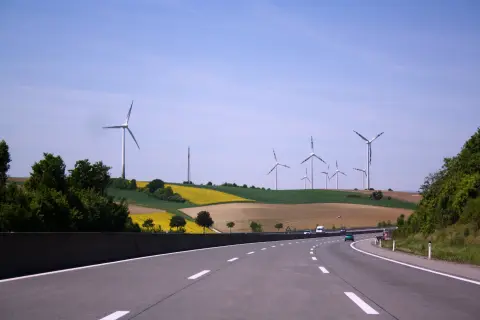
- Driving: there's no toll or vignette for cars in Germany, but Austria, Switzerland and Czechia have one. See Driving.
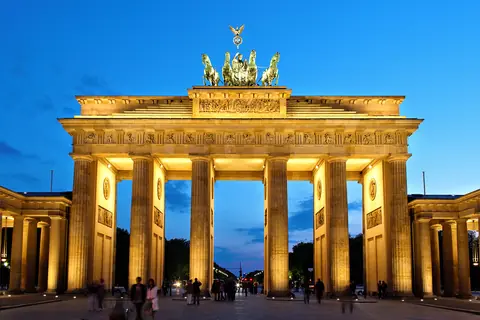
Brandenburg Gate, Berlin
Berlin's most famous landmark: a neoclassical gate of 1791, topped by the Quadriga, a chariot drawn by four horses.

Marienplatz and Munich Old Town
The heart of Munich since the 12th century, overlooked by the neo-Gothic New Town Hall, whose Glockenspiel plays at 11 am and 12 noon (also at 5 pm f…

Comments