
The Everest Base Camp trek, day by day: Lukla, Namche Bazaar, Tengboche and Kala Patthar
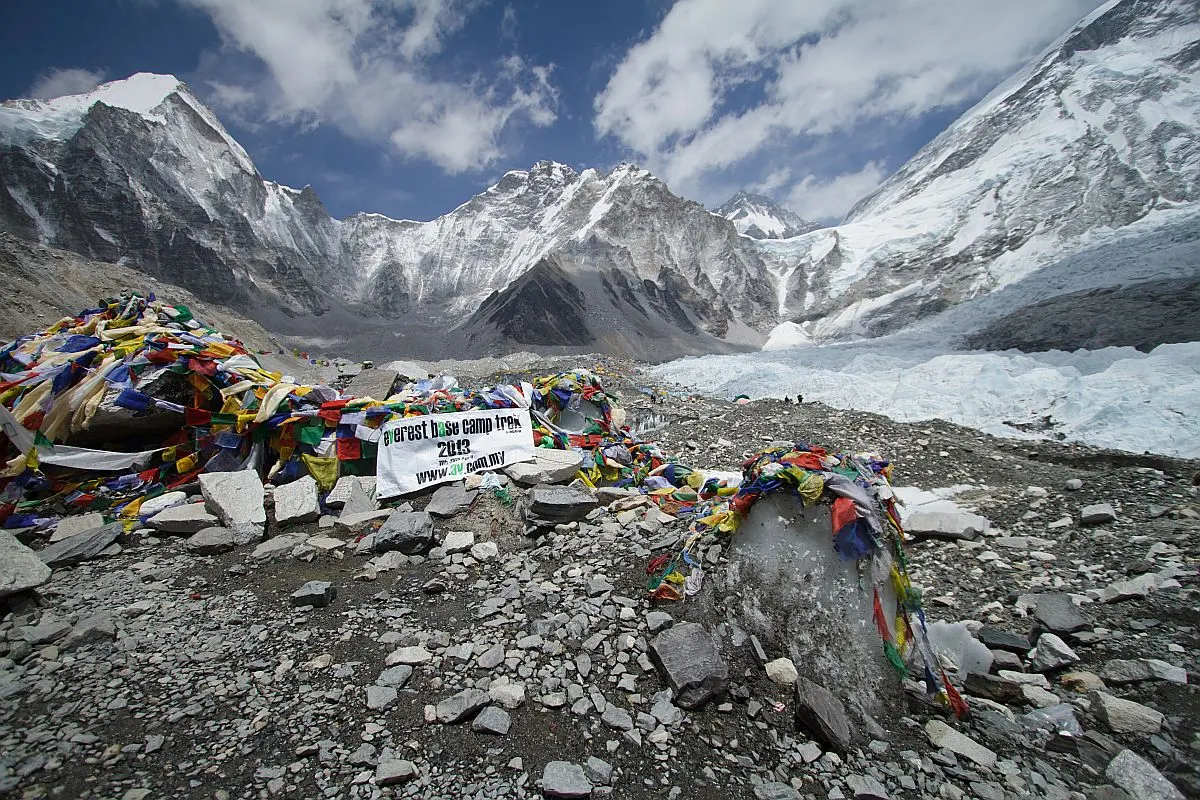
The trek to Everest Base Camp is Nepal's most famous walk: up the Dudh Kosi valley through Sherpa villages, monasteries and forests, to the foot of the Khumbu Icefall at 5,364 metres, and the viewpoint of Kala Patthar, at 5,545 metres. It takes about 12 days from Lukla and back, plus travel and spare days, so allow about 16 days from Kathmandu. You don't need climbing skills, but you do need to be fit, to go slowly, and to respect the altitude.
The best seasons are October and November, and March to May. See When to go. You'll need permits, and probably a licensed guide: see Trekking permits and rules. Heights here are rounded; the walking times are typical, without stops.
Day 1: Fly to Lukla, walk to Phakding (2,610 m)
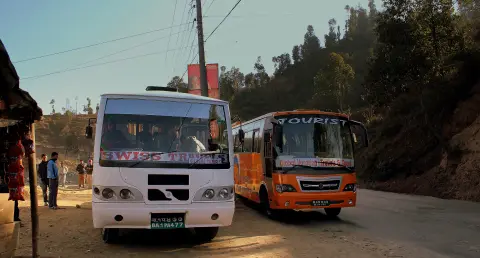
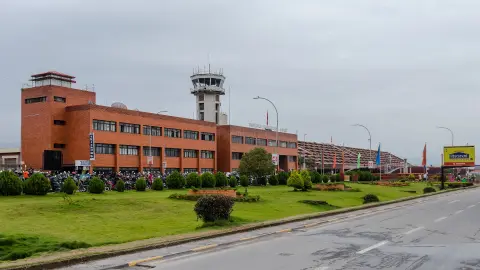
Fly to Lukla (2,860 m) early in the morning: from Kathmandu, or in the busy seasons from Ramechhap, a drive of four to five hours that starts in the middle of the night. See Getting around. Pay the local municipality fee in Lukla, then walk downhill along the Dudh Kosi to Phakding, about three hours. Starting with a lower night helps you acclimatise.
Day 2: To Namche Bazaar (3,440 m)
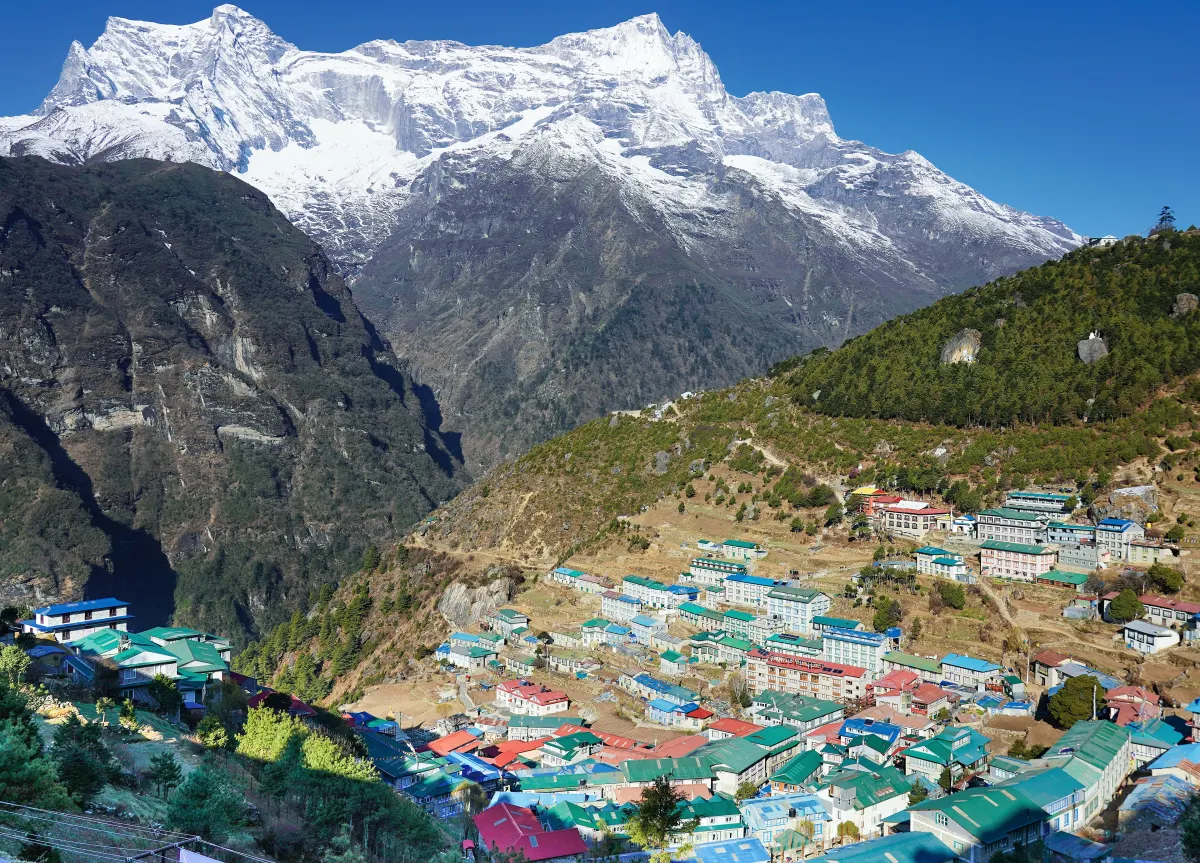
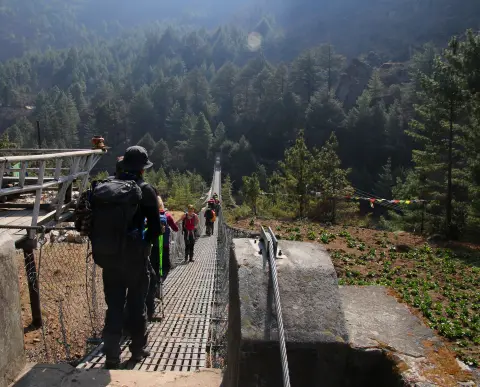
Cross the river on long suspension bridges, enter Sagarmatha National Park at Monjo, where permits are checked, and climb steeply up to Namche Bazaar, the Sherpa capital, about six hours. If the clouds are kind, you'll get your first view of Everest on the way.
Day 3: Rest day in Namche
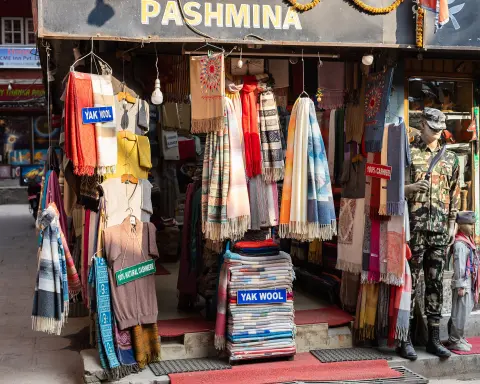
Acclimatise by climbing up to the Everest View Hotel or the Syangboche airstrip, or to the villages of Khumjung and Khunde, and come back down to sleep in Namche. Visit the Sherpa museum and the park's visitor centre. Namche has bakeries, gear shops and ATMs.
Day 4: To Tengboche (3,860 m)
A beautiful trail along the hillside, with views of Ama Dablam, then down to the river and steeply up to Tengboche, whose monastery is the most important in the Khumbu, about five to six hours. Go to the afternoon prayers. Many trekkers sleep lower, in Deboche, which is quieter.
Day 5: To Dingboche (4,410 m)
Through Pangboche, with its old monastery, and above the treeline into the Imja valley, to Dingboche, about five hours.
Day 6: Rest day in Dingboche
Climb Nangkartshang, the hill above the village, for views of Makalu and Lhotse, and come back down to sleep. Watch for altitude sickness: see Altitude sickness.
Day 7: To Lobuche (4,940 m)
Up past the memorials to climbers who died on Everest, at Thukla, and along the Khumbu Glacier's moraine, to Lobuche, about five hours.
Day 8: To Gorak Shep (5,164 m) and Everest Base Camp (5,364 m)
Walk to Gorak Shep, the last teahouses, about three hours, leave your bags, and walk on along the glacier to Everest Base Camp and back, another four or five hours. In spring, it's a tent city of climbing expeditions; in autumn, it's usually quiet. You can't see the summit of Everest from base camp itself.
Day 9: Kala Patthar (5,545 m), then down to Pheriche (4,370 m)
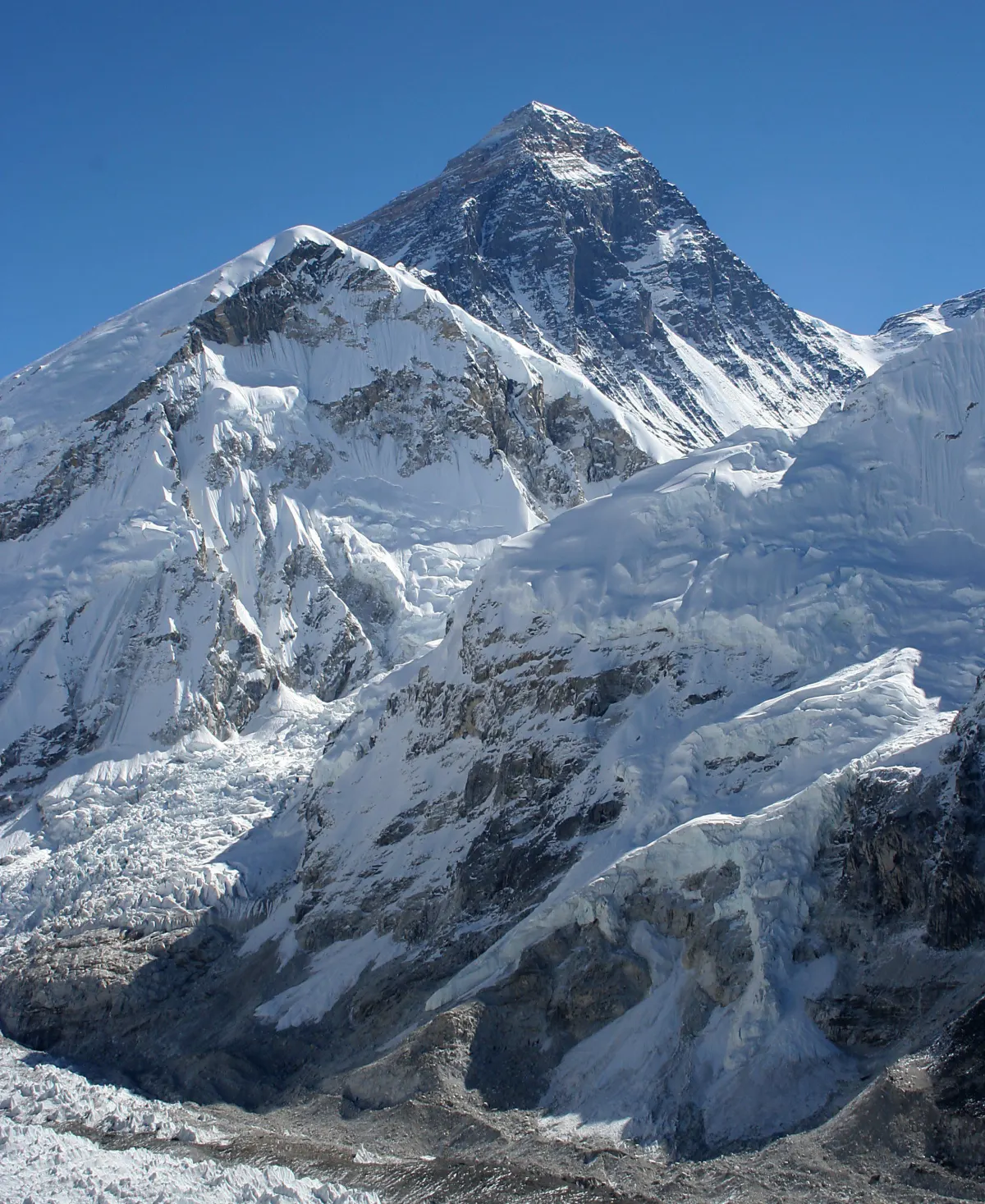
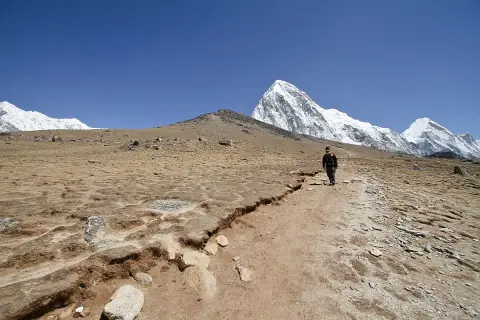
Climb Kala Patthar before dawn for the classic close view of Everest, Nuptse and the Khumbu Icefall in the morning light: it's steep, cold and slow at this height. Then walk down to Pheriche, where the Himalayan Rescue Association has its aid post, about seven to eight hours in all. Going down, you'll feel better fast.
Days 10 and 11: Back to Namche and Lukla
Walk down to Namche Bazaar, about six to seven hours, and on to Lukla the next day, about seven hours. Celebrate with your guide and porters, and tip them: see Money in Nepal.
Day 12: Fly back
Fly back to Kathmandu or Ramechhap in the morning. Keep at least one or two spare days in case of weather delays, before your flight home.
Variations
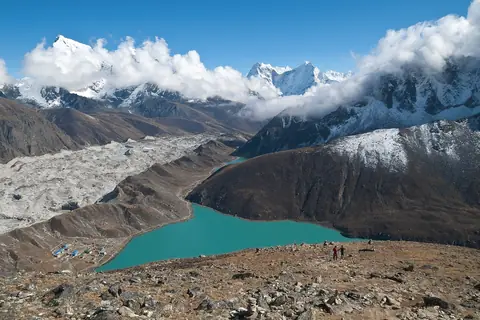
- Gokyo: go up the next valley to the turquoise Gokyo Lakes and Gokyo Ri, which many people think has a better view of Everest, and cross the Cho La pass to join the Base Camp trail. See the Gokyo Lakes trek.
- The Three Passes trek crosses the Renjo La, Cho La and Kongma La, all well over 5,000 metres, in about three weeks, for experienced trekkers.
- Walk in from the road at Salleri, Thamdanda or Jiri, through the lower hills, avoiding the Lukla flight and acclimatising gently, adding several days.
- For a short taste, walk to Namche and the Everest View Hotel and back, in about a week.

Everest Base Camp Trek
The classic trek to the foot of the world's highest mountain, about 12 to 14 days return from Lukla, through Sherpa villages such as Namche Bazaar, p…
Gokyo Lakes trek
An alternative to the Everest Base Camp trek: a week-long route up the Gokyo Valley to a chain of turquoise glacial lakes at around 4,700 m, beside t…
What to bring
- Warm layers, a down jacket and a sleeping bag good for well below freezing: you can rent or buy these in Thamel.
- Broken-in boots, poles, sunglasses, sunscreen, a hat and gloves, a water filter or tablets, a headtorch and a power bank. See Food and drink for water.
- Enough cash in rupees for the whole trek, and insurance that covers helicopter rescue above 5,000 metres. See Health and insurance.
Map of the route
Lukla to Everest Base Camp, about 53 km
Kala Patthar, and back down to Pheriche, about 15 km
Pheriche back to Lukla, about 37 km
Click a dot for the place. You fly to Lukla from Kathmandu or Ramechhap. Trail lines are from OpenStreetMap and approximate; heights are rounded. Route from OpenStreetMap (© OpenStreetMap contributors, ODbL).
Comments
No comments yet.