
Getting around Nepal: domestic flights, Lukla and Ramechhap, tourist buses, jeeps, taxis and ride-hailing apps
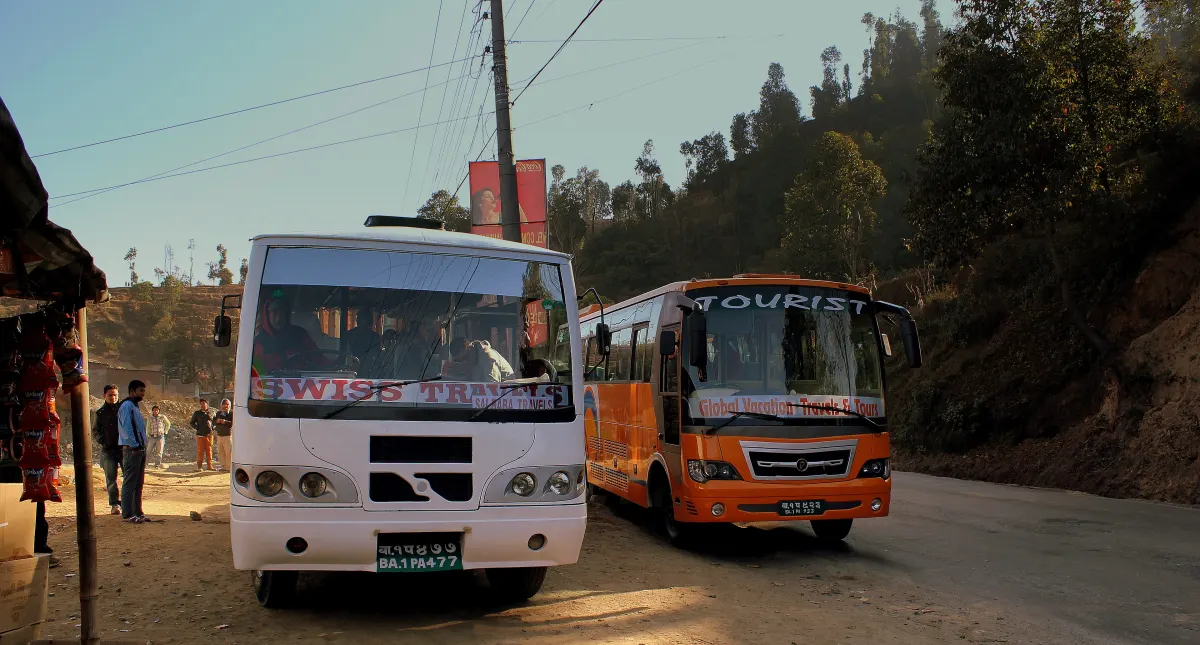
Nepal is small on the map, but its roads are slow, winding and often under repair, so even short distances take a long time. Most visitors travel by tourist bus or private car between Kathmandu, Pokhara and Chitwan, and fly to the start of the treks in the high mountains.
Domestic flights
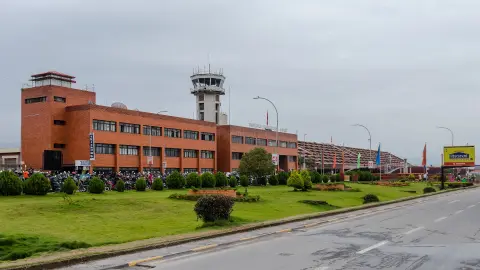
- Several Nepali airlines fly small planes from Kathmandu to Pokhara, Bharatpur (for Chitwan), Bhairahawa (for Lumbini), Nepalgunj (for Bardia), Jomsom, Lukla and other mountain airstrips. The Kathmandu to Pokhara flight takes about 25 minutes, against most of a day on the road.
- Mountain flights are often delayed or cancelled by cloud and wind. Flights usually go early in the morning, when the weather is calmer. Build spare days into your plans, especially before your international flight home.
- Nepal's air safety record is poor: the UK government notes at least 100 deaths in commercial air crashes in the last five years, and all Nepali airlines are banned from flying to the UK and the EU, as they don't meet international safety standards. Many travellers still fly, as the roads have their own risks, but it's worth knowing.
- Baggage limits on mountain flights are small, often around 10 to 15 kg including hand luggage: ask your airline or trekking agency, and leave the rest at your hotel in Kathmandu.
Flying to Lukla
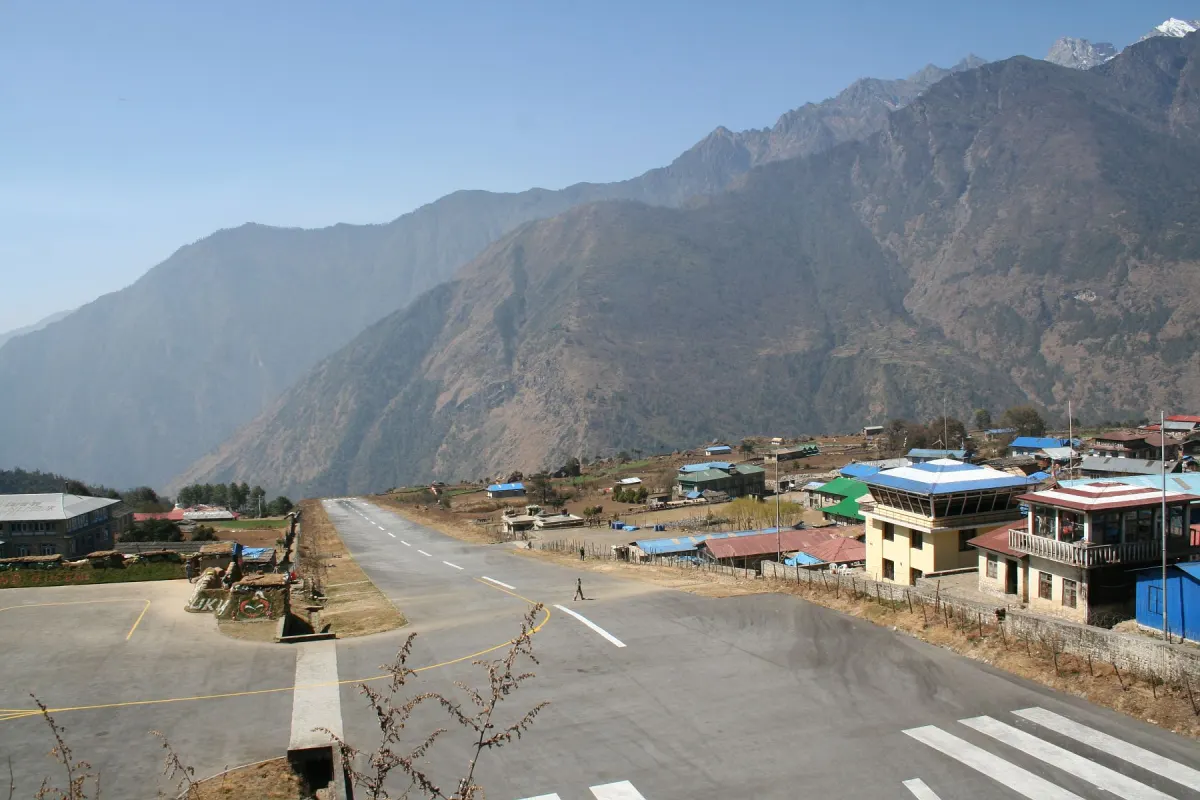
- The Everest region's treks start at Lukla, whose short, sloping runway on a mountainside is famous. The flight from Kathmandu takes about 35 minutes.
- In the busy seasons, usually from around October to November, and in spring, most Lukla flights leave from Ramechhap (Manthali) airport instead, to ease congestion in Kathmandu. Ramechhap is about four to five hours' drive east of Kathmandu, so you set off in the middle of the night. The dates change each season: check with your airline or agency.
- Lukla flights are often grounded by weather for a day or more, and a backlog builds up. Add at least one or two spare days at the end of the trek.
- Helicopters fly the same route when planes can't, for a much higher fare. Some trekkers walk in from Jiri or from the road head at Salleri or Thamdanda instead, which also helps with acclimatisation.
Tourist buses
- Tourist buses run every morning between Kathmandu and Pokhara, Kathmandu and Chitwan (Sauraha), and Pokhara and Chitwan, with fixed seats, stops for meals, and luggage on top or in the hold. Book a day or two ahead through your hotel or a travel agent, or online.
- Kathmandu to Pokhara is about 200 km, but takes seven hours or more, often much more with roadworks, traffic jams on the way out of the Kathmandu Valley, or landslides in the monsoon. Kathmandu or Pokhara to Chitwan takes about five to seven hours.
- Pricier "deluxe" buses have more legroom. A private car and driver costs more, but is quicker and lets you stop where you like.
- Local buses go everywhere, but are slow, crowded and often overloaded. The UK government advises against travelling on overloaded buses and travelling by road at night: bus crashes are common.
Jeeps on mountain roads
- Rough roads now reach far into the hills, including up the Kali Gandaki valley to Jomsom and beyond, to Manang on the Annapurna Circuit, and to Syabrubesi for Langtang. Shared and private jeeps run on them.
- These roads are bumpy, narrow and exposed, and landslides close them after rain. Pick a jeep that looks well maintained, and don't travel on them in heavy rain if you can avoid it.
In the cities
- Taxis in Kathmandu and Pokhara rarely use the meter: agree the fare before you get in.
- Ride-hailing apps such as Pathao and inDrive work in Kathmandu and Pokhara, for cars and motorbike taxis, and show the price up front.
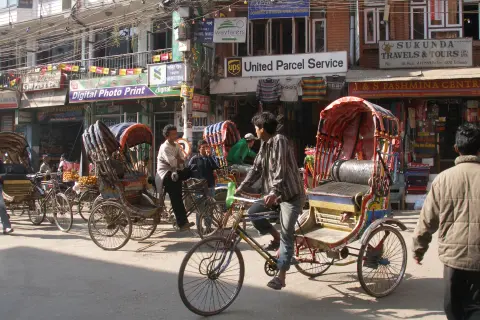
- Kathmandu's traffic is heavy and the old streets are narrow, crowded and dusty: walking is often the quickest way around Thamel and the old towns.
- You can hire motorbikes and scooters in Pokhara and Kathmandu, but you'll need a licence for it and an International Driving Permit (for UK licence holders, the 1968 kind), and the roads are chaotic. Most visitors hire a car with a driver rather than drive.
Strikes and roadblocks
Protests and general strikes, called bandhs, sometimes stop traffic for a day or more, and roads can be blocked by landslides for days in the monsoon. Ask your hotel before setting off. See Safety in Nepal.
For itineraries, see 7 days in Nepal and two weeks in Nepal, and for the Everest flight, see the Everest Base Camp trek, day by day.
Comments
No comments yet.