
Nepali food and drink: dal bhat, momos, Newari feasts, and safe water on treks
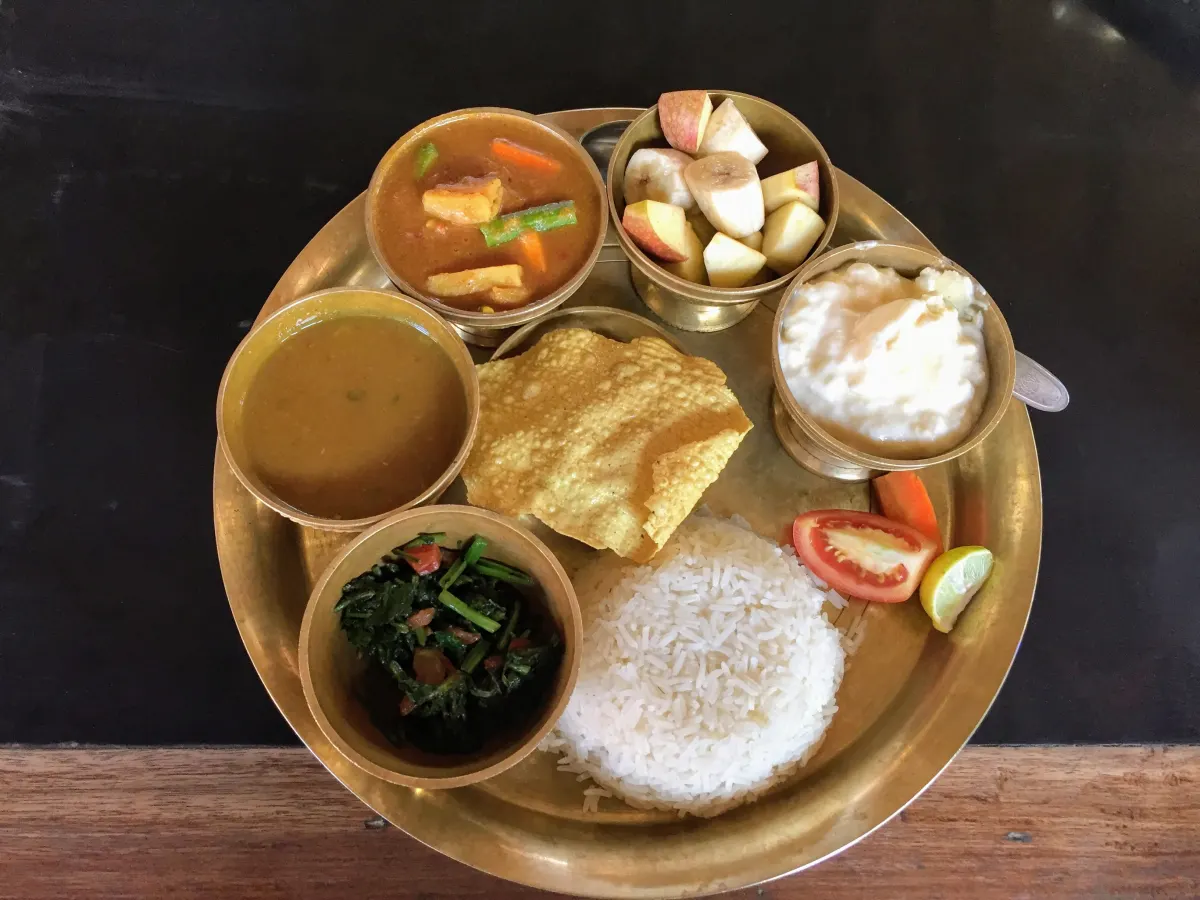
Nepali food is filling and simple, built for long days of hard work, with influences from India, Tibet and the Newar people of the Kathmandu Valley. In Kathmandu and Pokhara you can eat food from anywhere in the world, but try the local dishes too.
What to try
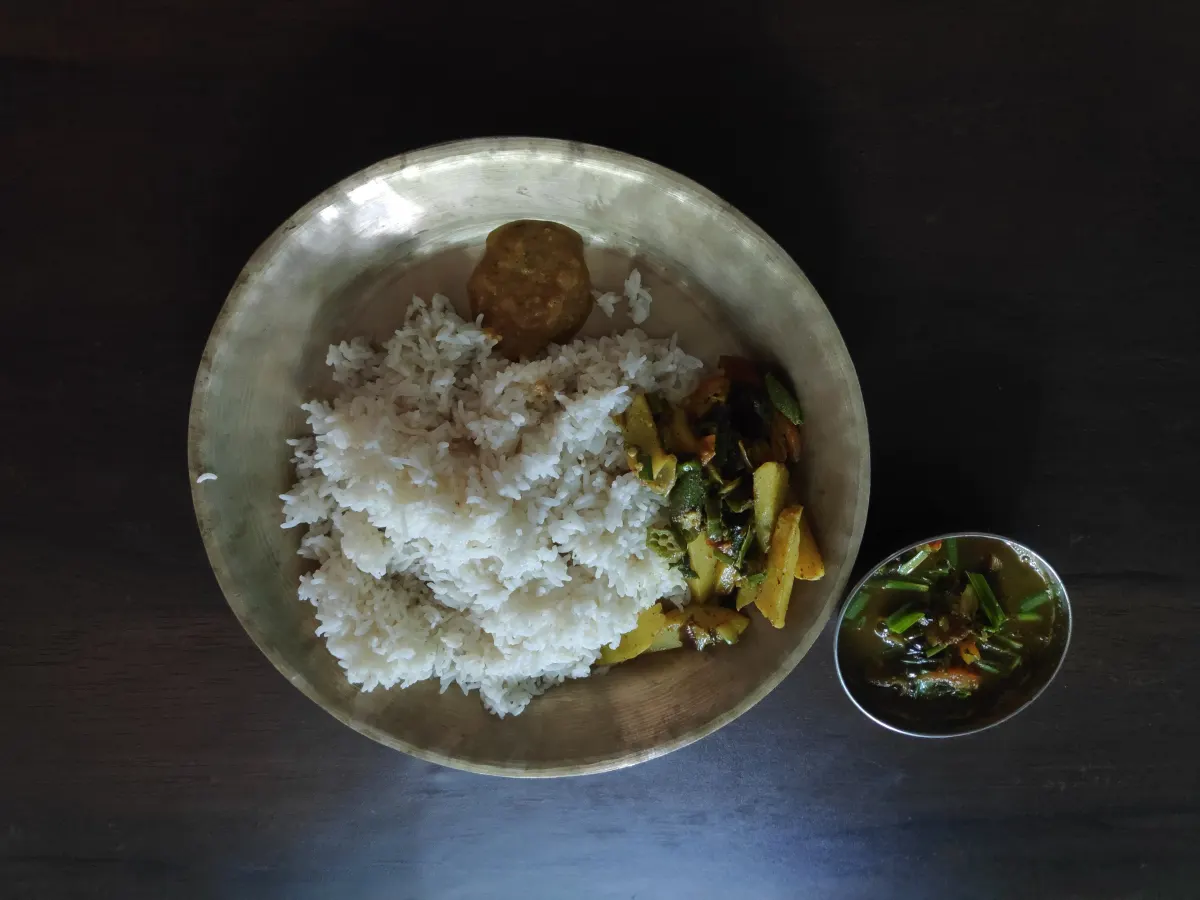
- Dal bhat: rice with lentil soup, vegetable curry, pickle and greens, sometimes with meat. It's what Nepalis eat once or twice a day, and on the trails you usually get free refills. "Dal bhat power, 24 hour", as the guides say.
- Momos: dumplings filled with vegetables, buffalo, chicken or pork, steamed or fried, with a spicy tomato sauce. Every street has a momo shop.
- Thukpa and thenthuk: Tibetan noodle soups, warming at altitude.
- Newari food, from the Kathmandu Valley: samay baji, a platter of beaten rice, spiced meat, beans, egg and pickles; bara (lentil patties); chatamari, a rice-flour "pizza"; and yomari, sweet steamed dumplings. Bhaktapur's thick, sweet juju dhau ("king curd") yoghurt is famous.
- Sel roti, a ring-shaped sweet rice bread, made especially at festivals, and dhido, a stiff porridge of millet or buckwheat, in the hills.
- In the Terai, the food is closer to Indian: try the Tharu dishes around Chitwan.
Food and drink
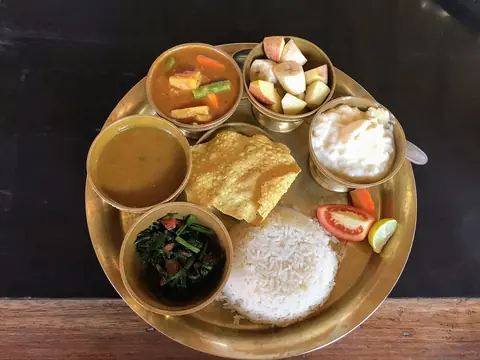
Dal bhat
Bagmati
Nepal's national meal, eaten twice a day: steamed rice (bhat) with lentil soup (dal), vegetable curry (tarkari), spicy pickle (achar), and sometimes …
Food and drink
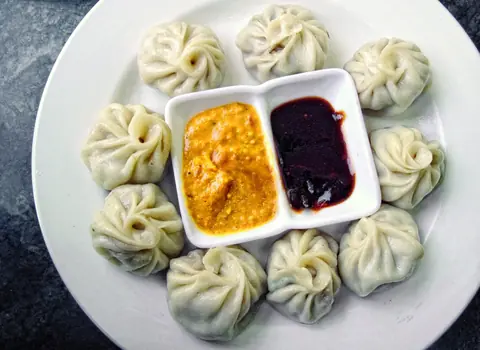
Momos
Kathmandu, Bagmati
Nepal's favourite snack: steamed dumplings filled with buffalo, chicken, pork or vegetables, served with a spicy tomato and sesame chutney (achar).
Food and drink
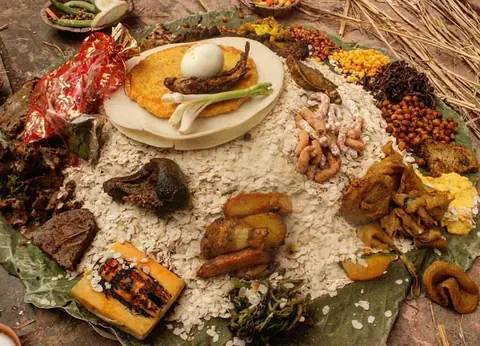
Newari food and samay baji
Bhaktapur, Bagmati
The Newar people of the Kathmandu Valley have one of Nepal's richest food traditions.
On the trails
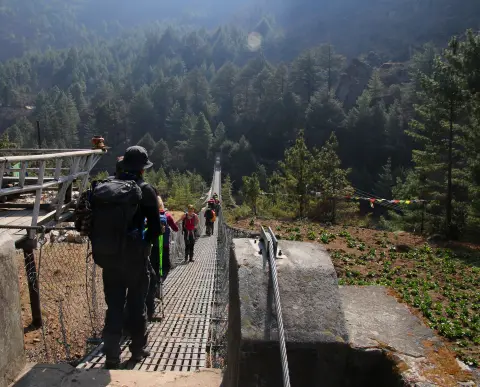
- Teahouse menus are long but similar everywhere: dal bhat, noodles, fried rice, potatoes, pancakes, Tibetan bread, porridge, and even pizza and apple pie. Yak cheese and garlic soup (said to help at altitude) are local favourites.
- Many trekkers go vegetarian once they're high up, as meat is carried up for days without refrigeration.
- Eat dal bhat where you sleep: teahouses earn more from meals than rooms, and many expect you to eat there.
- Skip the beer and rum high up, as alcohol makes altitude sickness more likely.
Drinks
- Chiya, sweet milky tea with spices, is drunk everywhere. Hot lemon, hot lemon with ginger and honey, and black tea are trekking staples.
- Nepal grows good tea, around Ilam in the east, and coffee in the hills.
- Lassi (yoghurt drink) is good in towns. In the hills, try tongba, warm fermented millet drunk through a straw from a wooden pot, and raksi, a home-distilled spirit, in moderation: there have been deaths from home-made spirits containing methanol. Nepal brews its own beer, too.
Water
- Don't drink tap water anywhere in Nepal, or water from streams on the trails, however clean it looks, without treating it. Brush your teeth with safe water too.
- Bottled water is sold everywhere, but plastic bottles are a huge problem on the trails, where there's no way to recycle them, and the Everest region has restricted single-use plastic. Instead, bring a filter bottle, a UV purifier or purification tablets, and refill.
- Many hotels, cafés and teahouses sell filtered or boiled water to refill your bottle, for much less than a bottle.
- Be careful with salads, raw fruit you haven't peeled, and ice outside good restaurants. Travellers' diarrhoea is common. See Health and insurance.
Eating the Nepali way
- Nepalis traditionally eat with their right hand, mixing the dal and rice with their fingers. You'll always be offered a spoon.
- Don't offer food you've bitten or touched with your mouth, or put your spoon back in a shared dish: it's considered jutho, ritually polluted. Drink from a shared bottle without touching it to your lips.
- Beef isn't eaten by Hindus, as the cow is sacred, and killing a cow is a crime. The "steak" on Thamel menus is buffalo.
For more on customs, see Culture and etiquette in Nepal.
Comments
No comments yet.